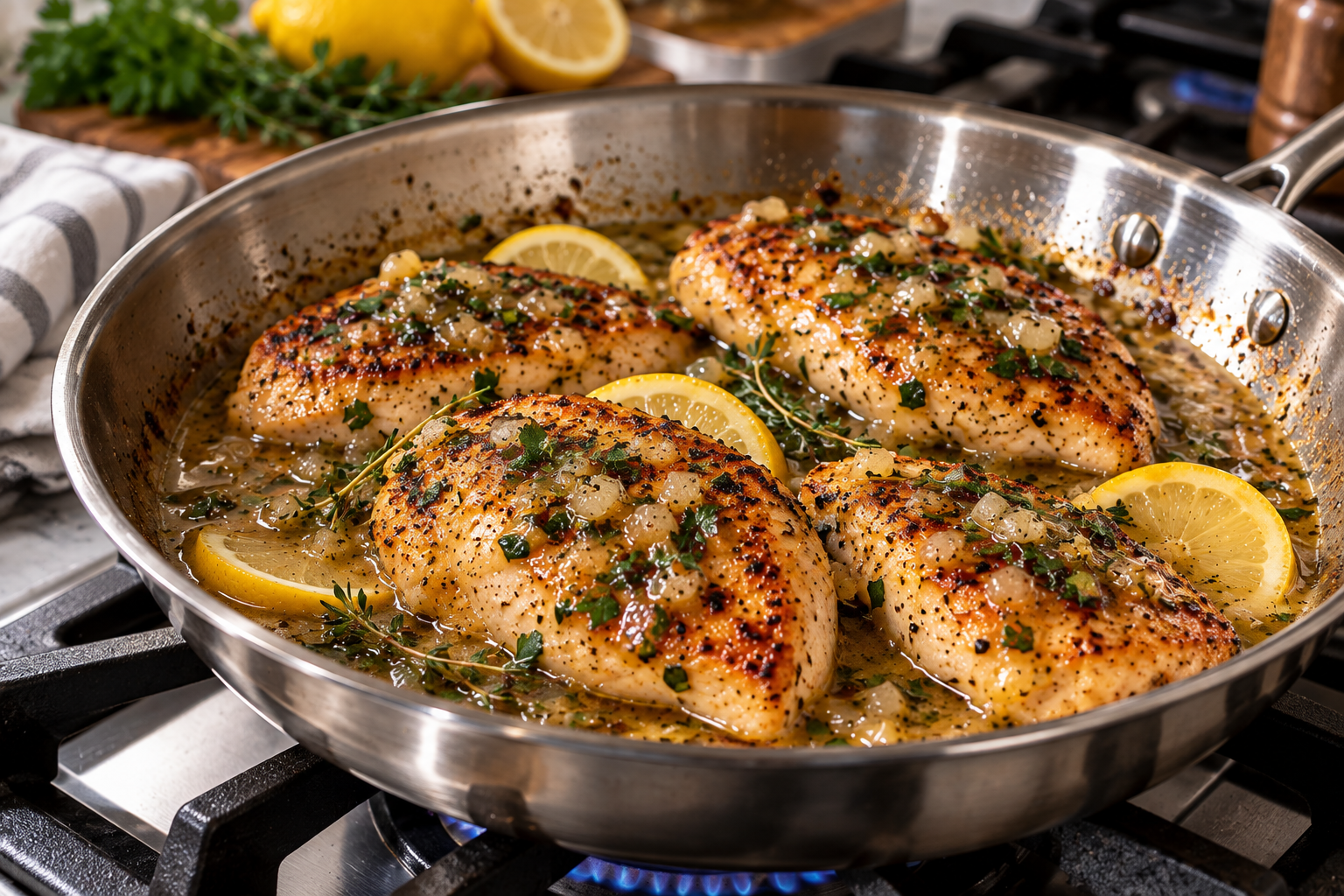
Pan-Seared Herb Chicken with Lemon Pan Sauce
Forks247 • Poultry
Golden pan-seared chicken finished with a bright lemon, thyme, and butter pan sauce. This recipe is as much about technique as dinner—control the heat, cook to temperature, let the chicken rest, and turn the browned fond left in the skillet into flavor.
Ingredients
Mise en Place — prep before you cook
For the Chicken
- 4 boneless, skinless chicken breasts, about 6–8 ounces each
- 1 tablespoon grapeseed oil
- 1 teaspoon kosher salt
- 1 teaspoon granulated garlic
- 1 teaspoon granulated onion
- 1 teaspoon dried thyme
- ½ teaspoon cracked black pepper
- ½ teaspoon smoked paprika
For the Lemon Pan Sauce
- 1 tablespoon unsalted butter
- 1 small shallot, finely minced
- 2 garlic cloves, minced
- ¾ cup chicken stock
- 2 tablespoons fresh lemon juice
- 1 teaspoon Dijon mustard
- 1 teaspoon fresh thyme leaves
- 2 tablespoons cold unsalted butter
- 1 tablespoon chopped flat-leaf parsley
- Kosher salt and cracked black pepper, as needed
Method
Follow each step for the best flavor and texture.
Even the chicken. Place the chicken breasts between parchment or plastic wrap and gently pound the thickest portions until each breast is an even thickness, about ¾ inch. Pat dry thoroughly.
Season. Combine the salt, granulated garlic, granulated onion, dried thyme, black pepper, and smoked paprika. Season both sides of the chicken evenly.
Heat the pan. Heat a large skillet over medium-high heat. Add the grapeseed oil and allow it to heat until shimmering.
Sear the chicken. Add the chicken without crowding the skillet. Cook undisturbed for about 4–5 minutes, or until deeply golden underneath. Flip and continue cooking until the thickest portion reaches a safe internal temperature of 165°F.
Rest. Transfer the chicken to a plate and allow it to rest while you prepare the pan sauce.
Build the sauce. Reduce the heat to medium. Add 1 tablespoon butter and the shallot to the same skillet. Cook for about 1 minute, then add the garlic and cook briefly until fragrant.
Deglaze. Pour in the chicken stock, scraping the browned fond from the bottom of the skillet. Add the lemon juice, Dijon mustard, and fresh thyme. Simmer until the liquid reduces slightly and develops more body.
Finish the sauce. Reduce the heat to low. Whisk in the 2 tablespoons cold butter until the sauce becomes smooth and glossy. Stir in the parsley and adjust the seasoning with salt, pepper, or additional lemon if needed.
Serve. Slice the rested chicken and spoon the warm lemon pan sauce over the top.
Chef Notes
Even thickness matters. If one end of the chicken breast is significantly thicker than the other, the thin end can be dry before the center finishes cooking.
Use the thermometer. Cooking times are estimates. Your skillet, burner, and thickness of the chicken determine the actual cooking time.
Don't clean the skillet. Those browned bits left after searing are fond—and they're the foundation of your pan sauce.
Finish with cold butter. Whisking it into the reduced sauce over low heat creates a smoother, glossier finish.
Did You Know?
The browned bits left in the skillet after searing meat are called fond. Deglazing the pan dissolves those concentrated browned flavors into the cooking liquid, creating the foundation for a quick pan sauce.
Flavor Notes
Savory herbs and light smokiness build the base while lemon adds brightness, Dijon brings gentle sharpness, shallot adds subtle sweetness, and butter rounds out the sauce.
The finished dish is savory, bright, buttery, and balanced.
Take It Into the Kitchen
Learn the Skill Behind the Recipe.
Recipes tell you what to cook. Kitchen Studio helps you understand the technique, temperature, seasoning, and flavor decisions that make better cooking possible.
Explore Kitchen StudioKeep Cooking.
Your next great meal starts here. Discover chef-led recipes, practical kitchen inspiration, and new ways to bring flavor to your table.
Explore Recipes
Find your next meal, discover new ingredients, and bring something different to your table.
Find Your Next Meal → STORIESExplore the Blog
Chef-led stories, practical cooking advice, seasonal inspiration, and a little food for thought.
Read More Stories → THE CHEFMeet Chef David
Meet the chef behind Forks247 and discover the experience, perspective, and philosophy behind the food.
Meet Chef David →Good Cooking Is About Understanding Why.
Ever wonder why certain techniques work, why ingredients behave differently, or how chefs build layers of flavor?
That's where Kitchen Studio comes in.
Recipes show you what to make. Kitchen Studio helps you understand why it works.
Explore Kitchen Studio →A Quick Note from Chef David
One thing I always tell cooks is this:
Recipes teach you what to cook. Foundations teach you how to cook.
That’s why I created Kitchen Studio.
It’s a place where I break down the real cooking principles behind the recipes you see here on Forks24/7—things like seasoning, flavor balance, and building meals that actually work. Explore the Meal After Meal Foundations inside Kitchen Studio.
If you're interested in learning the deeper side of cooking and want to cook with moreconfidence, I invite you to take a look.
Visit Kitchen Studio →






Follow Us

A chef’s rule worth wearing.
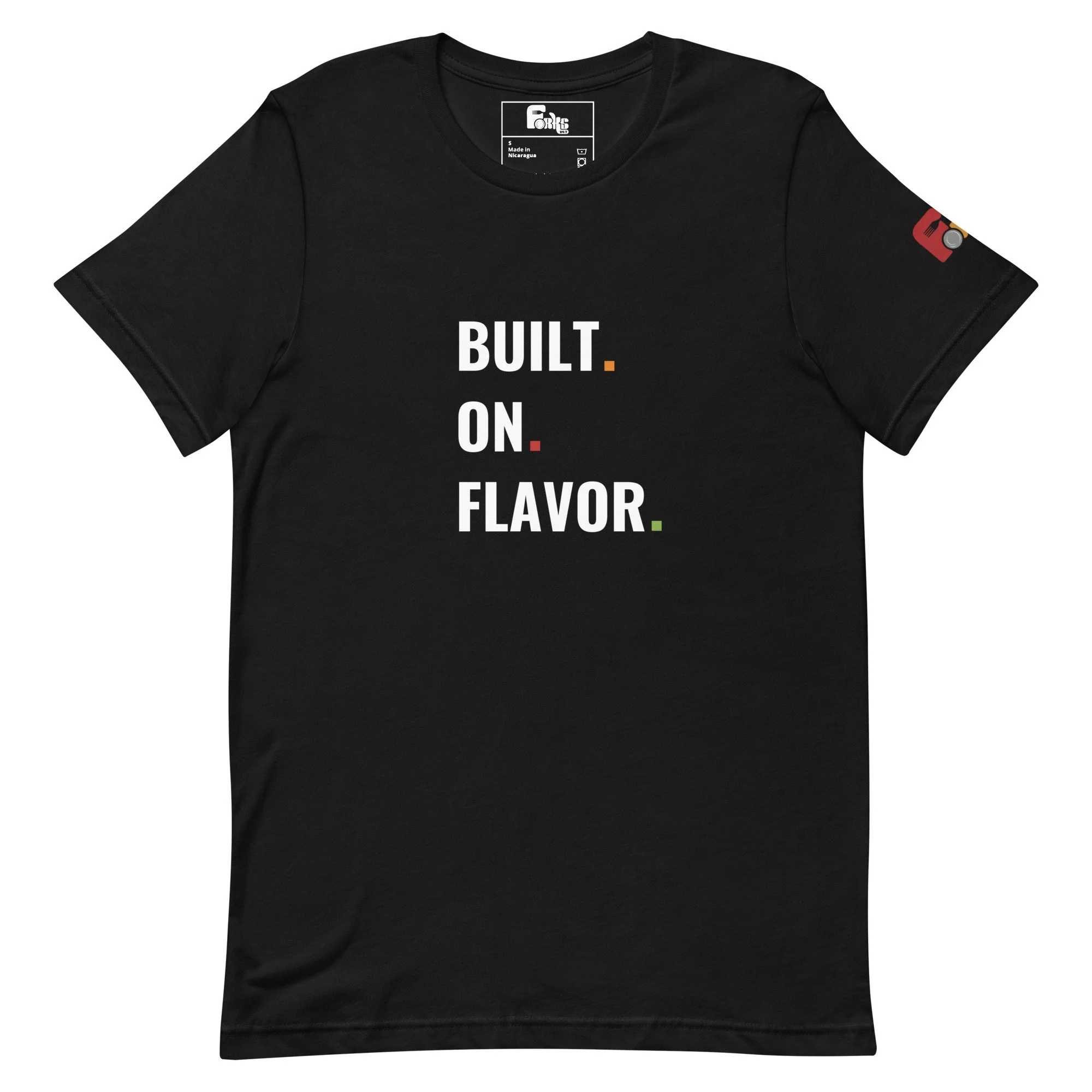
The Taste It Before You Trust It T-Shirt takes one of the kitchen’s simplest lessons and turns it into a statement. Bold typography paired with a refined editorial accent gives the design a clean, modern look that feels just as good outside the kitchen as it does behind the line.
Finished with subtle Forks247 branding on the sleeve, this tee is made for cooks, food lovers, and anyone who knows the final decision should always come down to flavor.
Detail
Premium unisex fit 100% combed and ring-spun cotton Heather colors contain polyester Fabric weight: 4.2 oz./yd² (142 g/m²) Pre-shrunk fabric Side-seamed construction Shoulder-to-shoulder taping Forks247 sleeve branding Designed for everyday comfort
Taste it. Adjust it. Trust yourself.