Chef David's Mahogany Bayou Gumbo
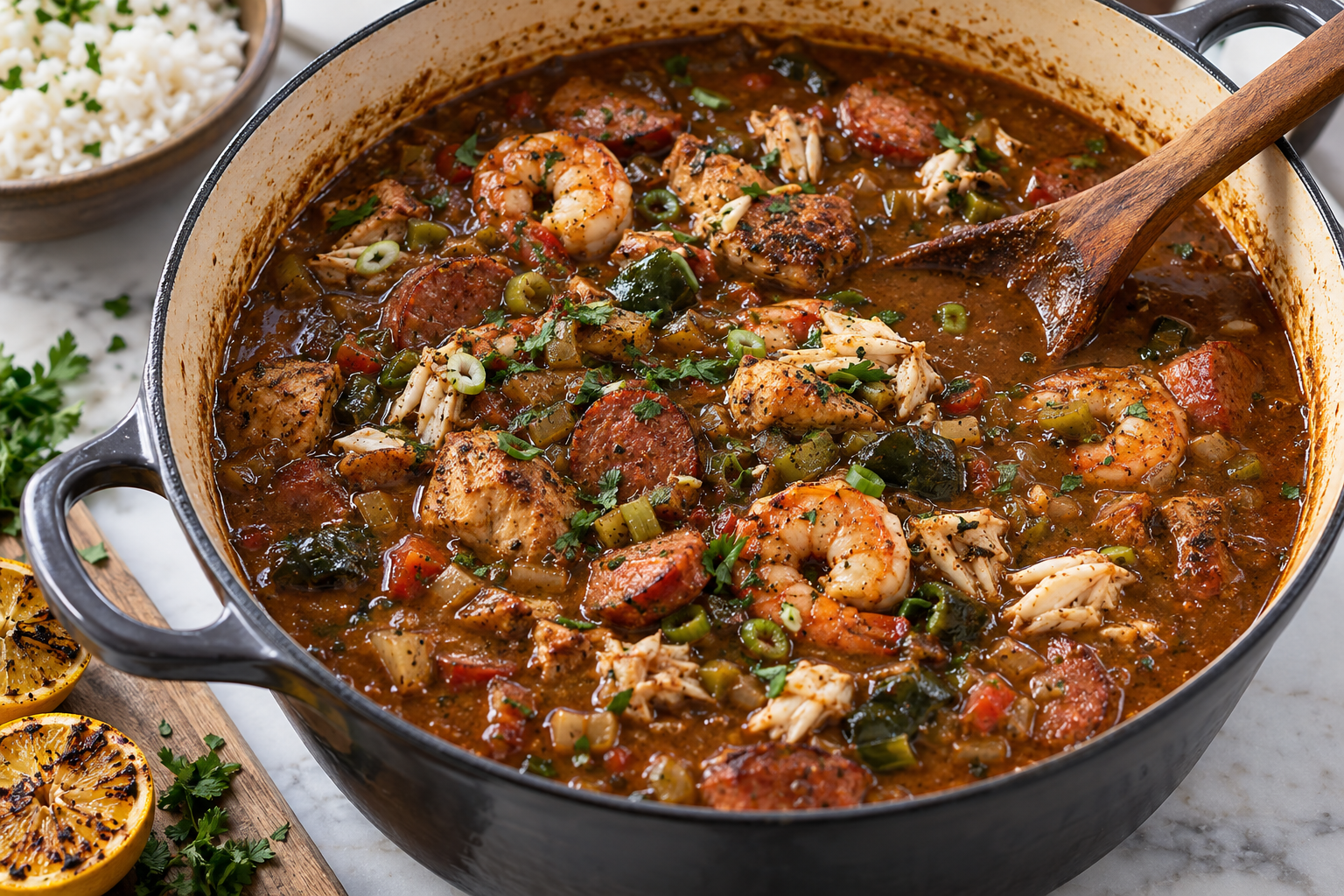
Gumbo is a celebration of culinary heritage, patience, and the beautiful way different traditions come together in one pot. For National Gumbo Day, we're honoring Louisiana's culinary roots while bringing a distinctive Forks247 approach to flavor. Blackened chicken, smoked andouille, Gulf shrimp, and sweet lump crab create layers of richness, while fire-roasted poblano peppers provide a smoky alternative to okra. A dark gluten-free rice-flour roux and a carefully developed broth produce a velvety gumbo that coats every spoonful of rice.
"Great gumbo isn't about how many ingredients you put into the pot. It's about how much flavor you build before the first spoonful is served."
Ingredients
Mise en Place — prep before you cook
Proteins
- 1 lb boneless, skinless chicken thighs, cut into 1½-inch pieces
- 12 oz gluten-free smoked andouille sausage, sliced into coins
- 1 lb large Gulf shrimp, peeled and deveined
- 8 oz lump crabmeat, picked over for shells
- 1 tbsp gluten-free blackening seasoning, divided
- 1 tbsp neutral oil, as needed for searing
Gluten-Free Mahogany Roux
- ½ cup white rice flour
- ¼ cup brown rice flour
- ¾ cup neutral oil, such as avocado or canola oil
Vegetables & Aromatics
- 2 large poblano peppers
- 1 large yellow onion, finely diced
- 1 medium green bell pepper, finely diced
- 2 celery stalks, finely diced
- 5 garlic cloves, minced
- 3 green onions, sliced, whites and greens separated
- 2 tbsp chopped flat-leaf parsley, plus more for garnish
Gumbo Broth & Seasoning
- 8 cups unsalted gluten-free chicken stock, divided
- 2 bay leaves
- 1 tsp dried thyme
- 1 tsp smoked paprika
- ½ tsp cayenne pepper, or to taste
- ½ tsp freshly ground black pepper
- 1 tbsp gluten-free Worcestershire sauce
- 1–2 tsp gluten-free Louisiana-style hot sauce
- 1–2 tsp pure gumbo filé powder, optional
- 1 lemon, halved
- Kosher salt, to taste
Optional Thickening Slurry
- 1–2 tbsp cornstarch
- Equal amount of cold water
For Serving
- Cooked long-grain white rice
- Fresh parsley and sliced green onion tops
- Additional Louisiana-style hot sauce
Method
Build the flavor, layer by layer.
- Fire-roast the poblanos. Place the poblano peppers over a gas flame or beneath a hot broiler, turning until blistered and charred. Transfer to a covered bowl for 10 minutes, then remove the loose skins, stems, and seeds. Dice and divide into two equal portions.
- Brown the proteins. Season the chicken with 2 teaspoons of the blackening seasoning. In a large skillet, brown the andouille over medium-high heat for 4–5 minutes. Transfer to a plate. Sear the chicken in the rendered fat, adding a little neutral oil if needed, until golden on both sides. The chicken will finish cooking in the gumbo.
- Develop the mahogany roux. Combine both rice flours and the neutral oil in a heavy Dutch oven over medium-low heat. Stir constantly until deeply toasted, brown, and nutty, approximately 20–40 minutes. Rice-flour roux behaves differently from wheat roux, so monitor color and aroma closely. If it scorches or smells burnt, start again.
- Build the aromatic foundation. Carefully add the onion, bell pepper, and celery to the roux. Stir for 5–7 minutes until softened. Add garlic, green onion whites, and half the roasted poblano. Cook for another 2 minutes.
- Create the gumbo broth. Gradually whisk 6 cups of warm chicken stock into the roux and vegetables until smooth. Add the browned chicken, andouille, bay leaves, thyme, smoked paprika, cayenne, black pepper, and Worcestershire sauce. Bring to a gentle simmer, then reduce the heat.
- Let the flavors develop. Simmer uncovered for 45–60 minutes, stirring occasionally, until the chicken is tender and fully cooked. The gumbo will reduce and develop a fuller body. Add some reserved stock if it thickens too much.
- Add the remaining poblanos. During the last 15–20 minutes of simmering, stir in the second portion of fire-roasted poblano. This preserves some texture and allows the smoky pepper flavor to remain distinct in the finished gumbo.
- Finish with seafood. Lightly season the shrimp with the remaining blackening seasoning. Add to the gently simmering gumbo and cook for 3–5 minutes, until opaque and cooked through. Fold in the lump crabmeat and warm for an additional 2–3 minutes without breaking apart the pieces.
- Perfect the consistency. If the gumbo needs more body, mix 1 tablespoon cornstarch with 1 tablespoon cold water. Stir into the simmering gumbo and cook for 1–2 minutes. Add more slurry only if needed. The gumbo should be velvety and spoon-coating, not pasty. Remove from heat. If using filé, stir in 1 teaspoon off heat, then assess the consistency before adding more.
- Balance and serve. Lightly char the cut lemon halves in a dry skillet. Add a restrained squeeze of lemon juice and the hot sauce. Taste and adjust the salt and heat. Remove the bay leaves. Ladle the gumbo around and over steamed white rice, making sure each serving includes the chicken, sausage, shrimp, crab, and roasted poblano. Garnish with parsley and green onion tops.
Chef Notes
Patience is the most important ingredient in this gumbo. A carefully toasted rice-flour roux contributes richness and nutty depth, although it will behave differently from traditional wheat roux. Fire-roast the poblanos before adding them to develop their earthy character. I prefer adding the seafood at the very end so the shrimp stay tender and the crab retains its delicate sweetness. Control the final thickness with a small slurry only if necessary; the finished gumbo should coat the rice without becoming heavy or pasty.
Did You Know?
Gumbo represents centuries of culinary exchange, shaped by West African, Native American, French, and other influences throughout Louisiana. The name gumbo is widely associated with West African words for okra, while filé powder, made from ground sassafras leaves, reflects Indigenous food traditions. Not every gumbo uses okra, filé, or tomatoes. Our Forks247 version celebrates that culinary flexibility with fire-roasted poblanos and a gluten-free rice-flour roux.
Flavor Notes
Deeply toasted, smoky, savory, earthy, and gently spicy. The mahogany roux creates a warm, nutty foundation, while smoked andouille and blackened chicken add savory depth. Fire-roasted poblanos introduce subtle smokiness and mild pepper warmth. Gulf shrimp and lump crab bring natural sweetness and delicate briny notes. Worcestershire contributes umami, while a touch of charred lemon brightens the finish. The result is a rich, velvety gumbo that beautifully coats every spoonful of rice.
Want to Understand Why This Recipe Works?
Inside Kitchen Studio, Chef David teaches the techniques, flavor decisions, and kitchen confidence behind everyday cooking. Explore the science of roux, building layers of flavor, and mastering the perfect consistency.
Keep Cooking.
Your next great meal starts here. Discover chef-led recipes, practical kitchen inspiration, and new ways to bring flavor to your table.
Explore Recipes
Find your next meal, discover new ingredients, and bring something different to your table.
Find Your Next Meal → STORIESExplore the Blog
Chef-led stories, practical cooking advice, seasonal inspiration, and a little food for thought.
Read More Stories → THE CHEFMeet Chef David
Meet the chef behind Forks247 and discover the experience, perspective, and philosophy behind the food.
Meet Chef David →Good Cooking Is About Understanding Why.
Ever wonder why certain techniques work, why ingredients behave differently, or how chefs build layers of flavor?
That's where Kitchen Studio comes in.
Recipes show you what to make. Kitchen Studio helps you understand why it works.
Explore Kitchen Studio →A Quick Note from Chef David
One thing I always tell cooks is this:
Recipes teach you what to cook. Foundations teach you how to cook.
That’s why I created Kitchen Studio.
It’s a place where I break down the real cooking principles behind the recipes you see here on Forks24/7—things like seasoning, flavor balance, and building meals that actually work. Explore the Meal After Meal Foundations inside Kitchen Studio.
If you're interested in learning the deeper side of cooking and want to cook with moreconfidence, I invite you to take a look.
Visit Kitchen Studio →





Follow Us

A chef’s rule worth wearing.
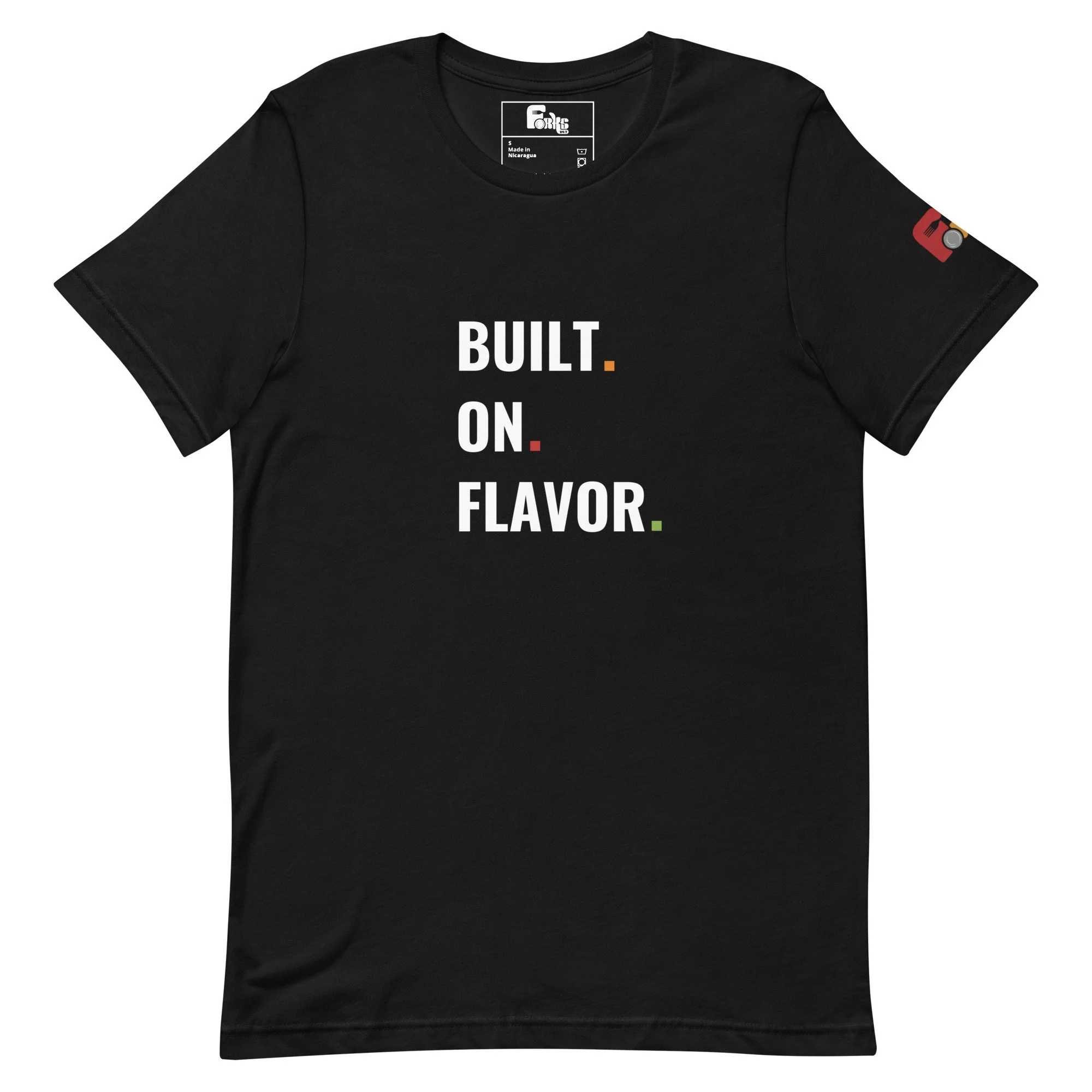
The Taste It Before You Trust It T-Shirt takes one of the kitchen’s simplest lessons and turns it into a statement. Bold typography paired with a refined editorial accent gives the design a clean, modern look that feels just as good outside the kitchen as it does behind the line.
Finished with subtle Forks247 branding on the sleeve, this tee is made for cooks, food lovers, and anyone who knows the final decision should always come down to flavor.
Detail
Premium unisex fit 100% combed and ring-spun cotton Heather colors contain polyester Fabric weight: 4.2 oz./yd² (142 g/m²) Pre-shrunk fabric Side-seamed construction Shoulder-to-shoulder taping Forks247 sleeve branding Designed for everyday comfort
Taste it. Adjust it. Trust yourself.