Sheet-Pan Roasted Salmon with Brown Butter Sage & Umami-Glazed Root Vegetables
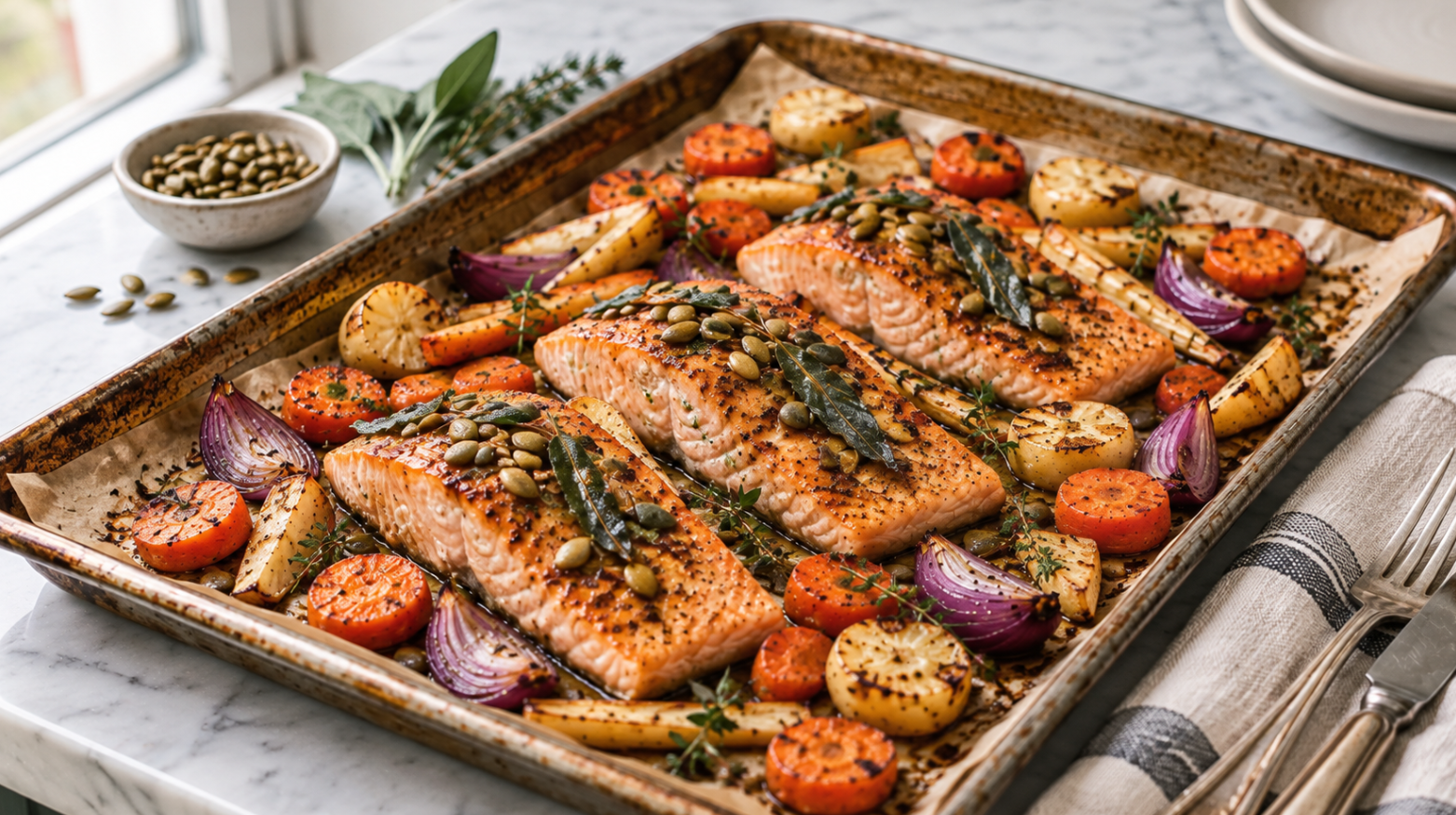
There is something deeply comforting about the aroma of brown butter and fresh sage filling the kitchen. This sheet-pan salmon brings together tender center-cut fillets, caramelized carrots and parsnips, and a savory Worcestershire brown butter glaze. Finished with toasted pepitas and fresh parsley, it is an easy seasonal dinner built on rich, balanced flavor.
Ingredients
Mise en Place — prep before you cook
- 4 center-cut salmon fillets, 6 ounces each
- 2 large parsnips, peeled and sliced into ½-inch rounds
- 3 large carrots, peeled and sliced into ½-inch rounds
- 1 small red onion, cut into thick wedges
- 4 garlic cloves, smashed
- 4 tablespoons unsalted butter
- 12 fresh sage leaves, whole
- 2 teaspoons fresh thyme leaves
- 1 tablespoon Worcestershire sauce
- 1 tablespoon brown sugar
- 2 tablespoons olive oil
- 1 teaspoon kosher salt, divided
- ½ teaspoon freshly cracked black pepper, divided
- ¼ cup toasted pumpkin seeds (pepitas), for garnish
- 2 tablespoons chopped flat-leaf parsley, for garnish
- F&F Hot Lemon Pepper, optional, for finishing
Method
Follow each step for the best flavor and texture.
-
Preheat the oven. Preheat the oven to 400°F. Line a large, heavy-duty rimmed sheet pan with parchment paper for easier cleanup.
-
Prepare the root vegetables. Place the parsnips, carrots, red onion, and smashed garlic on the sheet pan. Drizzle with olive oil and season with ½ teaspoon kosher salt and ¼ teaspoon black pepper. Toss thoroughly and spread into an even layer.
-
Begin roasting. Roast the vegetables for 18–20 minutes, stirring once halfway through, until they begin to soften and develop golden edges. They will finish cooking alongside the salmon.
-
Brown the butter. While the vegetables roast, melt the butter in a small saucepan over medium heat. Swirl the pan occasionally as the butter foams. Continue cooking until the milk solids turn golden brown and release a rich, nutty aroma.
-
Build the sage glaze. Remove the browned butter from the heat. Add the sage leaves and thyme, allowing the herbs to sizzle briefly. Stir in the Worcestershire sauce and brown sugar until the sugar dissolves into the warm butter mixture.
-
Prepare the salmon. Remove the sheet pan from the oven. Move the vegetables toward the edges, leaving room in the center for the salmon fillets. Pat the salmon dry, arrange the portions skin-side down if using skin-on fillets, and season with the remaining ½ teaspoon salt and ¼ teaspoon black pepper.
-
Glaze the salmon and vegetables. Spoon the brown butter sage glaze over each salmon fillet. Drizzle the remaining glaze over the roasted vegetables, distributing the herbs throughout the pan.
-
Finish roasting. Return the sheet pan to the oven and roast for approximately 10–12 minutes, or until the salmon reaches the desired doneness and the vegetables are tender. Cooking time will vary with fillet thickness. For the FDA-recommended food-safe temperature, cook salmon to 145°F in the thickest portion.
-
Rest and serve. Remove the pan from the oven and let the salmon rest for 2–3 minutes. Scatter the toasted pepitas and chopped parsley over the fish and vegetables. Finish with a light sprinkle of F&F Hot Lemon Pepper, if desired, and serve warm.
Chef Notes
Center-cut salmon is ideal for this preparation because its relatively even thickness promotes consistent roasting. Giving the root vegetables a head start prevents the salmon from drying out while waiting for the vegetables to become tender. For skin-on fillets, roast skin-side down; for crisp skin, pan-searing is the better method. Watch the brown butter carefully: once the milk solids turn golden and smell nutty, remove it from the heat.
Did You Know?
Not all salmon fillets cook the same way. The thin tail section cooks faster than a thick center-cut portion, while fattier cuts generally retain moisture more readily during cooking. Matching the thickness, fat content, and whether the skin is attached to the cooking method helps produce more consistent results.
Flavor Notes
Brown butter adds toasted, nutty richness that complements the natural oils in the salmon. Sage and thyme provide earthy, aromatic warmth, while Worcestershire contributes a savory umami backbone. Brown sugar softens the sharper notes and enhances the sweetness of the roasted carrots and parsnips. Toasted pepitas bring a final layer of crunch and subtle nuttiness.
Learn the Why Behind the Recipe.
Kitchen Studio goes beyond following instructions. Build stronger cooking instincts through Meal After Meal Foundations, including 100 Core Culinary Labs designed to help you understand flavor, technique, and how to cook with confidence.
Keep Cooking.
Your next great meal starts here. Discover chef-led recipes, practical kitchen inspiration, and new ways to bring flavor to your table.
Explore Recipes
Find your next meal, discover new ingredients, and bring something different to your table.
Find Your Next Meal → STORIESExplore the Blog
Chef-led stories, practical cooking advice, seasonal inspiration, and a little food for thought.
Read More Stories → THE CHEFMeet Chef David
Meet the chef behind Forks247 and discover the experience, perspective, and philosophy behind the food.
Meet Chef David →Good Cooking Is About Understanding Why.
Ever wonder why certain techniques work, why ingredients behave differently, or how chefs build layers of flavor?
That's where Kitchen Studio comes in.
Recipes show you what to make. Kitchen Studio helps you understand why it works.
Explore Kitchen Studio →A Quick Note from Chef David
One thing I always tell cooks is this:
Recipes teach you what to cook. Foundations teach you how to cook.
That’s why I created Kitchen Studio.
It’s a place where I break down the real cooking principles behind the recipes you see here on Forks24/7—things like seasoning, flavor balance, and building meals that actually work. Explore the Meal After Meal Foundations inside Kitchen Studio.
If you're interested in learning the deeper side of cooking and want to cook with moreconfidence, I invite you to take a look.
Visit Kitchen Studio →





Follow Us

A chef’s rule worth wearing.
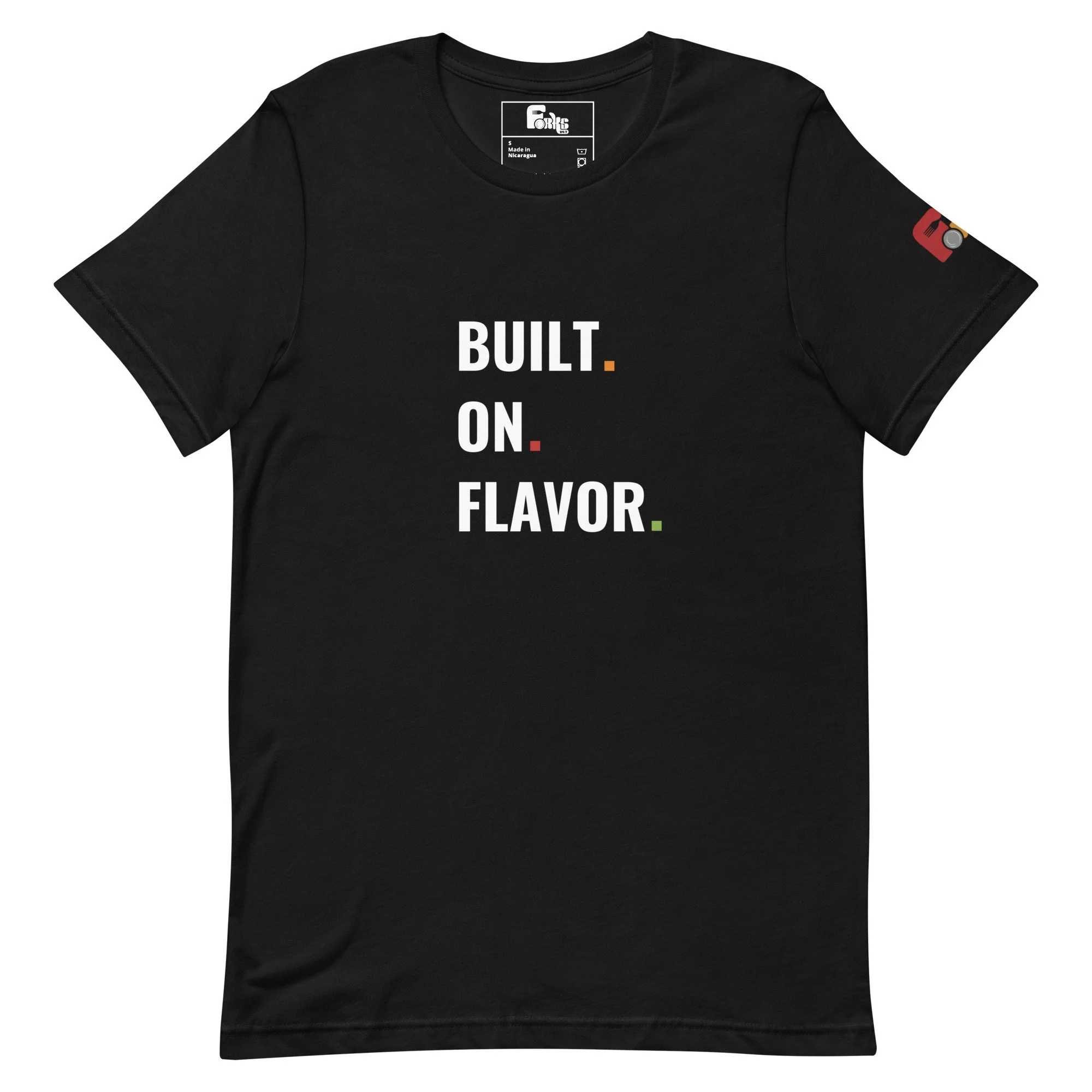
The Taste It Before You Trust It T-Shirt takes one of the kitchen’s simplest lessons and turns it into a statement. Bold typography paired with a refined editorial accent gives the design a clean, modern look that feels just as good outside the kitchen as it does behind the line.
Finished with subtle Forks247 branding on the sleeve, this tee is made for cooks, food lovers, and anyone who knows the final decision should always come down to flavor.
Detail
Premium unisex fit 100% combed and ring-spun cotton Heather colors contain polyester Fabric weight: 4.2 oz./yd² (142 g/m²) Pre-shrunk fabric Side-seamed construction Shoulder-to-shoulder taping Forks247 sleeve branding Designed for everyday comfort
Taste it. Adjust it. Trust yourself.