
Your Marinade Isn’t Going as Deep as You Think
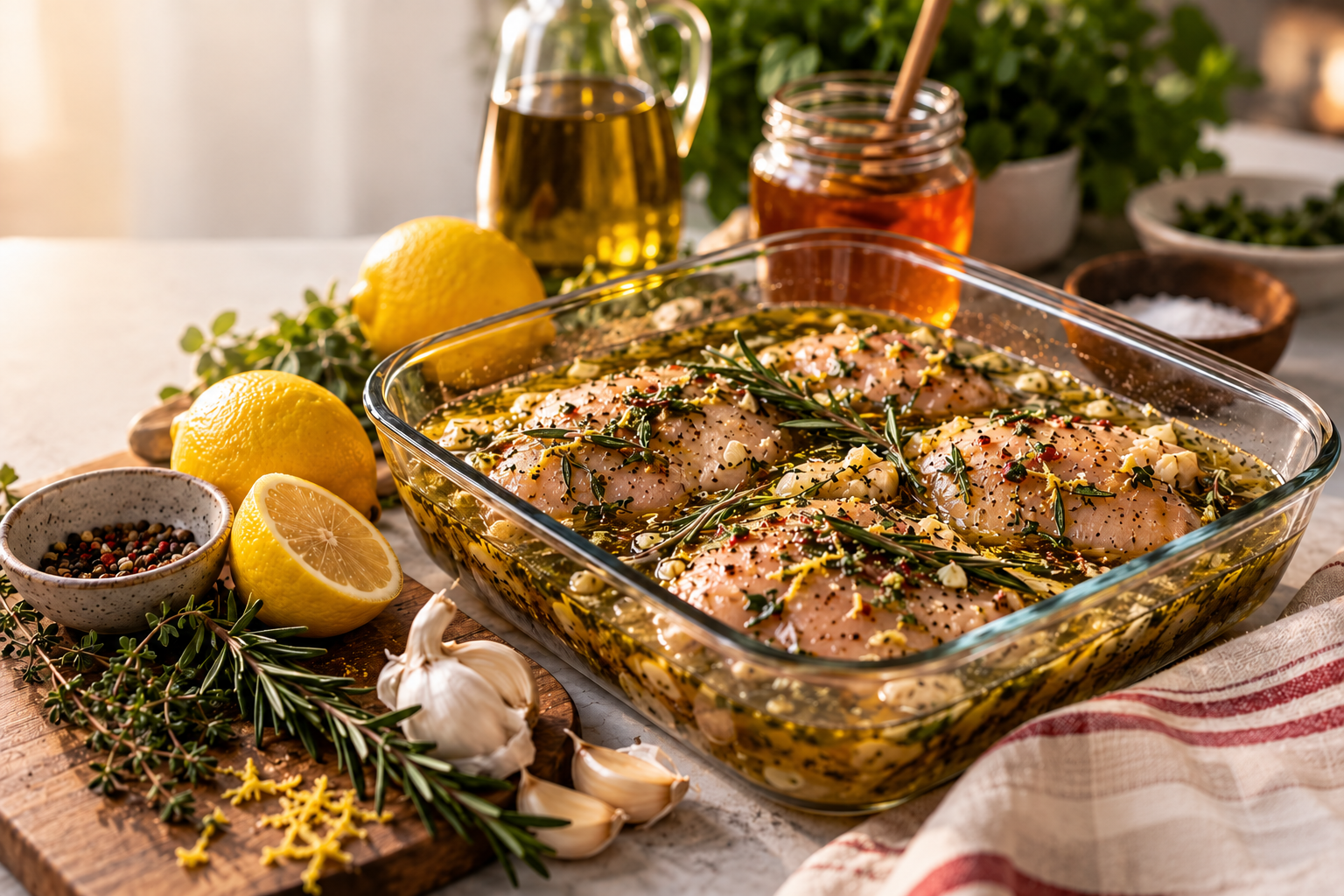
Salt, sugar, and oil are doing most of the heavy lifting. That bottle of 14 herbs? Mostly hanging out on the surface.
We need to talk about marinades.
Because somewhere along the way, we collectively decided that if we put a piece of chicken in a bowl with garlic, herbs, citrus juice, olive oil, seventeen spices, and good intentions, all of that flavor would somehow travel directly to the center of the meat.
And we’ve all done it. You build a marinade that smells so good you’re convinced the chicken is absorbing every drop of flavor overnight. Then you cut into it and realize the inside tastes suspiciously like… chicken.
It sounds reasonable. It smells incredible. And when you pull that bag out of the refrigerator six hours later, you’re convinced something magical has happened.
But your marinade probably didn’t travel nearly as far as you think it did.
And that’s okay.
A good marinade isn’t supposed to perform a culinary home invasion and infiltrate every molecule of your chicken. Its real job is much more interesting.
A properly built marinade can season meat, improve juiciness, affect texture, help create better browning, and build a flavorful exterior.
The trick is understanding which ingredients are actually doing the work.
Salt
Seasons deeper, alters protein structure, and can help meat retain moisture.
Sweet
Adds balance and helps encourage the browning that develops deeper flavor.
Oil
Carries aromatic flavors and helps your seasonings cling to the surface.
Everything else gets to come to the party, but these three are paying the mortgage.
First: What Exactly Is a Marinade?
At its simplest, a marinade is a seasoned liquid used to soak meat, seafood, vegetables, or other foods before cooking.
And marinades are seductive.
You see a recipe containing rosemary, garlic, smoked paprika, lemon zest, ginger, thyme, honey, chile flakes, and olive oil and think:
Oh, this chicken is about to be FLAVORFUL.
Maybe.
But here’s the part recipes don’t always explain.
Most of those flavors aren’t traveling very deeply into a piece of meat.
Large aromatic compounds from herbs, garlic, spices, and oils generally remain concentrated near the surface. That’s not necessarily a problem because the surface is exactly where browning happens — and browned, well-seasoned surfaces are delicious.
Salt, however, is different.
Salt can move farther into meat over time.
That’s one reason a great marinade isn’t just about throwing flavorful ingredients into a bowl. You need to understand what each ingredient is capable of doing.
The Three Ingredients Every Marinade Needs
1. Salt: The Ingredient Actually Going Somewhere
If there’s one ingredient in your marinade that deserves a promotion, it’s salt.
Salt isn’t just there to make meat taste salty. It changes how the proteins in meat behave.
As salt interacts with those proteins, it can alter their structure and help them retain more moisture during cooking. It can also loosen some of the protein structure, contributing to a more tender bite.
And unlike many herbs and spices, salt can actually travel beneath the surface.
That means you’re not simply seasoning the outside of the chicken and hoping nobody notices the middle.
For a concentrated marinade — sometimes called a brinerade, essentially a marinade with some of the seasoning power of a brine — a useful starting point is roughly 1½ teaspoons of salt for every 3 tablespoons of liquid.
That’s intentionally concentrated. You’re not making soup.
Please don’t taste it like soup either and email me afterward.
The amount should still be adjusted depending on whether you’re also using salty ingredients such as soy sauce, tamari, Worcestershire sauce, fish sauce, miso, or certain prepared seasoning blends.
Those count. Your chicken does not care whether the sodium came from a salt shaker or a bottle of soy sauce.
2. Sugar or Honey: Because Browning Is Flavor
Next comes sweetness.
And no, this doesn’t mean every piece of grilled chicken needs to taste like dessert.
Sugar, honey, maple syrup, agave, brown sugar, fruit preserves, and similar ingredients can bring balance and complexity to a marinade.
But they have another important job:
They help encourage browning.
When that marinated meat hits a hot grill, skillet, or oven, browning creates an entirely new layer of flavor.
That’s the difference between “That’s some chicken.” and “Wait. Who made this?”
Sweetness can also balance aggressive ingredients such as vinegar, citrus, mustard, chile, or heavily salted components.
But use some restraint. More sugar does not automatically mean better browning.
Eventually it means burning.
3. Oil: The Flavor Delivery System
Oil gets misunderstood in marinades.
We sometimes imagine that the olive oil carrying garlic, rosemary, pepper, and spices is traveling deep into the meat.
It isn’t.
Meat contains a lot of water, and oil doesn’t readily penetrate that water-rich environment.
So why use it?
Because many aromatic compounds found in herbs, spices, garlic, chiles, and other seasonings dissolve more readily in fat.
Oil helps extract and distribute those flavors. It also helps your seasonings cling to the surface instead of immediately sliding off into the bottom of the bowl.
And remember where we’re trying to create serious flavor? The surface.
That’s where the skillet, grill, broiler, or oven gets involved. That’s where browning happens. That’s where your seasoning turns into crust.
So while the oil isn’t carrying rosemary into the center of your pork chop, it can help make the outside of that pork chop absolutely worth eating.
So… What About Acid?
Now somebody is looking at the screen thinking: Chef, you forgot the lemon juice.
I did not.
Acid can absolutely belong in a marinade.
Citrus juice, vinegar, wine, yogurt, buttermilk, and other acidic ingredients can provide brightness, tang, balance, and changes in surface texture.
But acid isn’t the magical tenderizer we’ve sometimes been taught it is.
In fact, aggressive acidic marinades left too long can create an unpleasant exterior texture while doing relatively little to transform the center.
That’s especially important with delicate proteins like seafood.
Acid is a flavor and texture tool, not a requirement for every marinade.
Use it deliberately.
Stop Trying to Make the Marinade Reach the Center
This is probably the biggest takeaway.
Your marinade doesn’t have to completely penetrate the meat to be successful.
We care about two things: seasoning the interior where possible and building tremendous flavor on the exterior.
Salt helps us with the first.
Oil, aromatics, spices, sweeteners, acids, and cooking technique help us tremendously with the second.
Once you understand that, marinades become much easier to build.
Instead of dumping half the spice cabinet into a zip-top bag, you can ask:
What is each ingredient actually doing?
That’s how chefs think about flavor. Not just what am I adding? but why is it here?
When You’re Building a Marinade
You don’t need to memorize a formula. But it helps to know what you’re reaching for when you start pulling bottles out of the pantry. Think of these as roles rather than rules.
You don’t need all of them every time. The point is knowing why you’re reaching for them. That’s the difference between building a marinade and randomly pouring things into a bowl until it smells expensive.
One More Thing: Before You Cook It…
Take the meat out of the marinade and remove excess surface moisture when your cooking method calls for strong browning.
Notice I said remove the excess.
I did not say wash your chicken.
We’re not starting that argument today.
A dripping-wet piece of meat hitting a skillet can create steam before it develops the crust you’re looking for.
And steam is useful when you’re making dumplings.
It is significantly less exciting when you wanted beautifully seared chicken thighs.
Let the marinade do its job. Then let your cooking method do its job.
Please Don’t Brush Raw Marinade Back Onto Cooked Meat
We also need to address the container of marinade that just spent four hours hanging out with raw chicken.
It is not automatically a finishing sauce.
If you want some of your marinade for brushing, glazing, or serving, reserve a clean portion before adding the raw protein.
Otherwise, a marinade that has contacted raw meat needs to be handled as a raw-meat liquid and properly cooked before it can safely be reused.
That honey-garlic mixture may smell fantastic. Salmonella is famously unconcerned with your flavor profile.
Marinades Aren’t Magic. They’re Technique.
The best cooking gets easier once you stop treating ingredients like magic tricks.
A marinade doesn’t need twenty ingredients.
It needs ingredients with jobs.
Salt can help season deeper and improve moisture retention. Sweeteners bring balance and encourage browning. Oil helps distribute aromatic flavors across the surface. Acids provide brightness and can affect texture. Herbs, spices, garlic, chiles, and aromatics create the personality.
And then heat finishes what the marinade started.
So the next time you’re standing over a bowl with six bottles open, three spice jars missing their lids, and a piece of chicken wondering what it did to deserve this…
Stop.
Start with salt, sweet, and oil.
Then build the flavor you actually want.
Great cooking isn’t about adding more. It’s about understanding what the ingredients are doing.
Meal After Meal.
— Chef David A. Wilmott
Learn the Why Behind Better Cooking
Kitchen Studio goes beyond recipes with chef-led Foundations Labs designed to help you understand seasoning, flavor, technique, and the decisions that make cooking easier — Meal After Meal.
Join Kitchen Studio & Access Meal After Meal Foundations





Follow Us

A chef’s rule worth wearing.
The Taste It Before You Trust It T-Shirt takes one of the kitchen’s simplest lessons and turns it into a statement. Bold typography paired with a refined editorial accent gives the design a clean, modern look that feels just as good outside the kitchen as it does behind the line.
Finished with subtle Forks247 branding on the sleeve, this tee is made for cooks, food lovers, and anyone who knows the final decision should always come down to flavor.
Detail
Premium unisex fit 100% combed and ring-spun cotton Heather colors contain polyester Fabric weight: 4.2 oz./yd² (142 g/m²) Pre-shrunk fabric Side-seamed construction Shoulder-to-shoulder taping Forks247 sleeve branding Designed for everyday comfort
Taste it. Adjust it. Trust yourself.