Your Freezer Isn’t Where Leftovers Go to Die
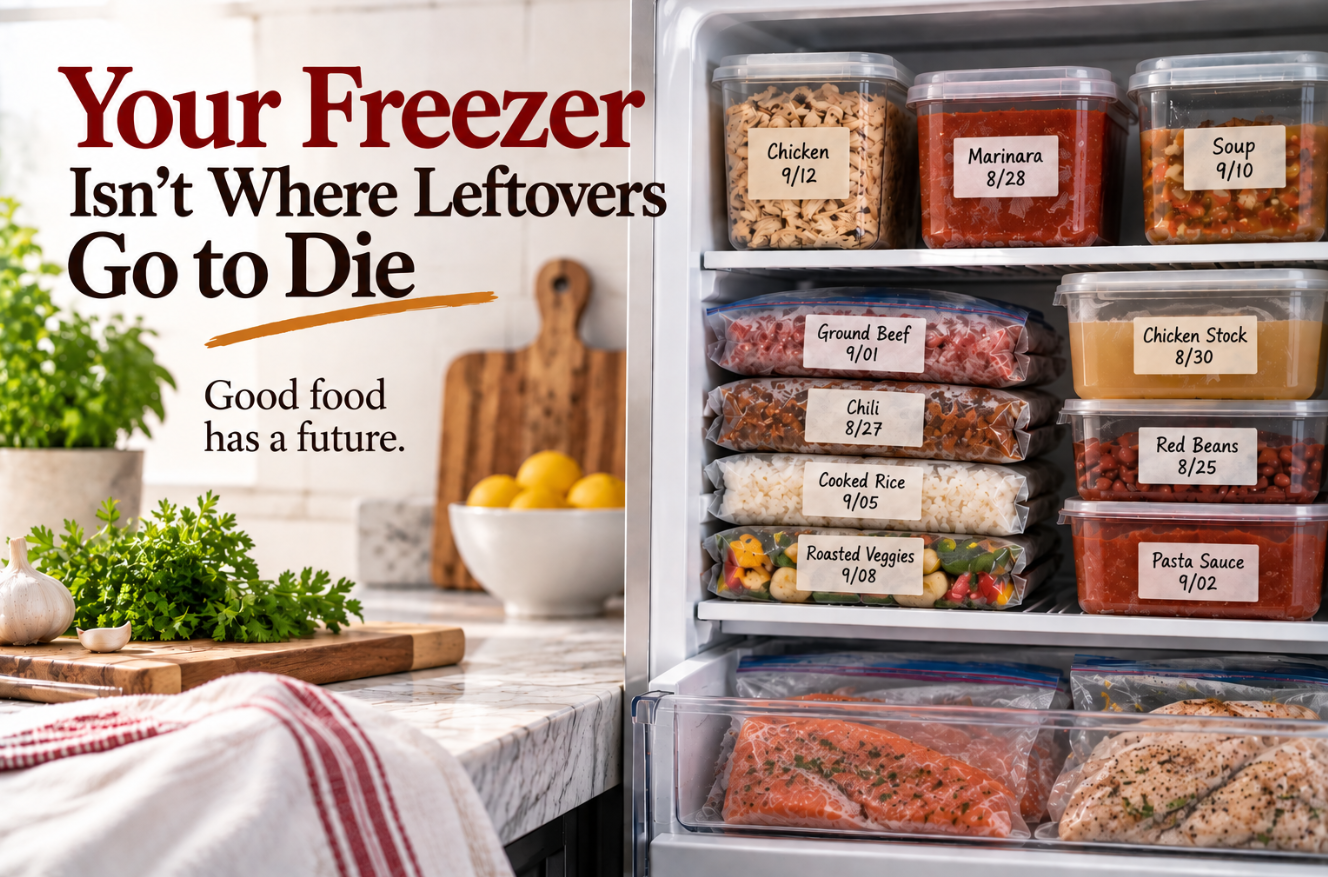
There is a particular kind of optimism that happens when we put leftovers in the freezer. We wrap up half a pan of lasagna, slide it onto a shelf and confidently tell ourselves, “I’ll eat this later.”
Later, apparently, is a very flexible concept.
It could mean next Thursday. It could mean sometime in November. It could mean six months from now when you discover a frozen container that could be chili, spaghetti sauce or evidence.
And somehow the freezer can be completely full while everybody in the house still says, “There’s nothing to eat.”
That’s because there’s a difference between freezing food and simply putting food in the freezer.
Freeze With a Plan
The freezer is one of the most useful tools in the kitchen, but only if the food that goes into it has some chance of coming back out.
Leftover soup? Freeze it. Extra chicken? Absolutely. Made enough chili to feed the neighborhood because apparently portion control left the building? Freeze that too.
But when you freeze something, think about how Future You is actually going to use it.
Future You does not want to pull out a gallon-size block of frozen soup when all Future You wanted was lunch.
Portion Before You Freeze
This is one of the easiest freezer habits to fix.
Instead of freezing everything in one large container, divide it into portions you are realistically going to use.
- Soup in individual or two-serving portions
- Cooked rice in one- or two-cup portions
- Ground meat in meal-size amounts
- Stock in recipe-friendly portions
- Cooked chicken sliced or shredded before freezing
The goal is simple: when you open the freezer, you should be able to pull out what you need without thawing enough food for a family reunion.
Please Label the Container
You think you’re going to remember what’s in that freezer bag.
You are not.
Once chili, tomato sauce, beef stew and red beans have been sitting in the freezer long enough, they all start looking suspiciously similar.
At minimum, write down what it is and the date you froze it. If the amount matters, add that too.
That little label just saved Future You from conducting a frozen-food investigation.
Flatten the Bags
If you’re freezing soups, sauces, cooked ground meat, marinades or anything else that works in a freezer bag, freeze the bag flat.
Once it’s frozen, stand it upright like a file.
Now instead of opening the freezer and being attacked by an avalanche of frozen bags, you can actually see what you have.
It also freezes and thaws more efficiently than one giant frozen lump.
Stop Freezing Food Nobody Wants
This needs to be said.
If nobody wanted the casserole Tuesday night, freezing it Wednesday morning is not going to make it more desirable in October.
Sometimes we freeze food because we don’t want to waste it, which makes sense. But there comes a point when we are no longer preventing waste—we are simply delaying the trip to the trash can.
Freeze food because you actually want to eat it again.
That one decision will instantly improve your freezer.
Rotate What You Already Have
Restaurants live by rotation, and your home freezer can benefit from the same basic idea.
Older food should get used before newer food. You do not need spreadsheets, inventory software or a clipboard hanging next to the refrigerator.
Just stop burying the older food.
Put newer items toward the back and older items where you can see them. Every few weeks, take a quick look at what’s there before making another grocery run.
You may discover two portions of chicken soup, cooked taco meat, marinara, roasted vegetables and enough bread to open a small café.
That is not “nothing to eat.”
That is dinner waiting for somebody to pay attention.
Create a “Use This First” Zone
This is one of the easiest ways to make your freezer work harder for you.
Create one shelf, basket or small section for food that should be used soon.
Call it Use This First, Eat This Week or, if necessary, Please Stop Ignoring This.
Put older leftovers, partially used bags of vegetables, cooked proteins and anything that keeps getting moved around in that area.
When you’re trying to figure out dinner, start there.
Freeze Ingredients, Not Just Leftovers
This is when the freezer becomes a real cooking tool.
Extra chopped onions can be frozen for soups and sauces. Bread can be frozen before it goes stale. Cooked rice can become the beginning of a quick dinner. Tomato paste can be portioned so you aren’t sacrificing another half-used can to the back of the refrigerator.
Cooked chicken can become tacos. Stock can become soup. Sauce can become pasta.
Now the freezer is not storing yesterday’s dinner.
It is helping you make tomorrow’s.
Freezer Burn Is Usually Telling You Something
Those dry, pale patches on frozen food usually happen because the food has been exposed to air.
Freezer burn does not automatically mean the food is unsafe, but it can absolutely hurt the texture and flavor.
Use freezer-safe containers, remove as much air as you reasonably can from bags and wrap foods properly before freezing.
The freezer is cold.
It is not magic.
Give Yourself Something Worth Finding
Think about those nights when you absolutely do not feel like cooking.
You open the refrigerator.
Nothing.
You close it.
Then, for reasons nobody can explain, you open it again fourteen seconds later like something new might have appeared.
Still nothing.
But imagine opening the freezer and finding a portion of homemade soup, taco meat, marinara, cooked rice or already-seasoned chicken ready to thaw.
That is when you realize what a well-used freezer can actually do.
Your Freezer Needs a Purpose
Your freezer is not the kitchen junk drawer.
It is not where leftovers go because you are emotionally unprepared to throw them away.
And it definitely should not become a museum dedicated to meals you vaguely remember cooking sometime earlier this year.
Freeze with intention. Portion properly. Label it. Date it. Rotate what you have. And most importantly, actually eat it.
The goal is not to see how long you can keep something frozen.
The goal is to make cooking tomorrow easier because of something smart you did today.
And if there are currently three unidentified containers hiding in the back of your freezer?
No judgment.
But tonight might be a good night to investigate.
Proceed carefully.
COOK SMARTER. WASTE LESS.
Make Your Kitchen Work for You
Better cooking is not just about recipes. It is knowing how to plan, prep, store, season and turn what you already have into something worth eating.
Inside Forks247 Kitchen Studio, Chef David breaks those skills down through practical culinary labs designed to help you cook with more confidence.
Join Kitchen Studio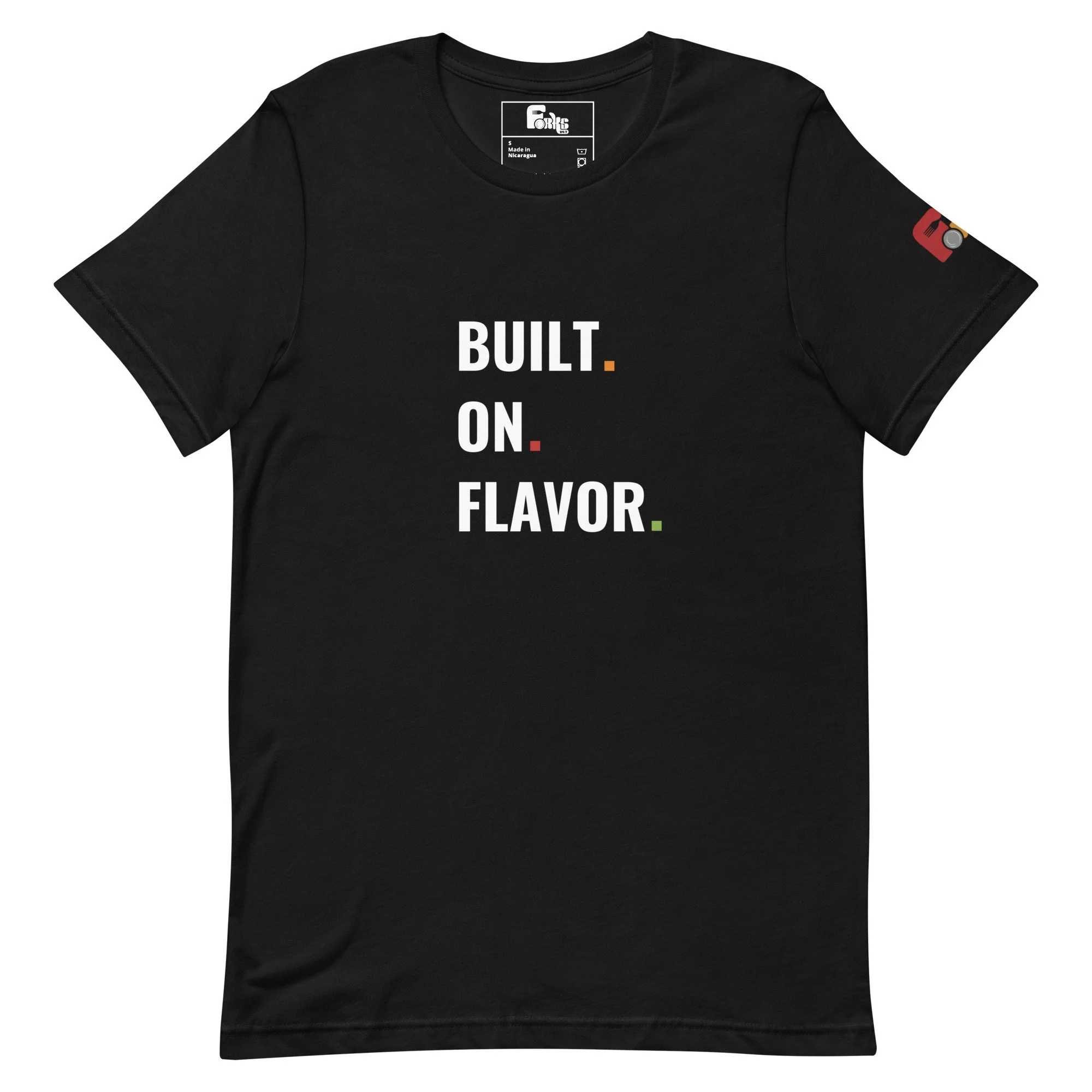



Follow Us

A chef’s rule worth wearing.
The Taste It Before You Trust It T-Shirt takes one of the kitchen’s simplest lessons and turns it into a statement. Bold typography paired with a refined editorial accent gives the design a clean, modern look that feels just as good outside the kitchen as it does behind the line.
Finished with subtle Forks247 branding on the sleeve, this tee is made for cooks, food lovers, and anyone who knows the final decision should always come down to flavor.
Detail
Premium unisex fit 100% combed and ring-spun cotton Heather colors contain polyester Fabric weight: 4.2 oz./yd² (142 g/m²) Pre-shrunk fabric Side-seamed construction Shoulder-to-shoulder taping Forks247 sleeve branding Designed for everyday comfort
Taste it. Adjust it. Trust yourself.