Your Food Is Seasoned. So Why Does It Still Taste Flat?
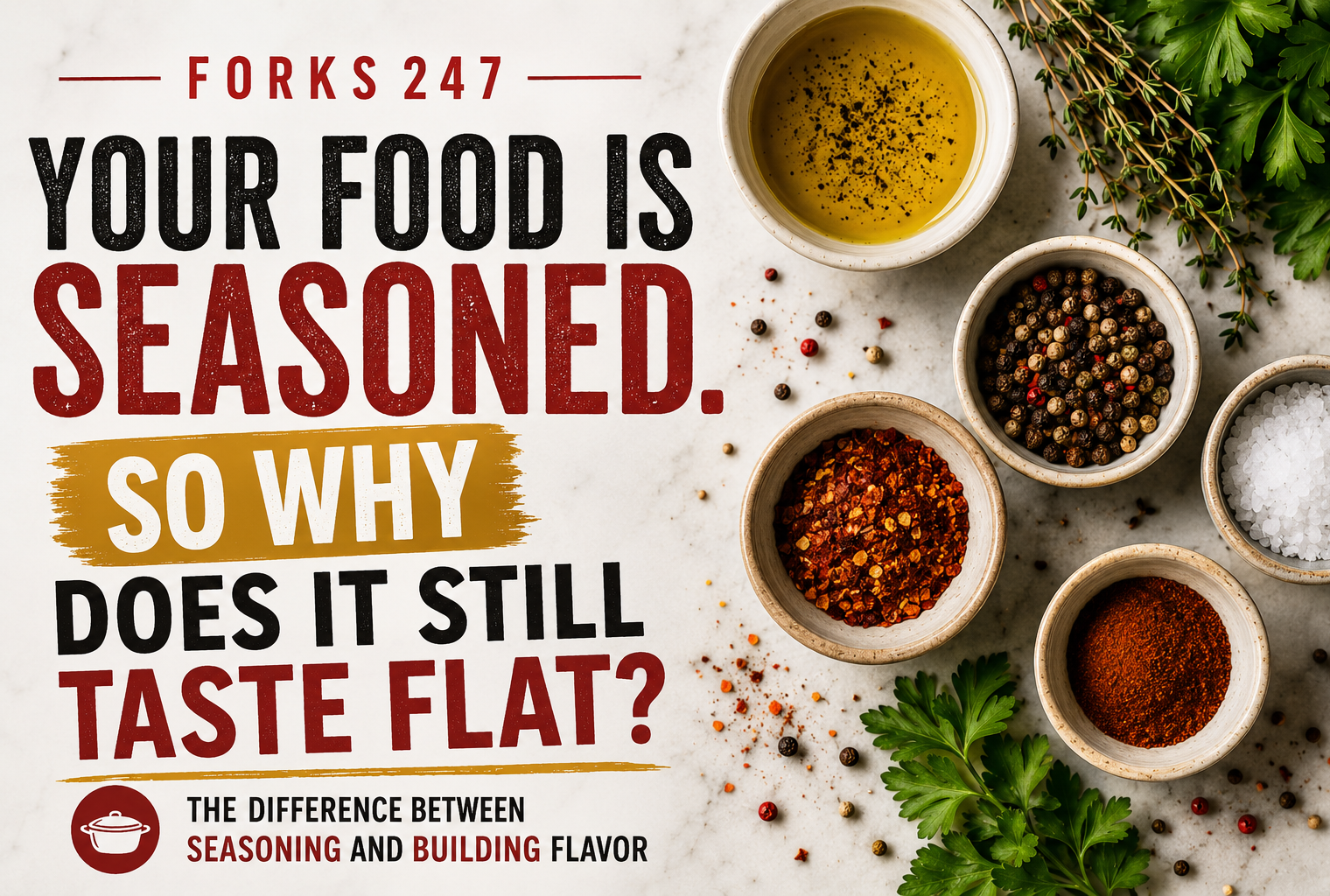
The difference between seasoning food and actually building flavor.
You've seasoned the chicken. There's garlic in the pan. You added the herbs. You measured the spices—or, if you're like me, you measured them with your heart. There's salt. There's pepper.
You taste it, and somehow... it's fine.
Not bad. Not underseasoned. Not something you need to throw away and order pizza over. Just...fine.
And fine might be one of the most frustrating flavors in cooking. Because now you're standing over the stove trying to figure out what to add next. More salt? More garlic? Another shake of seasoning? Hot sauce? Parmesan? That mystery bottle in the refrigerator door?
Seasoning Is Part of Flavor. It Isn't All of It.
We tend to use the words seasoning and flavor almost interchangeably. They're related, obviously. But when I'm cooking, I think about them differently.
Building flavor is what I'm doing with it.
Salt can season a piece of chicken. But getting a beautiful sear on that chicken creates another layer of flavor.
Paprika can season vegetables. Letting that paprika warm briefly in oil changes what you smell and taste.
Onions add flavor. Giving them enough time in the pan to soften, sweeten and develop some color creates a completely different result than tossing them in for two minutes and moving on.
Lemon juice adds acidity. But adding it at the right moment can wake up an entire dish.
A flavorful dish isn't necessarily one with the longest ingredient list. It's usually one where somebody gave those ingredients a chance to do their jobs.
Sometimes the Problem Isn't What's Missing
When something tastes flat, our first instinct is usually: What should I add?
Sometimes that's the right question. Maybe it does need salt. Maybe it needs acid. Maybe a little sweetness would balance the bitterness.
But sometimes nothing is actually missing. The ingredients just haven't been developed.
Think about garlic. Raw garlic has one personality. Garlic gently cooked in olive oil has another. Deeply roasted garlic practically becomes a different ingredient.
Same garlic. Different technique.
Browning Is Flavor
If you've ever heard a chef tell you not to overcrowd a pan, we're not just being difficult.
Okay, sometimes we're being difficult.
But not about this.
When meat or vegetables hit a properly heated pan, browning begins creating flavors that weren't there before.
That's why pale chicken and beautifully seared chicken can have identical seasoning and taste completely different.
The other was seasoned and developed.
If you overcrowd the pan, moisture has nowhere to go. Instead of browning, your food starts steaming.
Give your food some room. Let the pan stay hot. And perhaps most importantly: stop touching it every seven seconds.
Sometimes dinner needs you to leave it alone.
Let Your Spices Wake Up
Spices don't always need to go straight from the jar into a pot full of liquid. Many spices benefit from briefly meeting warm fat first.
Cumin. Coriander. Paprika. Chili powder. Turmeric. Curry spices.
When they hit warm oil or butter, their aromatic compounds begin opening up and spreading through the fat. You'll usually smell the difference before you taste it.
That's called blooming your spices.
Once you understand little techniques like this, you begin realizing that better flavor isn't always about buying another seasoning blend. Sometimes you just need to treat the seasoning you already own differently.
Build Flavor in Layers
This is probably the biggest difference between simply seasoning food and intentionally building flavor.
Great flavor usually doesn't happen in one dramatic moment at the end. It develops.
Maybe you season your protein before it hits the pan. Then you sear it and create browning. You remove it and sauté onions or shallots in the same pan. Garlic goes in. Maybe spices bloom for a few seconds.
Then you deglaze the pan and pull all those browned bits from the bottom into your sauce. The sauce reduces. The protein goes back in.
You taste. Then maybe the dish gets a final adjustment of salt, a squeeze of lemon, fresh herbs or a small amount of butter.
That's the point. They all are.
Don't Forget About Acid
If there's one thing I see home cooks overlook when a dish tastes flat, it's acid.
Not everything needs more salt. Sometimes it needs contrast.
A squeeze of lemon. A splash of vinegar. A spoonful of pickled vegetables. A little tomato. Something bright enough to make the other flavors stand up.
You've probably experienced this without realizing exactly what happened. You taste a sauce and think, It's almost there.
You add a little lemon. Taste again.
The lemon didn't necessarily make the dish taste like lemon. It created balance.
Acid isn't always supposed to announce itself. Sometimes its job is simply to turn the lights on.
Fat Has a Job Too
Fat gets reduced to "richness" a lot, but it's doing more than making things taste luxurious.
Fat carries flavor.
It's one reason blooming spices works. Many of the compounds responsible for aroma and flavor dissolve beautifully into fat, helping distribute those flavors throughout a dish.
Olive oil, butter, cream, coconut milk and even the natural fat rendered from meat can all become part of the flavor-building process.
It's also “What are those ingredients doing?”
More Isn't Always the Answer
This is where people can get into trouble. Something tastes flat, so we add seasoning. Still flat. More seasoning. Still not right. More salt. Garlic powder. Hot sauce. A little cheese.
Now we've gone from flat to confused. There are seventeen flavors happening and somehow none of them know each other.
Before You Add More Seasoning...
Run through these checks first.
Sometimes the answer isn't more. It might be better browning, a little acidity, more reduction, a hotter pan, a few minutes longer for the onions, a touch of fat, or simply giving the food enough time to develop.
That's why learning technique matters. Technique gives you more ways to fix a dish than reaching for another bottle.
Taste Throughout Cooking
I'm always going to tell you to taste your food. But tasting isn't only about deciding whether something needs salt.
You're checking how the dish is developing.
Tasting Should Be Part of the Cooking
Did the onions get sweet enough? Is the sauce still watery? Did the spices open up? Is the richness becoming too heavy? Does it need brightness? Did that last addition actually make things better?
Cooking becomes much easier when tasting stops being the final exam and becomes part of the conversation.
Taste. Adjust. Cook. Taste again.
Eventually you begin recognizing what the food needs before you even consciously think about it.
Want to understand what's really happening in the pan?
Inside Meal After Meal: Foundations, Kitchen Studio breaks cooking down into the skills that make recipes work—seasoning, salt, acid, fat, heat, browning, texture and the small techniques that help you build flavor with confidence.
Explore Kitchen Studio → From Forks247 • Learn the technique. Build the instinct.The Goal Isn't to Stop Using Recipes
Recipes are valuable. I write plenty of them.
The goal isn't to throw away your recipes and start dramatically improvising dinner every night.
The goal is to understand enough about cooking that the recipe stops being the only thing standing between you and a good meal.
That's a big part of what Meal After Meal means to me.
Learn what salt does. Understand acid. Know what happens when spices meet fat. Learn why browning matters. Understand when something needs sweetness, heat, texture or time.
Then when you taste something and think, This is missing something, you have somewhere to go besides the spice cabinet.
You start troubleshooting. You start adjusting. Eventually, you start trusting yourself.
And that's when cooking becomes a lot more interesting.
So the next time your food is seasoned but somehow still tastes flat, don't immediately ask:
“What else can I add?”
Ask instead: “What flavor haven't I developed yet?”
That one question can completely change the way you cook.
Build flavor. Trust your palate. Meal after meal.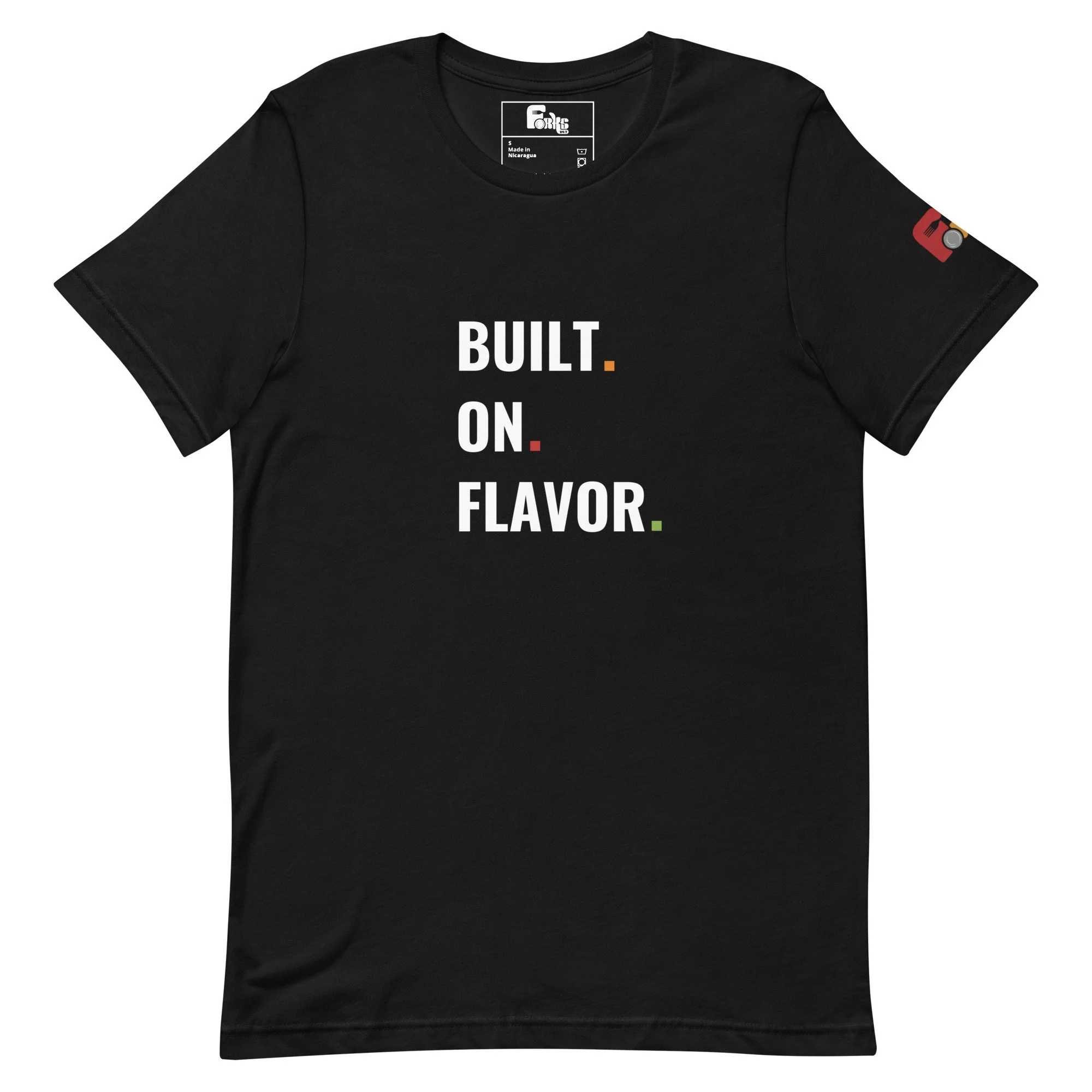




Follow Us

A chef’s rule worth wearing.
The Taste It Before You Trust It T-Shirt takes one of the kitchen’s simplest lessons and turns it into a statement. Bold typography paired with a refined editorial accent gives the design a clean, modern look that feels just as good outside the kitchen as it does behind the line.
Finished with subtle Forks247 branding on the sleeve, this tee is made for cooks, food lovers, and anyone who knows the final decision should always come down to flavor.
Detail
Premium unisex fit 100% combed and ring-spun cotton Heather colors contain polyester Fabric weight: 4.2 oz./yd² (142 g/m²) Pre-shrunk fabric Side-seamed construction Shoulder-to-shoulder taping Forks247 sleeve branding Designed for everyday comfort
Taste it. Adjust it. Trust yourself.