Stop Overcomplicating Dinner
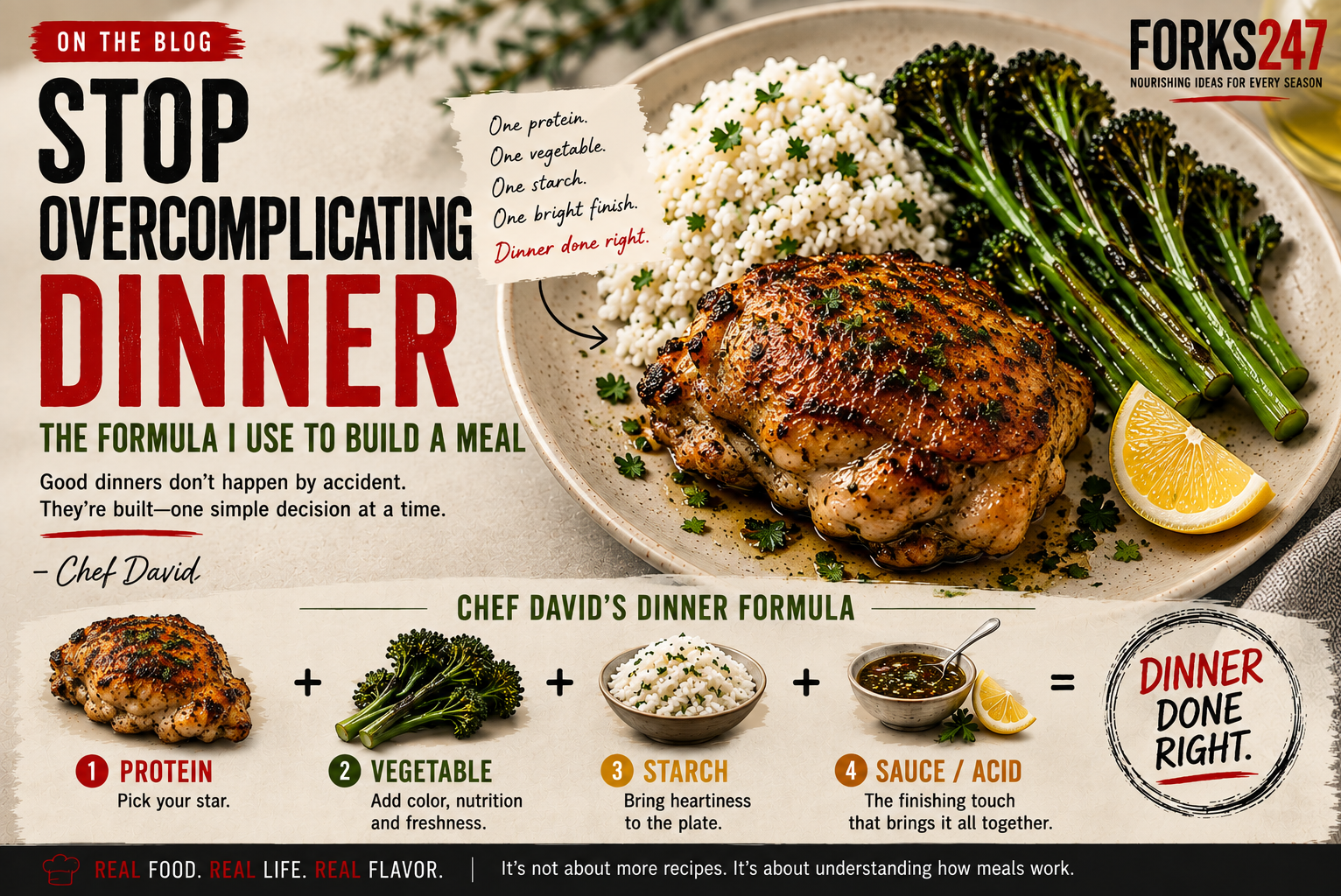
The formula I use to build a meal when I don't know what to cook — because dinner should not require seventeen browser tabs and a minor identity crisis.
Somewhere along the way, dinner became a full-time job. We scroll through recipes, save videos, open the refrigerator, stare inside like the answer is going to reveal itself, close it — then come back five minutes later as if something new has appeared.
The funny thing is, most of the time the problem isn't that we don't know how to cook.
The problem is that we're trying to invent an entire meal from scratch every single night.
That's exhausting.
Dinner does not need that kind of pressure.
In professional kitchens, you learn pretty quickly that a good meal is usually less about creating something completely new and more about understanding how the pieces work together.
At home, I use the same idea.
The formula
That's it.
Not revolutionary. Not complicated. And definitely not a reason to open seventeen browser tabs.
Once you stop asking, “What dish should I make?” and start asking, “What components do I need?”, dinner gets a whole lot easier.
Here's what that looks like on a plate
Greek Chicken Dinner
One protein. One vegetable. One starch. One bright finish.
Start with the protein
Pick your protein first.
Chicken. Salmon. Shrimp. Pork. Steak. Beans. Tofu.
Whatever you're in the mood for.
For this meal, I'm starting with Greek Chicken Thighs seasoned with lemon, garlic, oregano and herbs.
Once I know that, the rest of the meal starts making sense.
The flavors are already pointing me in a direction.
Stop asking, “What should I cook?” Ask, “What goes with this?”
That is a much easier question.
Then add the vegetable
Next, add something green, roasted, sautéed, grilled or fresh.
For this meal, I'm going with broccolini.
It roasts beautifully, picks up a little char, and works perfectly with lemon and herbs.
Yes, this is the part where I remind you to eat your vegetables. You knew it was coming.
You can put all the chicken and rice on the plate you want, but at some point something green needs to show up.
We are adults.
Mostly.
Now give the meal some substance
Choose your starch.
Rice. Potatoes. Pasta. Polenta. Grits. Couscous.
Pick the one that works with the flavors you've already built.
For this meal, it's Thyme Basmati Rice.
Basmati is light and aromatic, and it gives all those lemony, garlicky chicken juices somewhere to go.
The thyme connects the rice back to the chicken without making every component taste exactly the same.
That's the goal.
You want the meal to feel connected — not cloned.
If you want rice and potatoes, have rice and potatoes. I am not coming to your house to confiscate either one. Just don't use the second starch as an excuse to evict the vegetables from the plate.
Two starches? Perfectly fine.
No vegetables? Now we need to talk.
Finish with something bright
This is the part people often skip.
The chicken is cooked. The rice is done. The broccolini is roasted.
Everything looks good.
But the plate still needs that final little something.
For this meal, it's fresh lemon, herbs and those flavorful pan juices from the chicken.
The acid and freshness wake everything up.
Sometimes the difference between a meal that tastes fine and one that tastes finished is just a squeeze of lemon.
Nothing fancy.
Just intentional.
Let one decision make the next one
This is really the whole point.
You don't need to reinvent dinner every night.
Let one decision lead to the next.
Done.
Dinner.
No spreadsheet required.
One formula. A lot of dinners.
Keep the structure and change the flavors.
Same framework.
Completely different meals.
That's why learning how to build dinner is more useful than constantly searching for a new recipe.
Recipes tell you what to make tonight. Understanding the formula helps you cook tomorrow too.
Tonight, keep it simple
If you're staring into the refrigerator wondering what to make, stop trying to come up with the perfect dish.
Choose a protein.
Choose a vegetable.
Choose a starch.
Then add something bright, saucy or acidic to bring everything together.
That's dinner.
And if you decide you want a second starch?
Go ahead.
Live your life.
Just keep the broccolini.
That's cooking — meal after meal.
Make the Greek Chicken Dinner
Greek Chicken Thighs with Thyme Basmati Rice & Broccolini gives you the full framework on one plate: protein, vegetable, starch and a bright lemon-herb finish.
Explore Forks247 Recipes →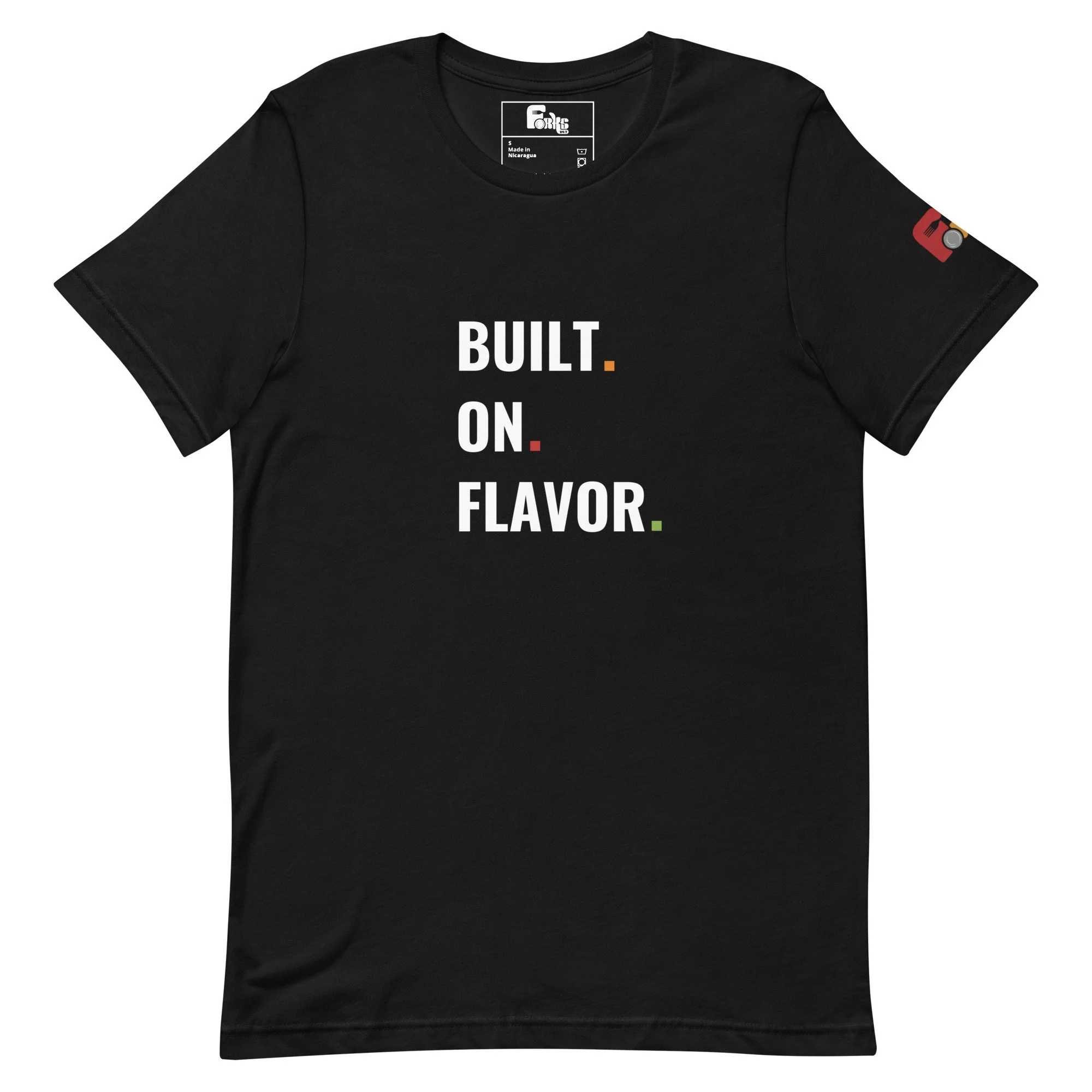





Follow Us

A chef’s rule worth wearing.
The Taste It Before You Trust It T-Shirt takes one of the kitchen’s simplest lessons and turns it into a statement. Bold typography paired with a refined editorial accent gives the design a clean, modern look that feels just as good outside the kitchen as it does behind the line.
Finished with subtle Forks247 branding on the sleeve, this tee is made for cooks, food lovers, and anyone who knows the final decision should always come down to flavor.
Detail
Premium unisex fit 100% combed and ring-spun cotton Heather colors contain polyester Fabric weight: 4.2 oz./yd² (142 g/m²) Pre-shrunk fabric Side-seamed construction Shoulder-to-shoulder taping Forks247 sleeve branding Designed for everyday comfort
Taste it. Adjust it. Trust yourself.