Why Deciding What to Cook Is Sometimes Harder Than Cooking
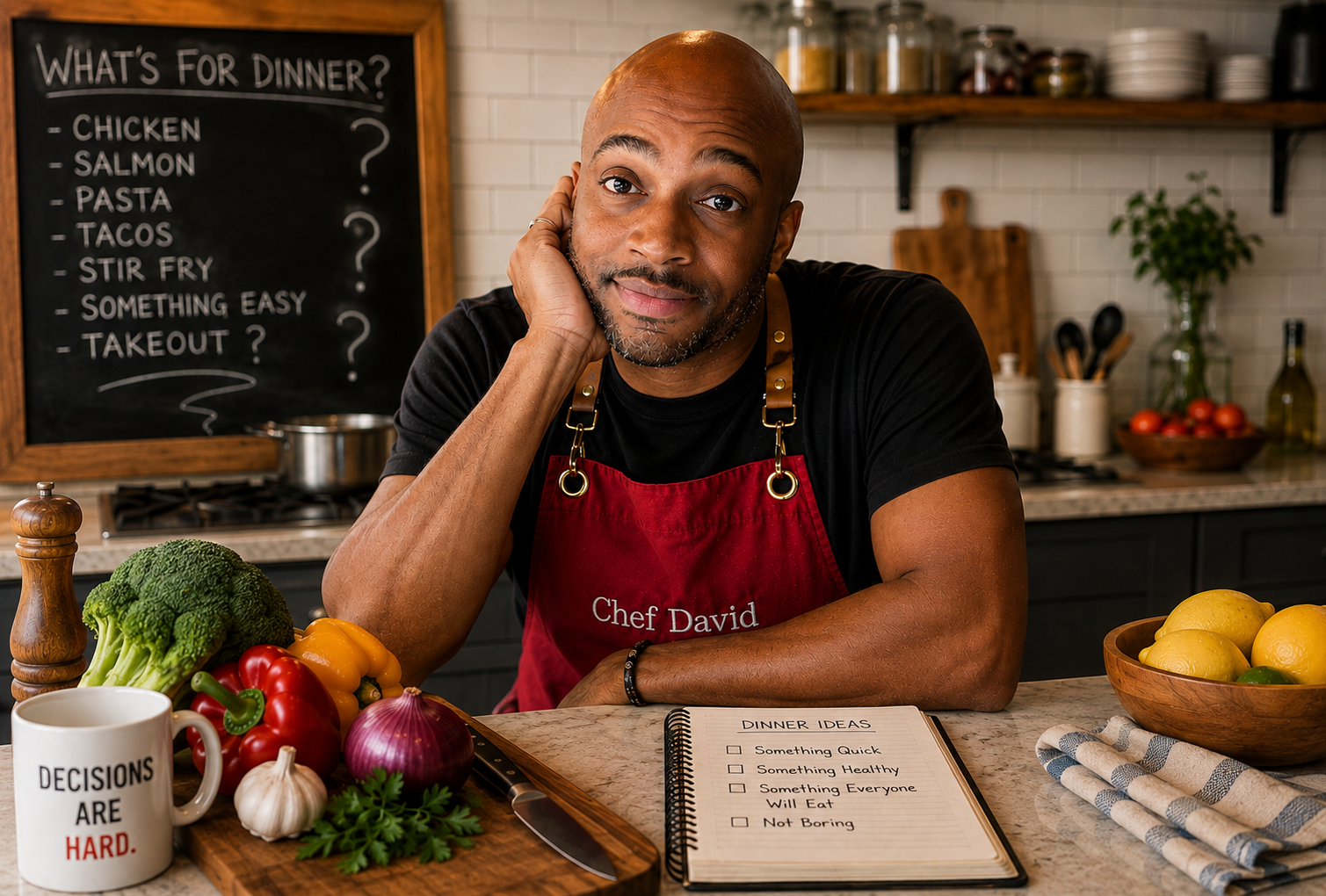
Sometimes dinner isn’t difficult because you don’t know how to cook. It’s difficult because your brain has already made enough decisions for one day.
There is a very specific kind of exhaustion that happens when someone asks, “What are we eating tonight?” Not how are we going to cook it. Not whether there’s food in the house. Just… what are we eating?
Suddenly, you’re standing in front of a refrigerator full of perfectly respectable ingredients like you’ve never seen food before. There’s chicken, broccoli, half an onion wrapped in foil that you have absolutely no memory of putting there, and somehow three different mustards.
And despite all evidence to the contrary, your brain reaches the only reasonable conclusion: we have nothing to eat.
Your Refrigerator Isn’t Empty. Your Brain Is Tired.
I’ve spent enough time in professional kitchens to know that cooking gets much easier when someone has already answered the big question.
In a restaurant, you don’t walk into the kitchen at 5:30 and say, “Okay everybody, what are we feeling tonight?”
Could you imagine? “Maybe salmon?” “I don’t know. We had salmon Tuesday.” “What about pasta?” Meanwhile, there are 47 people sitting in the dining room wondering why nobody has brought them food.
Restaurants work because decisions have already been made. There’s a menu. There’s prep. There are ingredients with a purpose.
At home, we often expect ourselves to make all those decisions at the exact moment we’re least interested in making them. You’ve worked all day, answered emails, driven somewhere, handled responsibilities and made approximately 900 tiny decisions.
We’ve Made Dinner More Complicated Than It Needs to Be
Somewhere along the way, cooking dinner became a nightly creativity competition. We scroll recipes, save videos, screenshot dishes and build Pinterest boards full of meals we’ve apparently been planning to cook since 2019.
Instead of making dinner easier, all that inspiration can create the opposite problem: too many choices.
Do I want Mediterranean? Something spicy? Should I use the chicken? Maybe salmon. Didn’t I just have salmon? What about that recipe I saved? Where did I save it—Instagram, Facebook, TikTok, email?
Not because we couldn’t cook. Because we exhausted ourselves trying to decide.
You Don’t Need 100 Dinner Ideas
You need about 10 really good ones.
That’s something I wish more home cooks understood. You don’t need a completely different dinner every night of the month.
Think about restaurants. A great restaurant doesn’t reinvent its entire menu every Tuesday afternoon because somebody might get bored. It develops dishes that work, repeats them, improves them, changes the vegetables, changes the sauce and adjusts with the seasons.
The foundation stays recognizable.
Home cooking can work the same way. Maybe you know how to make a really good roasted chicken. Great. One week it’s roasted chicken with potatoes and vegetables. Next time, slice it over a big salad. Another night, turn it into tacos. Add rice and a bright sauce. Shred what’s left and make sandwiches.
Now we’re cooking smarter instead of auditioning for a cooking competition every night.
Start Thinking in Foundations, Not Recipes
This is one of the ideas behind Meal After Meal that I’ve become more passionate about the longer I’ve cooked.
Recipes are useful. But knowing how food works is better.
If you understand how to roast something properly, build a sauce, balance salt and acid, cook rice without negotiating with it, and turn leftovers into something that doesn’t feel like leftovers, you suddenly need fewer recipes.
You start looking at ingredients differently. Chicken, broccoli and rice stops being boring. It becomes a foundation.
Tonight it might be lemon, garlic and herbs. Next time, smoky chipotle. Another night, soy, ginger and sesame. Same basic ingredients, completely different direction.
Learn the “why” behind better cooking.
Kitchen Studio is where we take these ideas further. Explore Meal After Meal: Foundations and learn how seasoning, salt, acid, heat, texture and technique work together—so you can cook with more confidence without depending on a recipe every night.
Explore Kitchen Studio → From Forks247 • Built for curious home cooksGive Yourself Some Defaults
There are certain things I believe every kitchen should have: salt, garlic, a decent knife, and a few meals you can make without conducting research first.
Call them your defaults—your “I don’t feel like thinking about this” meals.
A Few Reliable Dinner Defaults
- Roasted chicken, vegetables and rice
- Pasta with a quick pan sauce
- Salmon with roasted vegetables
- Tacos
- A really good salad with protein
- Stir-fry
- Soup and a sandwich
They don’t have to be impressive. They have to work.
And default meals aren’t boring unless you refuse to change anything about them. Change the seasoning. Change the sauce. Change the vegetable. Change how you serve it.
One reliable meal can become five different dinners without requiring five completely different grocery lists. That’s how you build a kitchen that actually supports your life.
And Please Stop Waiting Until You’re Hungry
At 2 p.m., you might reasonably think, “I’ll make the salmon tonight with rice and roasted vegetables.”
At 7:04 p.m., when you haven’t eaten since lunch, you’re standing over the sink eating shredded cheese directly from the bag while DoorDash loads.
The decision needs to happen before the desperation.
You don’t necessarily need a beautifully organized seven-day meal plan with matching containers and handwritten labels. If that’s your thing, wonderful. For the rest of us, knowing the next two or three meals is often enough.
Maybe You Don’t Hate Cooking
If cooking dinner constantly feels exhausting, maybe you don’t actually hate cooking. Maybe you hate starting from zero every night.
There’s a difference.
When you have a handful of reliable dishes, ingredients you understand and a few techniques you trust, cooking becomes less of a nightly decision and more of a rhythm.
You open the refrigerator and instead of seeing random ingredients, you start seeing possibilities. That leftover roasted chicken? Lunch tomorrow. Those vegetables? Roast them. That half onion wrapped in foil? We finally found a job for it.
And those three mustards?
But we’ll save that for another day.
Find the meals that work. Learn the techniques behind them. Change the flavors when you want something different. And stop believing that cooking well means reinventing dinner every single night.
Sometimes the best answer to “What’s for dinner?” is something you’ve made before— just make it a little better this time.
Meal after meal.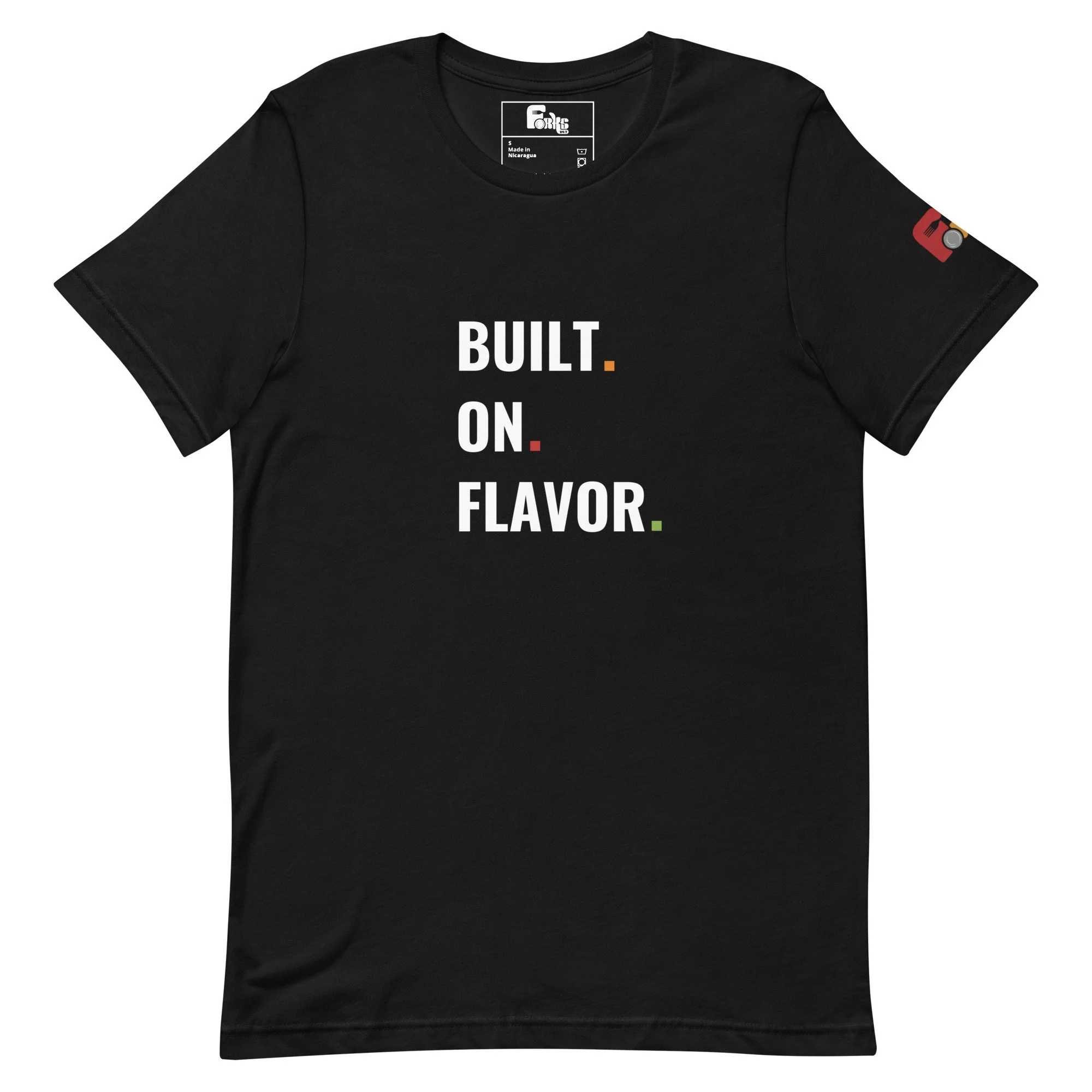




Follow Us

A chef’s rule worth wearing.
The Taste It Before You Trust It T-Shirt takes one of the kitchen’s simplest lessons and turns it into a statement. Bold typography paired with a refined editorial accent gives the design a clean, modern look that feels just as good outside the kitchen as it does behind the line.
Finished with subtle Forks247 branding on the sleeve, this tee is made for cooks, food lovers, and anyone who knows the final decision should always come down to flavor.
Detail
Premium unisex fit 100% combed and ring-spun cotton Heather colors contain polyester Fabric weight: 4.2 oz./yd² (142 g/m²) Pre-shrunk fabric Side-seamed construction Shoulder-to-shoulder taping Forks247 sleeve branding Designed for everyday comfort
Taste it. Adjust it. Trust yourself.