Why Does Rice Feel So Easy Until It Goes Wrong?
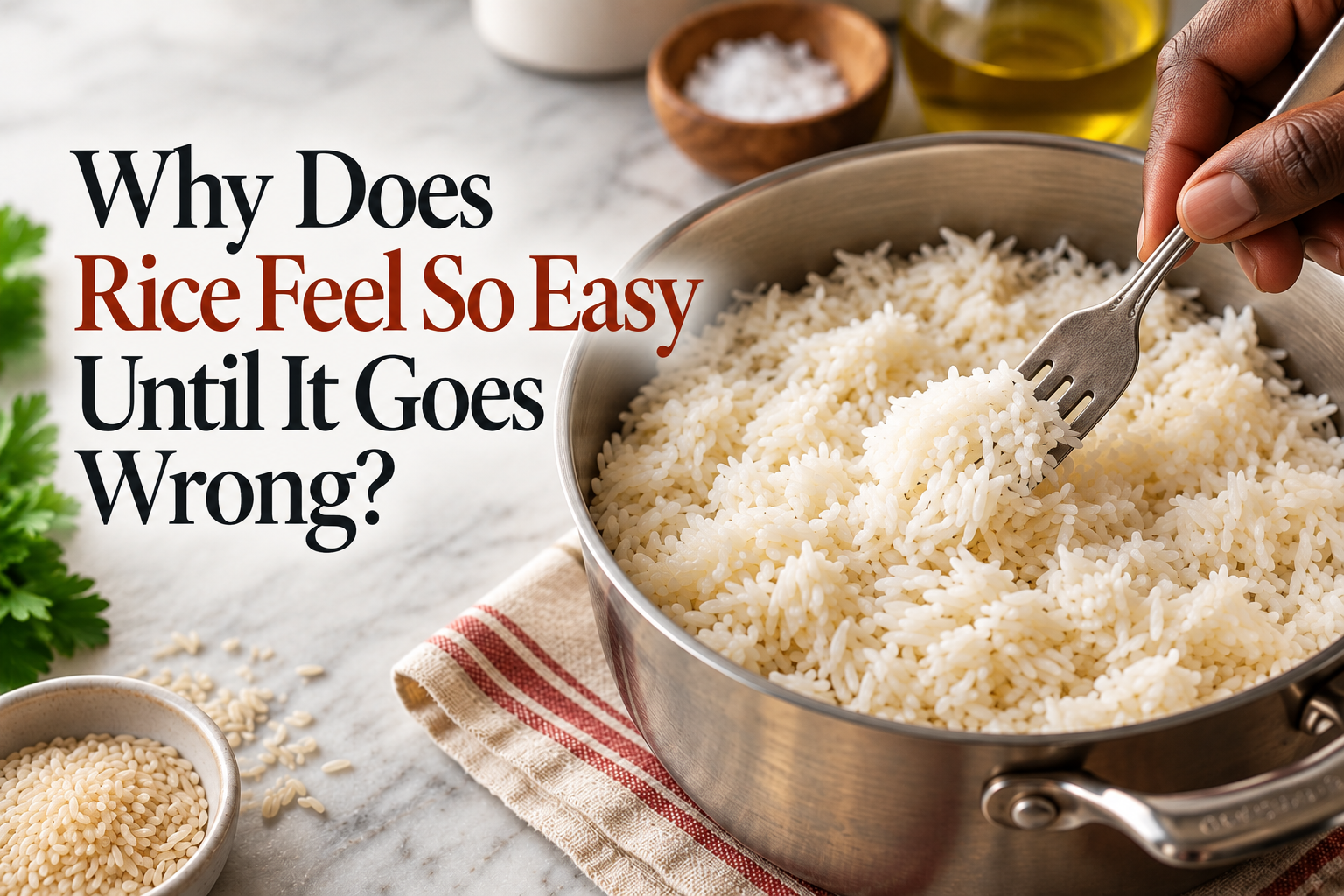
Rice feels like it should be one of the easiest things in the kitchen. Grain. Water. Heat. So why can one pot come out perfectly fluffy while the next is crunchy, sticky, wet, or burned?
Rice is one of those foods that can make you question your cooking skills for absolutely no reason.
It's rice.
Grain. Water. Heat.
That should be the whole conversation.
And yet somehow you lift the lid and find rice that's crunchy in the middle, wet at the bottom, stuck to the pot, clumped together, or so soft you're halfway to making porridge.
The frustrating part is that you probably didn't do anything dramatically wrong. Rice usually goes wrong because of a few small decisions that happen before, during, and immediately after cooking.
Once you understand those decisions, rice becomes a lot more predictable.
First, Stop Treating Every Rice the Same
One of the easiest mistakes to make is assuming rice is rice.
It isn't.
Long-grain white rice, jasmine, basmati, brown rice, arborio, and short-grain rice don't all behave the same way. They absorb water differently, release different amounts of starch, and require different cooking times.
That's why one universal ratio doesn't work for everything.
If you normally cook jasmine rice and suddenly switch to brown rice using the exact same method, the problem may not be your cooking.
You changed the ingredient without changing the technique.
Start with the type of rice you're actually cooking, then choose the appropriate amount of liquid and cooking time.
Your Ratio Matters—But It's Not the Only Thing That Matters
You've probably heard some version of: one cup of rice, two cups of water.
It's easy to remember.
It's also not a universal rule.
Different varieties need different amounts of liquid, and your cooking vessel matters too. A wide pot can lose moisture differently than a narrow saucepan. A loose-fitting lid allows more steam to escape.
Measuring correctly matters, but understanding what's happening inside the pot is even more useful.
You're trying to give the rice enough liquid to hydrate completely without leaving so much behind that the finished grains are swimming.
Rinsing Isn't Just Something Recipes Tell You to Do
When you rinse rice, you'll often notice that the water starts cloudy.
That's surface starch washing away.
For varieties where you want distinct, fluffy grains, rinsing can help reduce some of the excess starch that encourages the grains to stick together.
Put the rice in a bowl or fine-mesh strainer and rinse it with cool water until the water becomes noticeably clearer.
You don't have to obsess over perfectly transparent water. The goal is simply to remove some of that loose surface starch before cooking.
Once the Lid Goes On, Leave It Alone
This is where curiosity starts ruining dinner.
You bring everything to the proper temperature, cover the pot...
And three minutes later:
Let me see what's happening in there.
Every time you unnecessarily lift the lid, steam escapes.
That steam is part of the cooking environment you've created. Rice cooks through a combination of absorbing liquid and steaming. Constantly opening the pot interrupts that environment and makes the process less predictable.
The same applies to stirring.
Unless you're deliberately making something like risotto, rice generally doesn't need constant attention.
Sometimes better cooking means knowing when to stop touching the food.
Heat Control Is Where Things Usually Fall Apart
Rice doesn't need aggressive heat for the entire cooking process.
Once the liquid reaches the appropriate initial temperature, you're generally moving into a gentler cooking phase.
Leave the burner too high and the bottom can scorch while the rice above it is still trying to hydrate.
Go too low too early and you may struggle to maintain the cooking environment you need.
This is why rice isn't really a “throw it in a pot and forget it” food.
It's simple food that rewards heat control.
And learning heat control here translates to almost everything else you cook.
The Rest Is Part of the Cooking
The timer goes off.
You're hungry.
Do not immediately attack the pot with a fork.
Let the rice rest.
With the heat off and the lid still on, that short resting period allows the remaining moisture and steam to redistribute through the rice.
Then uncover it and gently fluff the grains.
That little pause can be the difference between rice that feels wet and uneven and rice that feels finished.
We tend to think cooking stops the second the burner turns off.
It doesn't.
Residual heat is still doing work.
If Your Rice Keeps Going Wrong, Look for the Pattern
Crunchy rice:
It likely needed more moisture, more cooking time, or better steam
retention.
Mushy rice:
You may have used too much liquid or cooked it too long.
Burned on the bottom:
Your heat may have been too aggressive, or your pot may not distribute
heat evenly.
Excessively sticky:
Look at the rice variety, how much surface starch remained, and whether
you stirred it unnecessarily.
Wet when the timer ends:
It may need a little more cooking—or simply a proper rest before you
decide something went wrong.
Instead of changing five things the next time you cook rice, look at what actually happened.
That's how you become a better cook.
Not by memorizing one perfect formula, but by learning to look at the result and understand what caused it.
Learn the Skill Behind the Recipe.
Recipes tell you what to cook. Understanding heat, moisture, timing, seasoning and technique helps you know what to do when there isn't a recipe in front of you. Build those skills inside Kitchen Studio by Forks247.
Explore Kitchen StudioOne Last Thought
Rice is simple. Simple doesn't mean automatic.
Your ratio matters. Your heat matters. Your lid matters. Your timing matters. And yes, leaving it alone matters.
Once you understand those variables, you stop hoping the rice turns out correctly and start recognizing what it needs.
That's the larger lesson.
Good cooking isn't about having a trick for every ingredient. It's about understanding what heat, moisture, time, and technique are doing to your food.
Learn that, and you won't just make better rice. You'll become a better cook—meal after meal.
— Chef David
Keep Cooking With Forks247
Keep building your skills, trying new recipes, and understanding the technique behind better cooking.
Keep Cooking.
Your next great meal starts here. Discover chef-led recipes, practical kitchen inspiration, and new ways to bring flavor to your table.
Explore Recipes
Find your next meal, discover new ingredients, and bring something different to your table.
Find Your Next Meal → STORIESExplore the Blog
Chef-led stories, practical cooking advice, seasonal inspiration, and a little food for thought.
Read More Stories → THE CHEFMeet Chef David
Meet the chef behind Forks247 and discover the experience, perspective, and philosophy behind the food.
Meet Chef David →Good Cooking Is About Understanding Why.
Ever wonder why certain techniques work, why ingredients behave differently, or how chefs build layers of flavor?
That's where Kitchen Studio comes in.
Recipes show you what to make. Kitchen Studio helps you understand why it works.
Explore Kitchen Studio →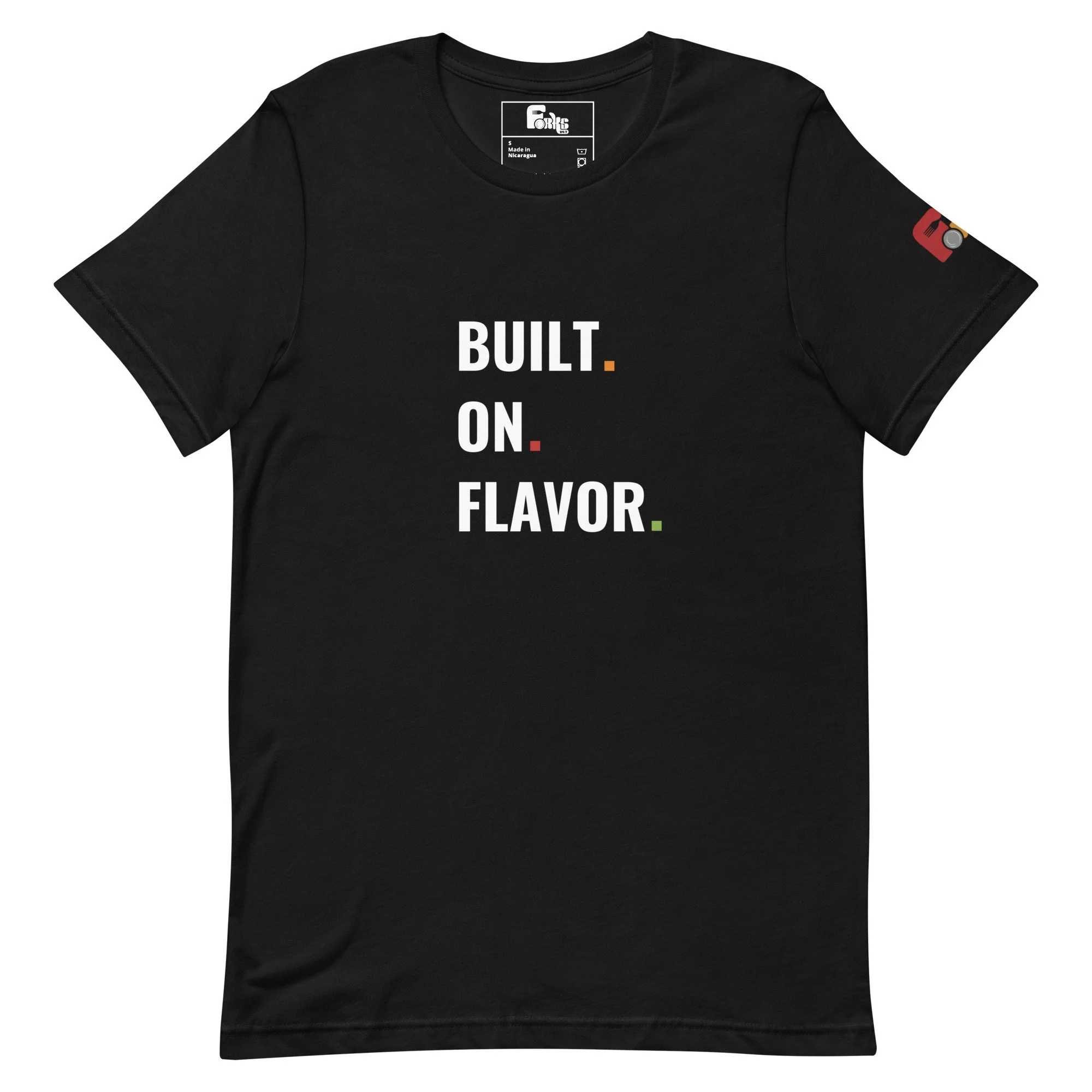






Follow Us

A chef’s rule worth wearing.
The Taste It Before You Trust It T-Shirt takes one of the kitchen’s simplest lessons and turns it into a statement. Bold typography paired with a refined editorial accent gives the design a clean, modern look that feels just as good outside the kitchen as it does behind the line.
Finished with subtle Forks247 branding on the sleeve, this tee is made for cooks, food lovers, and anyone who knows the final decision should always come down to flavor.
Detail
Premium unisex fit 100% combed and ring-spun cotton Heather colors contain polyester Fabric weight: 4.2 oz./yd² (142 g/m²) Pre-shrunk fabric Side-seamed construction Shoulder-to-shoulder taping Forks247 sleeve branding Designed for everyday comfort
Taste it. Adjust it. Trust yourself.