Everybody's Gumbo Isn't the Same Gumbo:Roux, Roots & Regional Rivalries
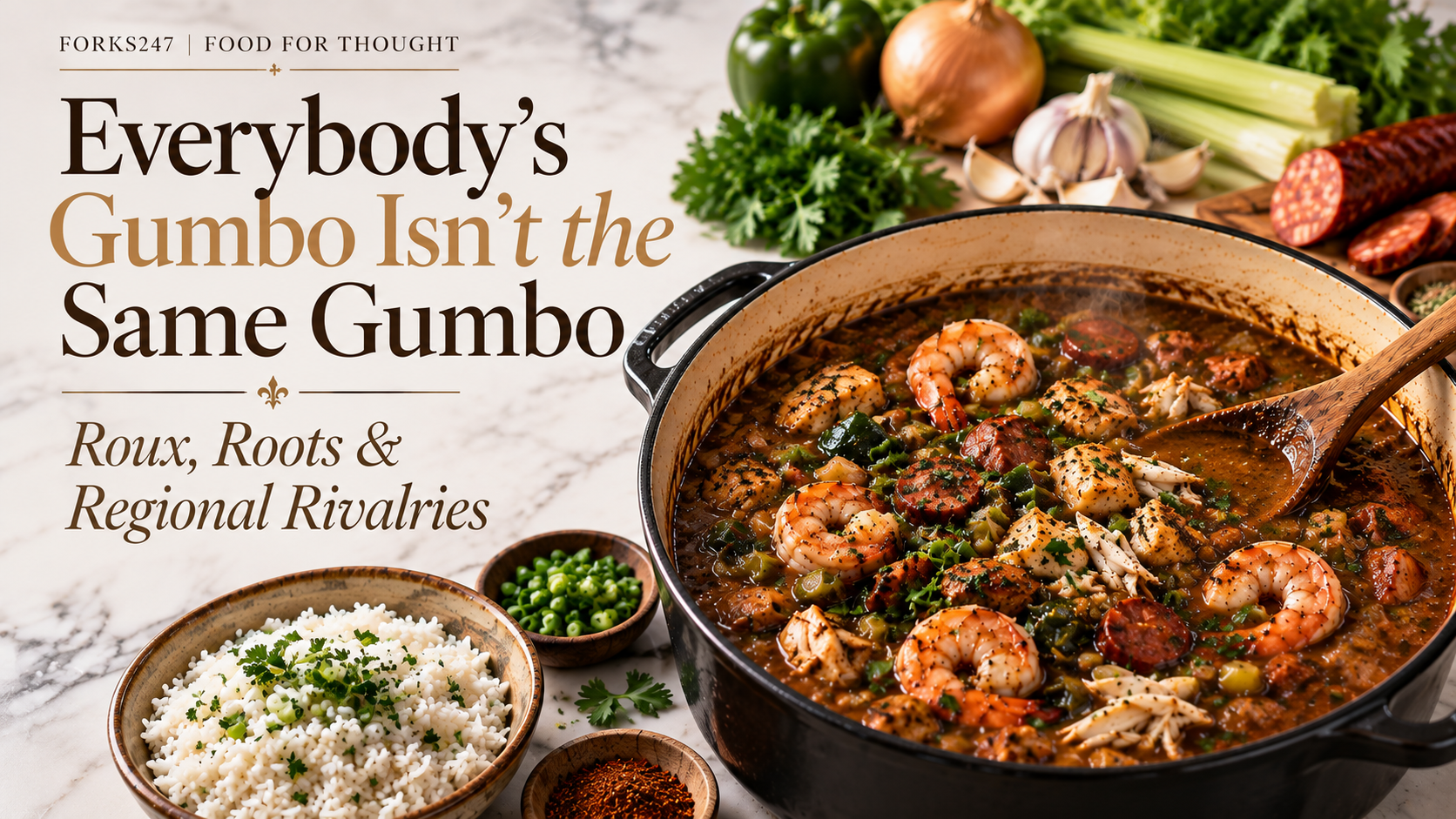
Everybody has an opinion about gumbo. Some are rooted in tradition. Others are just looking for an argument.
There's something about gumbo that brings people together. A big pot simmering on the stove, the smell of smoked sausage filling the kitchen, and that deep, dark roux developing an aroma you can practically taste.
It's comforting. It's familiar. It's the kind of food that makes somebody wander into the kitchen asking, "What you got cooking?"
But let somebody mention putting tomatoes in that gumbo.
Now, all of a sudden, we're holding a family meeting.
Somebody's grandmother is being quoted. Somebody else is explaining why their Louisiana cousin would never approve. And there's always that one person who swears they've been making gumbo the right way for 40 years.
I've learned something over the years: Everybody loves gumbo, but everybody doesn't agree on what gumbo should be.
And you know what? I'm perfectly fine with that.
"Everybody's gumbo isn't the same gumbo. And quite frankly, I wouldn't want it to be."
Before We Argue, Let's Talk About Where Gumbo Came From.
Gumbo didn't begin with one chef standing over a stove writing down measurements in tablespoons and teaspoons.
It developed over generations through the culinary knowledge of West African, Indigenous, French, and other communities that helped shape Louisiana.
Even the name has a story. The word gumbo is widely associated with West African words for okra. Filé powder, made from ground sassafras leaves, reflects Indigenous food traditions. Roux has connections to French cooking, but Louisiana cooks developed their own traditions around just how dark it should become.
That's a lot of history in one pot.
Much of that knowledge was preserved by cooks who weren't publishing cookbooks or filming cooking shows. They were feeding families, sharing techniques, and passing down recipes through observation, practice, and generations of experience.
And we cannot discuss Southern culinary history honestly without recognizing the enormous contributions of enslaved African cooks whose skills helped establish many of the food traditions we celebrate today.
When you understand how many cultures contributed to gumbo's development, the idea that every pot should contain exactly the same ingredients starts to sound a little unreasonable.
Let's Talk About That Roux.
If you've ever stood over a pot stirring flour and oil for what feels like half your afternoon, congratulations. You understand the beginning of a good gumbo.
Now, the color of that roux? That's a conversation by itself.
Some cooks prefer something around the color of peanut butter. Others want a deep brown that looks like dark chocolate.
Personally, I love a deeply developed mahogany roux. There's a toasted, almost nutty richness that gives the entire pot its foundation.
But here's something important: the darker the roux, the less thickening power it generally has.
So that dark roux isn't just there to make your gumbo thick. It's there to build flavor.
And whatever you do, don't burn it. A scorched roux isn't something you're going to fix with an extra shake of seasoning.
Sometimes the best thing you can do as a cook is admit defeat, wash the pot, and start again.
"Good flavor takes patience. Burnt flavor takes about three seconds of not paying attention."
Cajun, Creole, and Everybody in Between.
Here's where the conversation usually gets interesting.
People love to draw a hard line between Cajun and Creole cooking. You'll hear that Cajun gumbo never has tomatoes, while Creole gumbo does.
You'll hear that one is darker, another is lighter, one uses seafood, and the other relies on chicken and sausage.
There are historical patterns behind those descriptions, but Louisiana cooking has never been quite that simple.
Family traditions, geography, available ingredients, and personal preferences have always played a role.
Two Traditions, Plenty of Opinions
Cajun-Style Gumbo
Frequently associated with deeply toasted roux, chicken, sausage, game meats, and rustic country cooking. Tomatoes are generally less common in many traditional preparations.
Creole-Style Gumbo
Often associated with New Orleans' diverse culinary influences. Seafood, okra, and sometimes tomatoes appear in different family and regional versions.
Neither description covers every gumbo ever made.
And that's exactly my point.
You can respect the differences without pretending there's only one acceptable way to cook.
Now, About Those Tomatoes...
I knew we'd get here eventually.
Tomatoes might be one of the most controversial ingredients you can bring into a conversation about gumbo.
There are people who will tell you tomatoes don't belong anywhere near the pot.
Others have been using them in family seafood gumbo recipes for generations.
And both groups are very confident about their positions.
From a culinary standpoint, tomatoes bring acidity, sweetness, and body. In some preparations, those qualities work beautifully.
But in a deeply toasted, smoky gumbo, I don't always want that additional acidity competing with my roux.
For my Mahogany Bayou Gumbo, I leave the tomatoes out.
Not because tomatoes are inherently wrong.
Because I know the direction I want the flavors to take.
And that's an important lesson in cooking: just because an ingredient tastes good doesn't mean it belongs in every dish.
Okra? Filé? Or Can We Just Talk About the Texture?
Now let's discuss okra.
Some people love it. Some people appreciate what it does for gumbo but aren't completely sold on the texture.
And some people are going to tell you they don't eat anything slimy.
I hear you.
But okra actually serves a purpose beyond simply being another vegetable.
It contributes flavor and natural thickening to the broth. Filé powder offers a different traditional way to add body, along with its own distinctive herbal character.
If you're removing okra, you need to think about what you're losing.
Not just the ingredient itself, but its function in the dish.
That's where knowing a little food science comes in handy.
And that's also where I decided to have a little fun.
Chef David's Perspective
When I started developing my National Gumbo Day recipe, I wasn't interested in throwing every ingredient I could find into a pot and calling it fusion.
I wanted something rich, bold, gluten-free, and full of character.
So I kept the foundation: the holy trinity, a deeply toasted roux, smoky andouille, blackened chicken, Gulf shrimp, and sweet lump crab.
Then I made one deliberate departure from tradition.
Fire-roasted poblano peppers.
I know. Somebody's probably raising an eyebrow already.
But hear me out.
Roasting the poblanos brings out an earthy, slightly smoky character that complements the sausage and chicken beautifully.
I add them in two stages: some early to build flavor into the broth, and some later to preserve their texture and character.
I also use a gluten-free roux made with white and brown rice flours, then adjust the final consistency with filé and, if needed, a little cornstarch slurry.
The result is a gumbo that's rich enough to coat the rice without becoming a bowl of gravy.
It's my interpretation, not a replacement for anyone's family tradition.
More Ingredients Don't Always Mean More Flavor.
Let me tell you something I've learned from years of working in kitchens.
Sometimes the hardest thing for a cook to do is leave something out.
We get excited. We start tasting ingredients. We think about everything that might work.
Next thing you know, we've added six things that individually taste wonderful, but together don't make much sense.
I've seen some gumbo pots that looked like the entire seafood department took a wrong turn.
More doesn't always mean better.
In my gumbo, the andouille brings smoke and spice. The chicken provides a savory foundation. The shrimp adds sweetness. And the lump crab brings a delicate briny richness.
Every ingredient has a job.
That's how I like to cook.
If an ingredient isn't contributing something meaningful to the finished dish, I have to question why it's there.
Respect Tradition. But Understand It First.
I believe there's a difference between respecting tradition and being afraid to cook outside of it.
Traditional dishes tell stories about families, cultures, migration, survival, and creativity.
Those stories deserve to be preserved.
But understanding why something is prepared a certain way should make us better cooks.
It should give us the confidence to make thoughtful decisions, not just follow instructions without understanding them.
Sometimes you'll want to prepare a recipe exactly as your grandmother taught you.
Other times you may need to make it gluten-free, accommodate a dietary preference, or explore a different flavor.
None of those choices automatically means you've forgotten where the dish came from.
Just be clear about what you're creating.
I wouldn't tell anybody that fire-roasted poblanos are a traditional Louisiana gumbo ingredient.
But I can tell you exactly why I use them and what they contribute.
And I think that's a much more interesting conversation than arguing over who gets to make the rules.
At the End of the Day, It's About the Pot.
National Gumbo Day gives us a reason to appreciate one of America's most remarkable culinary traditions.
It's a dish shaped by history, community, and generations of cooks who understood how to turn everyday ingredients into something extraordinary.
So make yours with okra. Make it without okra. Use chicken and sausage, seafood, or the family combination everybody looks forward to.
If your grandmother taught you to make it a certain way, hold on to that knowledge.
And if you decide to make a little adjustment of your own, make sure there's a good reason behind it.
Just don't invite me over for gumbo and serve me a bowl of hot water with a few shrimp floating around in it.
We might need to have a conversation.
"Great gumbo isn't about winning the argument. It's about building something worth gathering around."
Everybody's gumbo isn't the same gumbo.
And that's exactly what makes it special.
— Chef David A. Wilmott
Chef David's Mahogany Bayou Gumbo
Ready to bring these flavors to your own kitchen? Try my gluten-free gumbo featuring blackened chicken, smoked andouille, Gulf shrimp, lump crab, and fire-roasted poblano peppers.
Get the Full Gumbo Recipe →Now I Want to Hear From You.
What's the one ingredient you absolutely must have in your gumbo?
And what's the one ingredient that has absolutely no business being anywhere near your pot?
No judgment. Well, maybe a little.
Share your gumbo traditions and opinions below. I want to hear how you make yours.
Keep Cooking.
Your next great meal starts here. Discover chef-led recipes, practical kitchen inspiration, and new ways to bring flavor to your table.
Explore Recipes
Find your next meal, discover new ingredients, and bring something different to your table.
Find Your Next Meal → STORIESExplore the Blog
Chef-led stories, practical cooking advice, seasonal inspiration, and a little food for thought.
Read More Stories → THE CHEFMeet Chef David
Meet the chef behind Forks247 and discover the experience, perspective, and philosophy behind the food.
Meet Chef David →Good Cooking Is About Understanding Why.
Ever wonder why certain techniques work, why ingredients behave differently, or how chefs build layers of flavor?
That's where Kitchen Studio comes in.
Recipes show you what to make. Kitchen Studio helps you understand why it works.
Explore Kitchen Studio →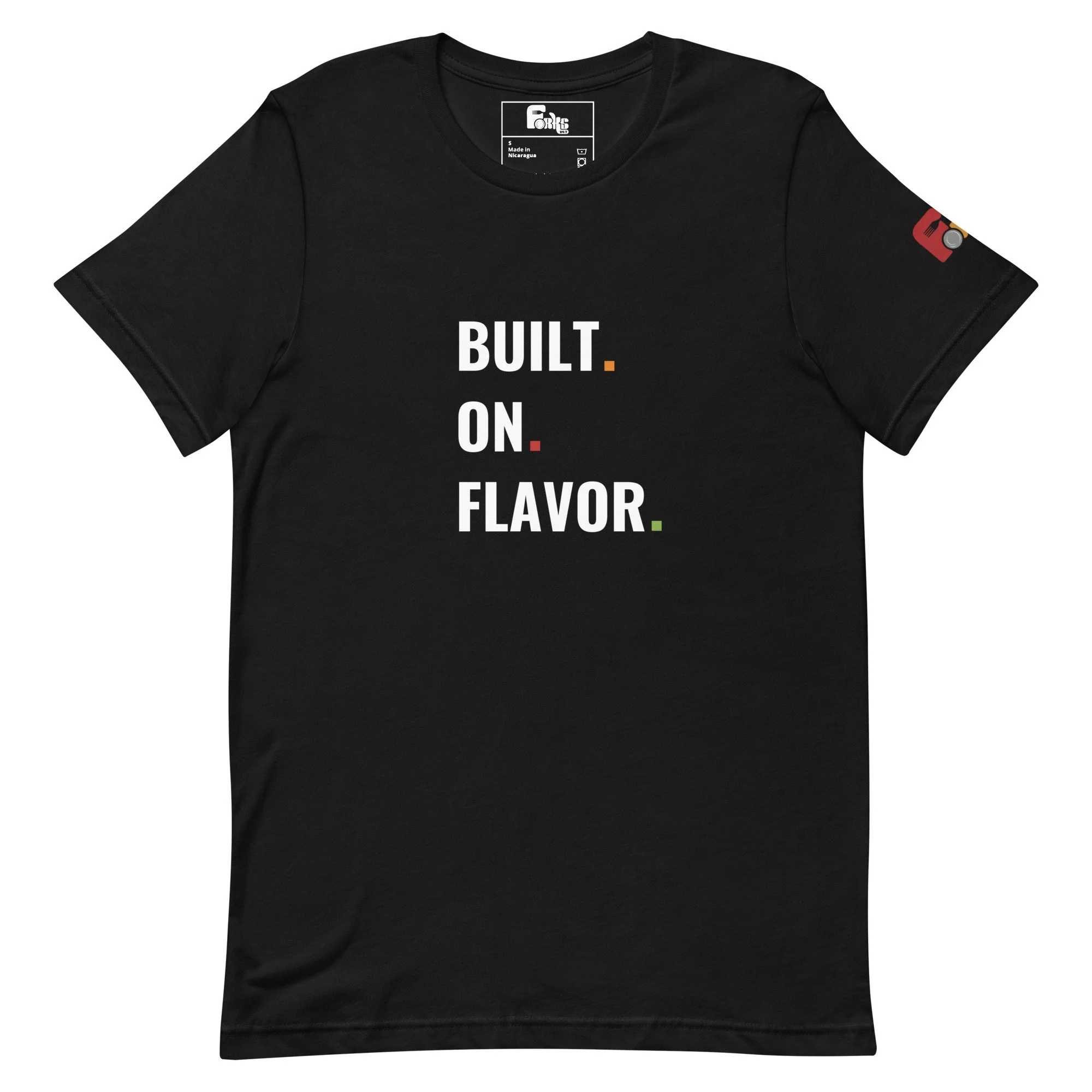




Follow Us

A chef’s rule worth wearing.
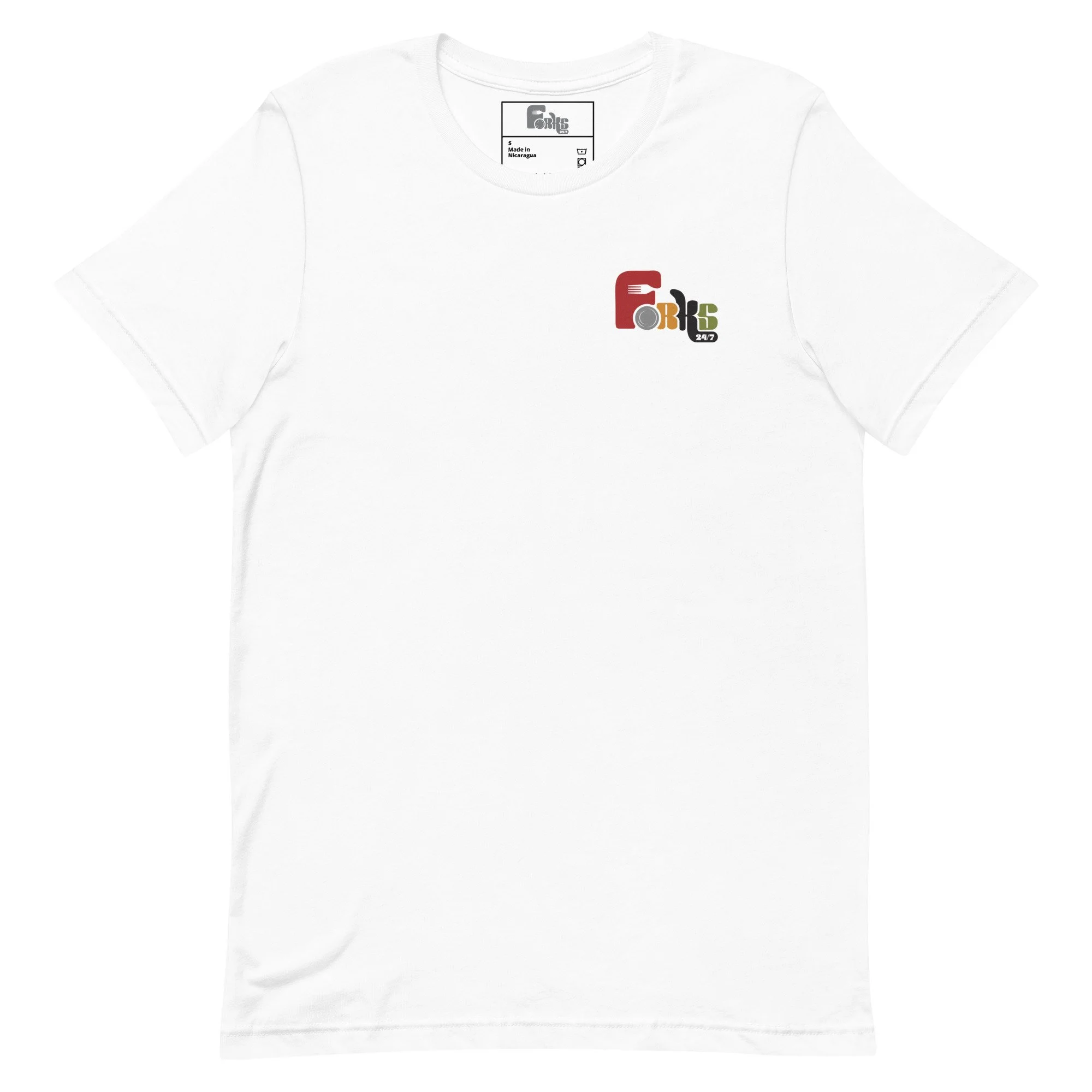
The Taste It Before You Trust It T-Shirt takes one of the kitchen’s simplest lessons and turns it into a statement. Bold typography paired with a refined editorial accent gives the design a clean, modern look that feels just as good outside the kitchen as it does behind the line.
Finished with subtle Forks247 branding on the sleeve, this tee is made for cooks, food lovers, and anyone who knows the final decision should always come down to flavor.
Detail
Premium unisex fit 100% combed and ring-spun cotton Heather colors contain polyester Fabric weight: 4.2 oz./yd² (142 g/m²) Pre-shrunk fabric Side-seamed construction Shoulder-to-shoulder taping Forks247 sleeve branding Designed for everyday comfort
Taste it. Adjust it. Trust yourself.