Exploring the world, one ingredient, one tradition, and one unforgettable meal at a time.
There's something beautiful about a cuisine that knows when to leave well enough alone.
Give me ripe tomatoes, a generous piece of feta, good olive oil, and a little oregano, and we're already heading somewhere delicious.
Greek cooking reminds me of something I've always believed about food: you don't need twenty ingredients to create an unforgettable meal. You need good ingredients, an understanding of how flavors work together, and enough confidence to let them shine.
And if you've ever gathered around a Southern family table where the food keeps coming and nobody seems ready to leave, you'll recognize something familiar about the Greek approach to hospitality.
Food isn't simply something you put on the table. It's what brings people to it.
Welcome to our first installment of Around the Table, a Forks247 series where we explore the culinary traditions, ingredients, and stories that make food such a powerful connection between cultures.
Our first stop? Greece.
More Than a Meal: The Spirit of the Greek Table
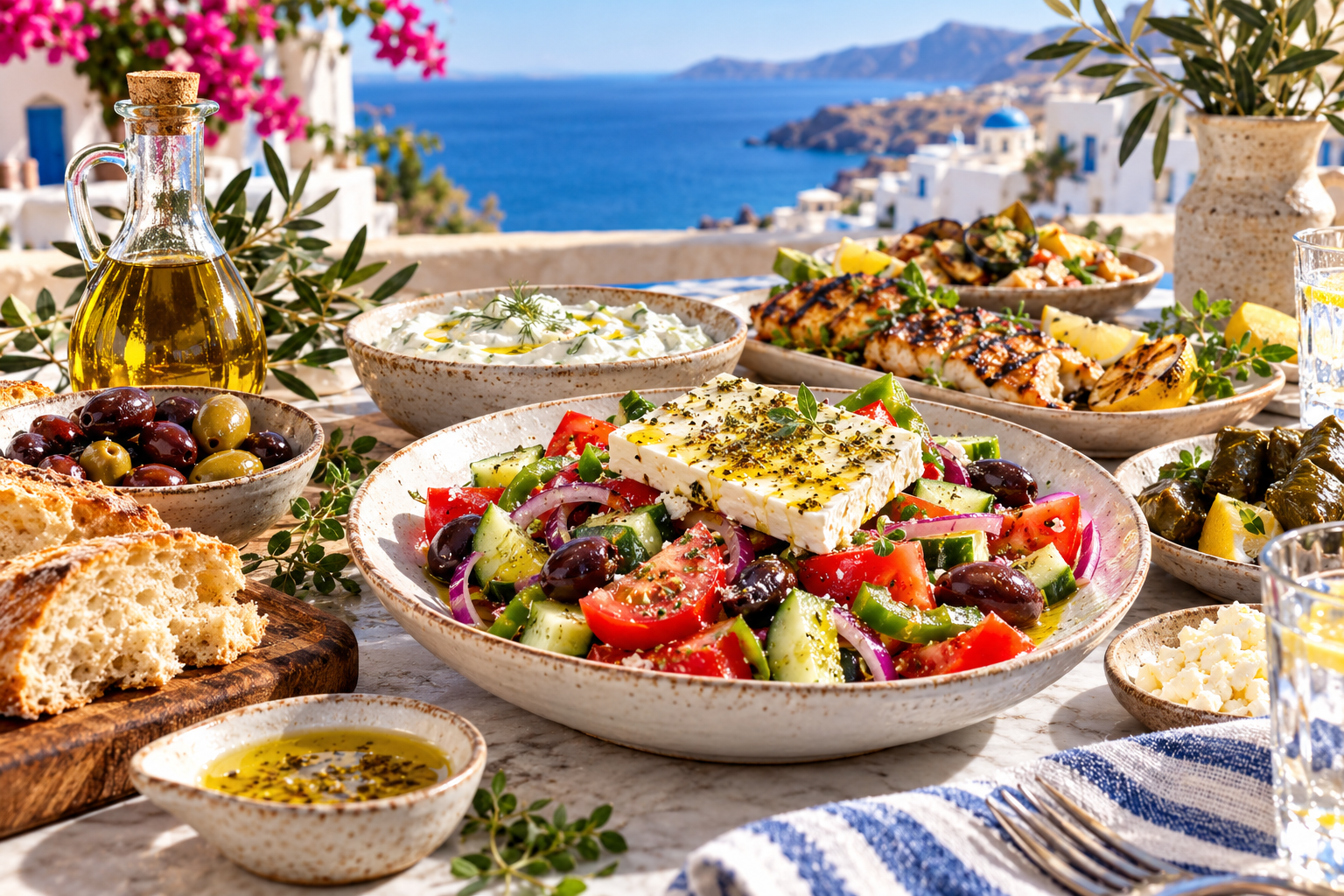
Picture a table filled with small plates. Fresh vegetables glistening with olive oil. A bowl of olives. Warm bread waiting to be torn and shared. Perhaps grilled seafood, a dish of creamy tzatziki, and a generous portion of feta.
Nobody is in much of a hurry.
There's conversation, a little laughter, someone reaching across the table for another helping, and the comfortable understanding that a good meal deserves time.
That's one of the things I appreciate about Greek food culture.
Sharing dishes, often called mezedes, is a familiar part of Greek dining. Rather than centering every meal around an individual plate, these smaller preparations encourage people to taste, share, and enjoy food together.
And that sounds an awful lot like Southern hospitality to me.
Of course, Greek cooking isn't one single style. The islands, mountains, agricultural regions, and coastal communities all bring different ingredients and traditions to the table.
But there is a common thread worth understanding: respect for the ingredients and the pleasure of sharing them.
A Cuisine Built on the Land and the Seasons
Greek cuisine is closely connected to the Mediterranean landscape.
Olives, vegetables, legumes, grains, fresh herbs, seafood, and cheeses have all played important roles in shaping how people cook and eat.
In many traditional preparations, olive oil isn't simply a cooking fat. It's part of the flavor itself.
Lemon adds brightness. Oregano brings an earthy, fragrant quality. Yogurt provides tang and richness. Feta contributes saltiness and acidity.
Each ingredient has a purpose.
That's something I want home cooks to understand, because once you begin thinking about ingredients in terms of what they contribute, cooking becomes much more intuitive.
You stop adding ingredients simply because a recipe tells you to.
You begin asking, What does this dish need?
Does it need acidity to balance richness? A little salt to bring forward the natural sweetness of vegetables? Fresh herbs to introduce aroma?
Those questions can transform the way you cook.
The Beauty of Seasonal Cooking
One of my favorite lessons from Greek cuisine is the importance of letting seasonal produce take the lead.
Take a ripe tomato.
When it's at its best, beautifully sweet, juicy, and full of flavor, it doesn't need much assistance. A little salt, good olive oil, perhaps some oregano, and you've already built the foundation of something wonderful.
Now compare that with a tomato that's underripe, cold, and lacking flavor.
You can dress it, season it, and add all the ingredients you want, but you're still starting with a weaker foundation.
That's why quality matters. And quality doesn't always mean expensive.
Sometimes it simply means buying vegetables in season, selecting the right product for the preparation, and knowing when to leave an ingredient alone.
Horiatiki: A Salad That Knows Exactly What It Is
Let's talk about one of Greece's most recognizable dishes: Horiatiki, commonly known as Greek village salad.
If you're accustomed to Greek salads served over a mountain of lettuce with bottled dressing, the traditional version might surprise you.
There generally isn't any lettuce at all.
Instead, you have tomatoes, cucumbers, onions, peppers, olives, oregano, olive oil, and feta.
That's it. No complicated preparation. No elaborate sauce hiding the vegetables.
And that's precisely what makes it special.
When I look at a dish like Horiatiki, I see a lesson in restraint.
The tomatoes bring sweetness and acidity. Cucumbers contribute freshness and crunch. Olives introduce a concentrated, briny flavor. Feta adds richness and salt.
Olive oil carries those flavors across the palate, while oregano finishes the dish with its distinctive aroma.
It's a beautiful example of what I call flavor architecture: every ingredient doing its job, without competing for attention.
For our Forks247 interpretation, we're keeping the soul of the traditional village salad intact while introducing a bright lemon-oregano olive oil finish.
The goal isn't to reinvent a classic that doesn't need reinventing.
It's to highlight what already makes it exceptional.
The Ingredients That Define the Experience
There are two ingredients we'll return to throughout our Greek culinary exploration: feta cheese and olive oil.
Both have histories that extend far beyond their familiar places on supermarket shelves.
Real Greek feta is traditionally made with sheep's milk or a combination of sheep's and goat's milk. Its brining process gives it that distinctive salty, tangy character.
And olive oil? Depending on the variety of olive, growing conditions, and production methods, it can taste buttery, grassy, fruity, peppery, or pleasantly bitter.
These aren't just supporting ingredients.
They can completely change the personality of a dish.
We'll take a closer look at both in our next Around the Table feature, including how to shop for them, cook with them, and bring their flavors into meals that have nothing to do with Greek cuisine.
What Southern Cooking and Greek Cooking Have in Common
At first glance, a traditional Greek table and a Southern Sunday dinner might look entirely different.
But look a little closer.
Both culinary traditions have deep relationships with agriculture, family cooking, hospitality, and the importance of feeding people well.
Both know how to turn simple ingredients into memorable dishes.
Beans, greens, vegetables, slow-cooked meats, breads, and seasonal produce all have meaningful places in Southern kitchens. Greek cooking similarly celebrates legumes, vegetables, grains, herbs, and preparations shaped by local ingredients.
The seasonings and methods may differ, but the respect for tradition and the connection between food and community feel familiar.
And here's where I believe exploring other cuisines becomes especially valuable.
You don't have to abandon your own cooking traditions to learn from someone else's.
You can appreciate how another culture develops flavor, understand why particular ingredients are important, and allow those lessons to make you a better cook in your own kitchen.
That's the spirit I want to bring to Around the Table.
Bringing the Greek Table Into Your Own Kitchen
You don't need an elaborate Mediterranean feast to begin exploring Greek flavors.
Start with something simple.
Prepare a fresh village salad. Roast vegetables with olive oil and oregano. Serve grilled chicken or seafood with a squeeze of lemon. Make a bowl of creamy tzatziki to accompany dinner.
Pay attention to how the ingredients work together.
Notice how acidity brightens a dish, how feta contributes salinity, and how fresh herbs can make a familiar preparation feel entirely new.
Most importantly, enjoy the process.
Because good cooking isn't always about doing more.
Sometimes, it's about knowing when you've already done enough.
A Final Thought From My Kitchen
If there's one thing I hope you take from our first journey around the table, it's this:
"Simplicity isn't the absence of skill. It's the confidence to let good ingredients speak for themselves."
Greek cuisine gives us a beautiful reminder that remarkable meals don't have to be complicated, expensive, or reserved for special occasions.
Sometimes all you need is a handful of thoughtful ingredients, a little understanding of flavor, and people who appreciate gathering around a table.
And that's a tradition worth celebrating wherever you call home.
Until next time, keep exploring, keep tasting, and remember that every meal is another opportunity to learn something delicious.
— Chef David A. Wilmott
Keep Cooking.
Your next great meal starts here. Discover chef-led recipes, practical kitchen inspiration, and new ways to bring flavor to your table.
Explore Recipes
Find your next meal, discover new ingredients, and bring something different to your table.
Find Your Next Meal → STORIESExplore the Blog
Chef-led stories, practical cooking advice, seasonal inspiration, and a little food for thought.
Read More Stories → THE CHEFMeet Chef David
Meet the chef behind Forks247 and discover the experience, perspective, and philosophy behind the food.
Meet Chef David →Good Cooking Is About Understanding Why.
Ever wonder why certain techniques work, why ingredients behave differently, or how chefs build layers of flavor?
That's where Kitchen Studio comes in.
Recipes show you what to make. Kitchen Studio helps you understand why it works.
Explore Kitchen Studio →






Follow Us

A chef’s rule worth wearing.
The Taste It Before You Trust It T-Shirt takes one of the kitchen’s simplest lessons and turns it into a statement. Bold typography paired with a refined editorial accent gives the design a clean, modern look that feels just as good outside the kitchen as it does behind the line.
Finished with subtle Forks247 branding on the sleeve, this tee is made for cooks, food lovers, and anyone who knows the final decision should always come down to flavor.
Detail
Premium unisex fit 100% combed and ring-spun cotton Heather colors contain polyester Fabric weight: 4.2 oz./yd² (142 g/m²) Pre-shrunk fabric Side-seamed construction Shoulder-to-shoulder taping Forks247 sleeve branding Designed for everyday comfort
Taste it. Adjust it. Trust yourself.