The Biggest Lie About “Fresh Food” No One Talks About
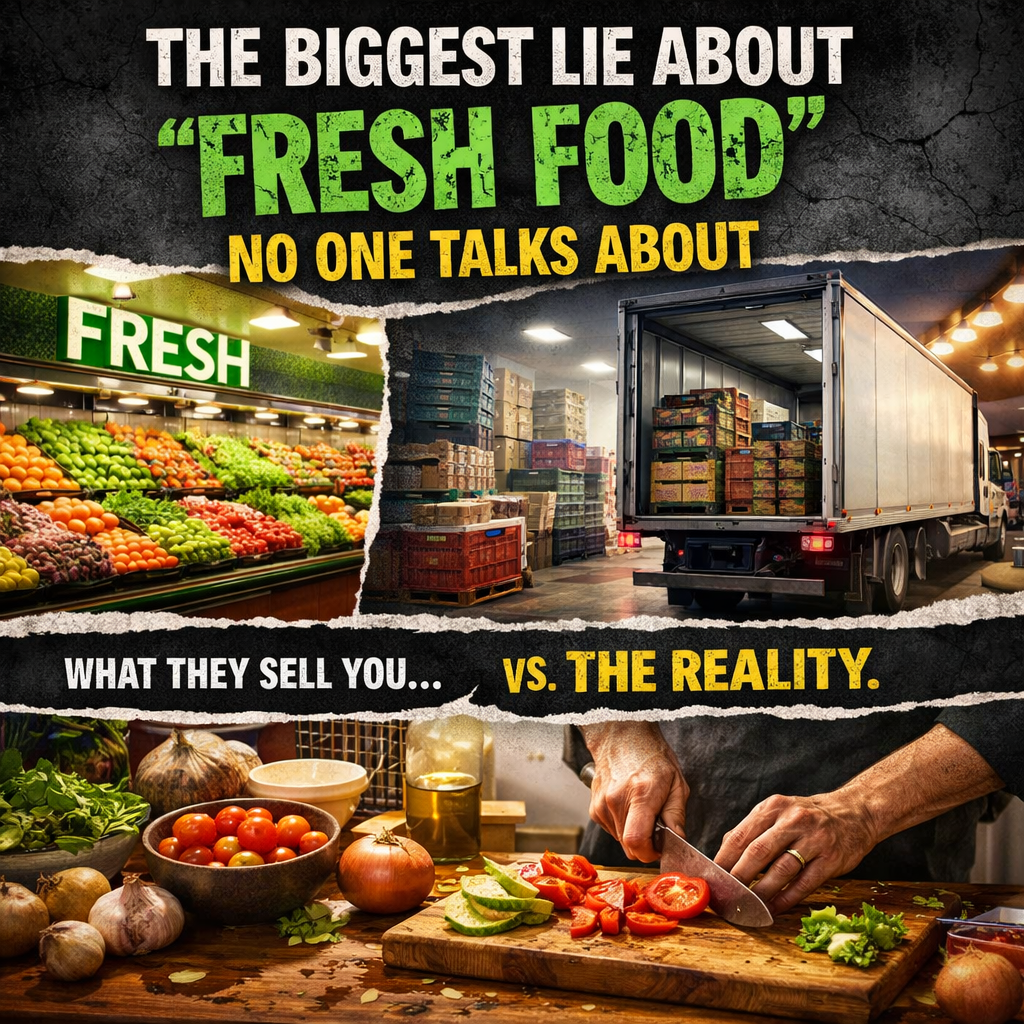
That salmon you bought this morning? It might be older than you think. Here's what grocery store "freshness" actually means — and why the label is the last thing you should trust.
Let's get something straight. When you walk into a grocery store and see that bright, pristine display of "fresh" produce and proteins, the word fresh is doing a lot of heavy lifting it hasn't earned. It's marketing, not a timestamp. And most people have no idea what actually happened to that food before it landed under those flattering fluorescent lights.
I've been in professional kitchens long enough to know the difference between truly fresh food and food that's been managed, modified, and moved through a system designed to make old things look new. The gap is wider than most home cooks realize — and understanding it will change the way you cook forever.
The Distribution Reality Nobody Puts on the Label
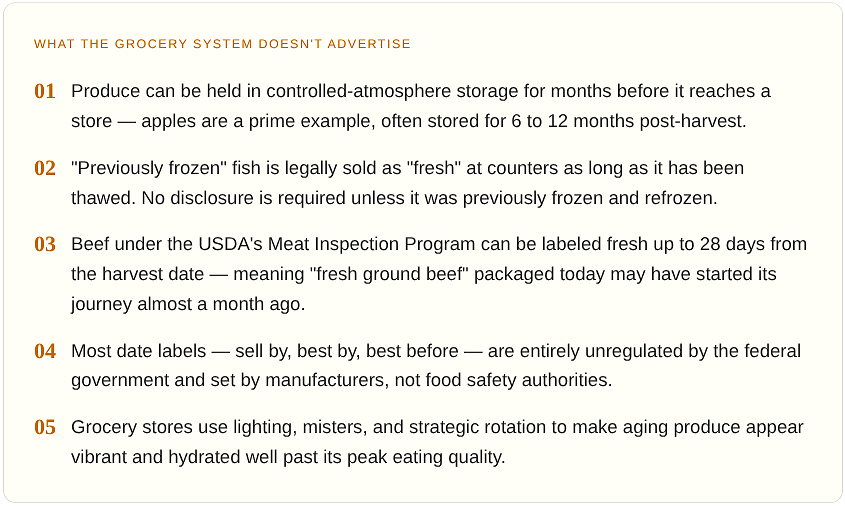
Here's a truth that the grocery industry doesn't advertise: the average piece of produce travels between 1,500 and 2,000 miles to reach your store. That apple you're eyeing? It may have been picked weeks ago, held in a controlled-atmosphere storage facility with reduced oxygen to slow ripening, then shipped, stocked, and finally placed in that tidy bin. "Fresh-picked" it is not.
Beef can be sold as fresh for up to 28 days from the slaughter date. "Fresh" chicken can legally sit in cold storage for weeks before being packaged. Fish labeled "fresh" at the counter may have been previously frozen, thawed, and put on display — a practice that is completely legal and shockingly common.
"Fresh" is a legal term, not a culinary one. It tells you what the food isn't — frozen, canned, or preserved — not how old it actually is.
What "Sell By," "Best By," and "Use By" Actually Mean
These dates are among the most misunderstood pieces of information on any package. Here's the hard truth: only "Use By" dates on infant formula are federally regulated in the United States. Every other date — sell by, best by, best if used by — is manufacturer-suggested and largely voluntary. They're quality indicators, not safety cutoffs.
The result? Billions of pounds of perfectly edible food get thrown away every year because consumers trust a stamped date more than their own senses. Meanwhile, food that's genuinely past its prime stays on shelves because the date hasn't hit yet.
The Grocery Store Illusion
Grocery stores are designed to sell freshness.
Bright lights. Water misters. Perfect stacking. No bruises in sight.
It’s theater.
And it works.
Because what you’re really buying into is the feeling of freshness, not the timeline of it.
Here’s Where Most People Get It Wrong
People assume:
“If it says fresh, it must be better.”
Not always.
Let me give it to you straight:
Frozen vegetables are often processed within hours of harvest
“Fresh” produce may have been sitting in storage for weeks
Flavor doesn’t come from labels—it comes from handling, timing, and cooking
So What Should You Actually Trust?
Your senses. Full stop.
This is something culinary school teaches and home cooking culture has largely forgotten. Your nose, your eyes, and your hands are more reliable than any label stamped by a machine. Does the fish smell like the sea or like something that's been sitting too long? Does the tomato feel plump and give slightly under pressure, or is it hard and waxy? Does the chicken have a gray tint around the edges or a clean, blush-pink color?
You already know how to read food. You've just been trained to outsource that knowledge to a label instead.
Freshness vs Flavor — They’re Not the Same Thing
This is the part nobody tells you.
Freshness is a timeline.
Flavor is a result.
And as a chef, I care about the result.
You can take something that’s been sitting for a few days and turn it into something incredible with the right technique.
You can also take something labeled “fresh” and end up with a bland plate if you don’t know how to build flavor.
What Actually Matters More Than “Fresh”
Let me shift your thinking for a second.
Instead of asking:
“Is this fresh?”
Start asking:
Does it look alive or tired?
Does it smell like something or nothing?
Is it in season?
Do I know how to cook it to bring out flavor?
Because that’s where the real difference is made.
Chef’s Perspective
I’ve worked with products straight off farms—and I’ve worked with ingredients that came off trucks after long distribution chains.
The difference?
The cook. Not the label.
Give me decent ingredients and control over seasoning, heat, and timing—I’ll give you a great dish every time.
So What Should You Do?
Don’t ignore labels—but don’t worship them either.
Shop smart. Stay aware.
But more importantly?
“Learn how to cook in a way that makes your ingredients better than they arrived.”
Because once you can do that…
You’re not depending on “fresh” anymore.
You’re in control.
Take It Further in Kitchen Studio
f you want to stop guessing in the kitchen and actually understand how to build flavor no matter what you’re working with—
That’s exactly what I built Kitchen Studio for.
No fluff. No over-complicated recipes.
Just real cooking—based on how chefs actually think.
👉 Start cooking smarter.
👉 Trust your instincts.
👉 Build meals from what you already have.
From pantry to plate—that’s where real cooking begins.
Inside Kitchen Studio , you don’t just follow recipes. You learn how to “think like a chef in your own kitchen.”
Turn the ingredients you already have into curated meals
Explore flavor-building foundations that actually stick
Get guided ideas based on what’s in your pantry—no guesswork
This is how you go from “what should I cook?”to “I know exactly what to make.”
Step into Kitchen Studio start cooking smarter. Meal After Meal




Follow Us

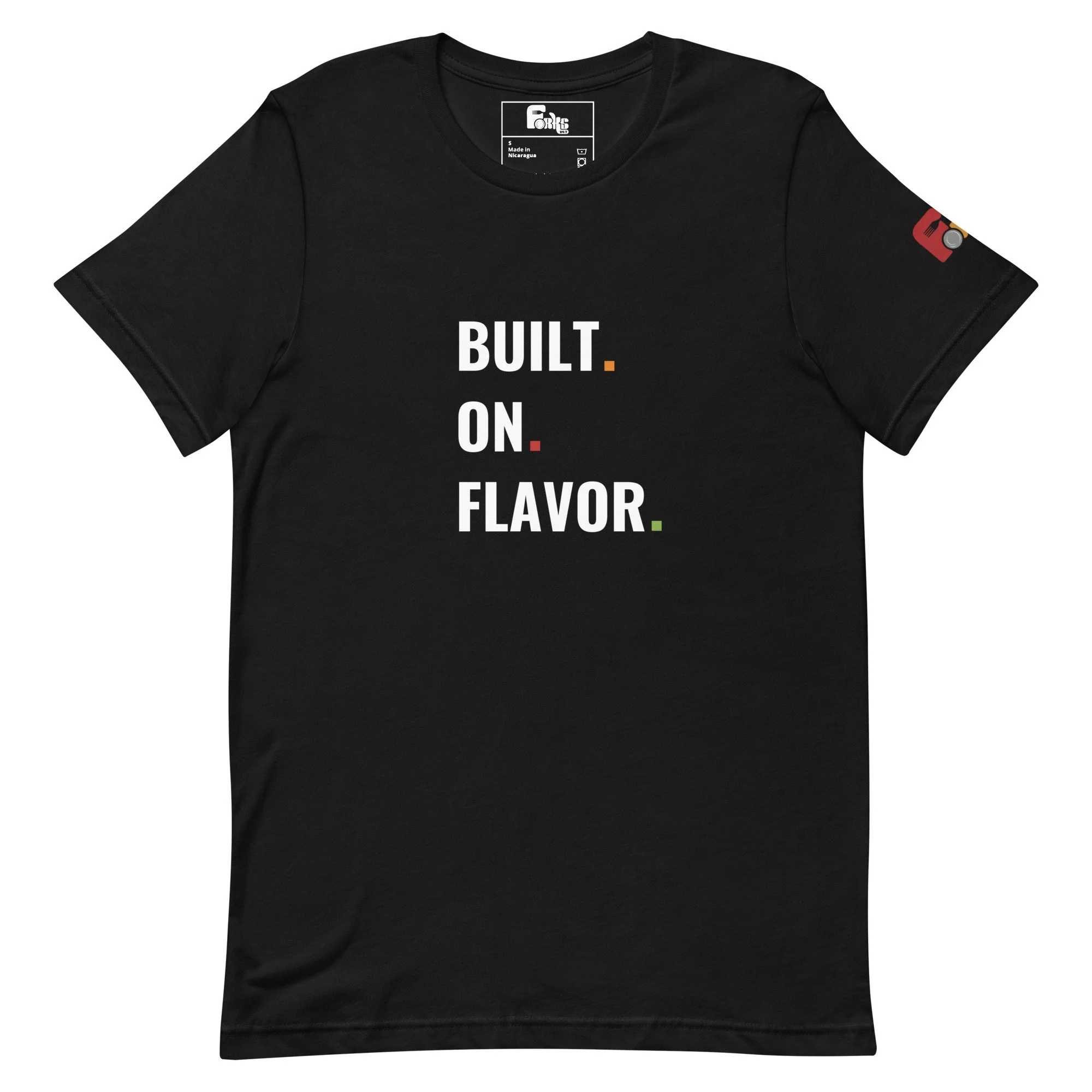
A chef’s rule worth wearing.
The Taste It Before You Trust It T-Shirt takes one of the kitchen’s simplest lessons and turns it into a statement. Bold typography paired with a refined editorial accent gives the design a clean, modern look that feels just as good outside the kitchen as it does behind the line.
Finished with subtle Forks247 branding on the sleeve, this tee is made for cooks, food lovers, and anyone who knows the final decision should always come down to flavor.
Detail
Premium unisex fit 100% combed and ring-spun cotton Heather colors contain polyester Fabric weight: 4.2 oz./yd² (142 g/m²) Pre-shrunk fabric Side-seamed construction Shoulder-to-shoulder taping Forks247 sleeve branding Designed for everyday comfort
Taste it. Adjust it. Trust yourself.