
The 5 Biggest Mistakes People Make When Cooking Chicken (And How to Fix Them Like a Chef)

There’s a reason chicken shows up on dinner tables more than almost anything else.
It’s affordable. It’s versatile. It’s familiar.
And yet… it’s also one of the most commonly messed up proteins in home kitchens.
Dry chicken. Bland chicken. Rubbery chicken. Unevenly cooked chicken.
Not because people can’t cook—but because no one ever showed them what actually matters when working with it.
So let’s fix that.
Here are the 5 biggest mistakes people make when cooking chicken—and the simple shifts that will instantly level up your results.
1. The Cold Start: Cooking Straight from the Fridge
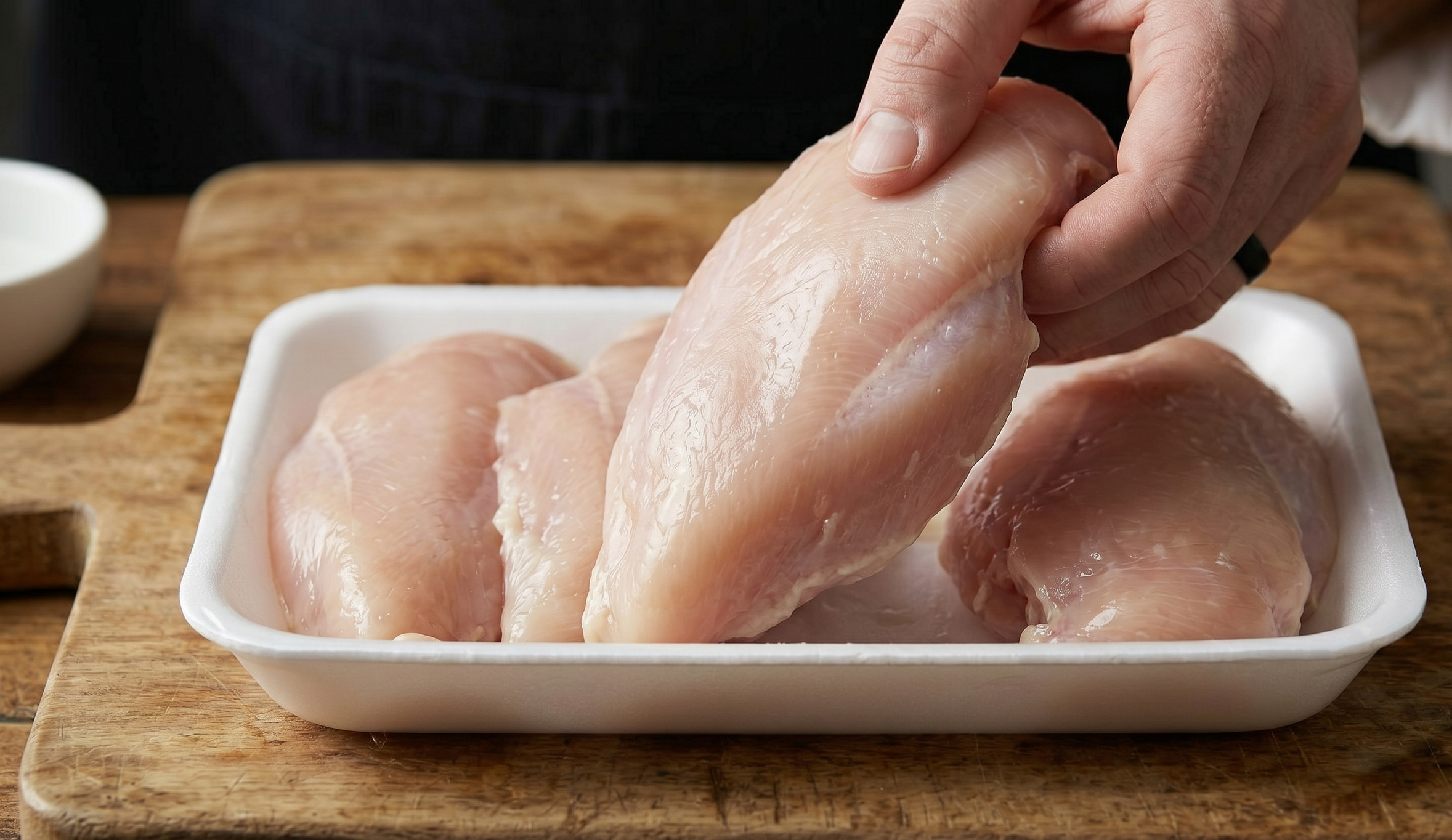
Taking a cold chicken breast and throwing it into a hot pan is a recipe for uneven cooking. The outside sears and tightens before the center even begins to lose its chill. By the time the middle is safe to eat, the exterior is overcooked and tough.
The Fix: Take your chicken out of the fridge 15–20 minutes before cooking. Let it come closer to room temperature so the heat can penetrate evenly.
2. Fear of Salt: Under-Seasoning
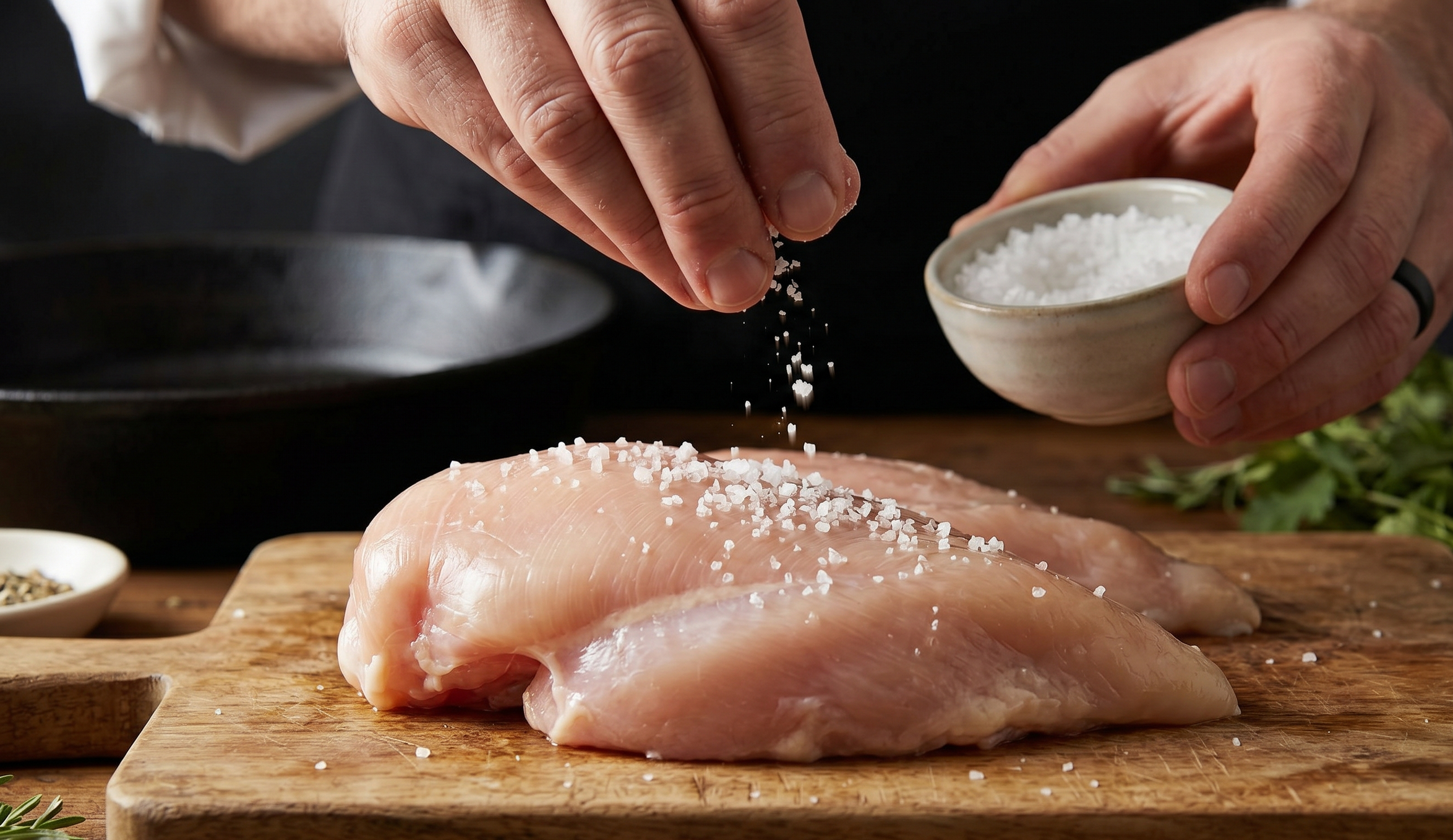
Chicken is a blank canvas, but without enough salt, it stays flat. Most home cooks season the surface right before it hits the pan, but salt needs time to penetrate the muscle fibers and amplify the natural flavors.
The Fix: Season early and often. If you have the time, dry-brine your chicken with salt a few hours (or even a day) ahead. This alters the protein structure, allowing the meat to hold onto more moisture.
3. The Parking Lot: Overcrowding the Pan
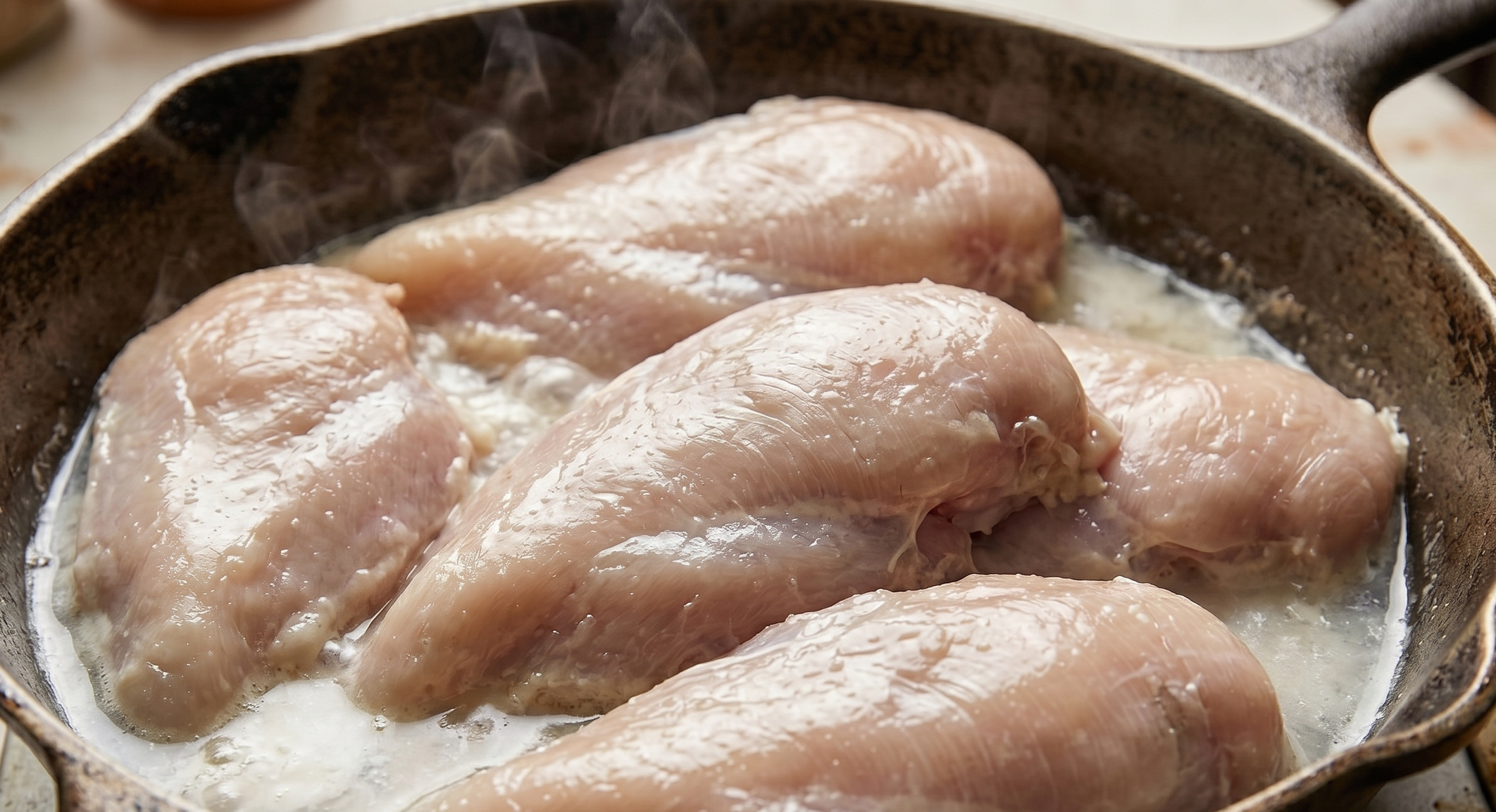
We’ve all been there—trying to fit six thighs into one skillet to save time. When you crowd the pan, the temperature drops instantly. Instead of searing, the chicken begins to steam in its own juices. You lose the Maillard reaction (that golden-brown crust) and end up with gray, rubbery meat.
The Check: If the pieces are touching, the pan is too full.
The Fix: Cook in batches. Give each piece at least an inch of "breathing room" to ensure the heat can circulate and create texture.
4. The "Is It Done Yet?" Trap: Overcooking
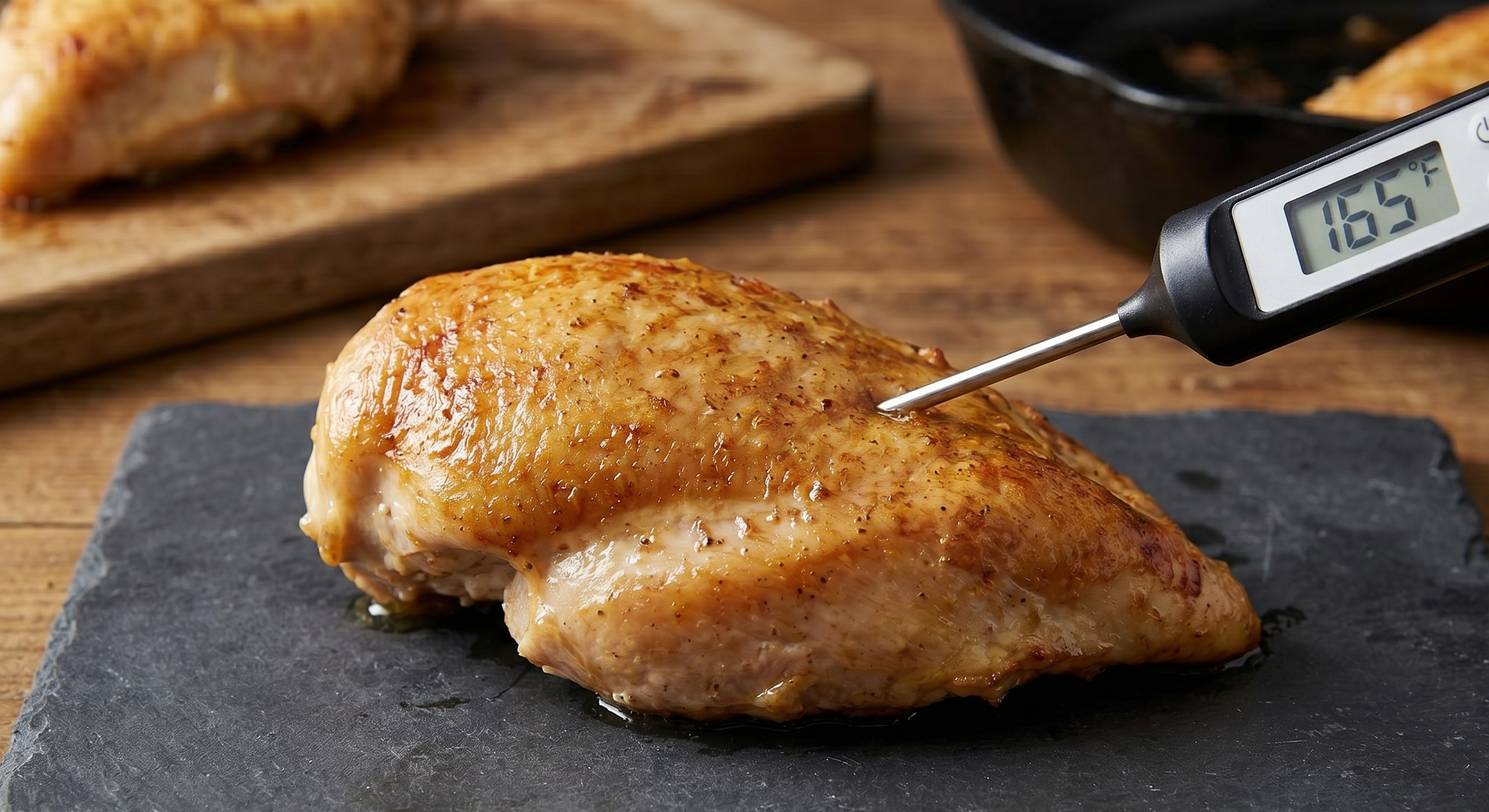
Chicken breast is lean. There is a very narrow window between "perfectly juicy" and "sawdust." If you are cooking until the juices run clear or until it "looks white," you’ve likely already gone too far.
The Fix: Use a digital meat thermometer. Pull chicken breast at 165°F . Carryover cooking will bring it up to the safe 170°F mark while it rests, keeping the moisture locked inside.
5. The Great Escape: Not Resting the Meat
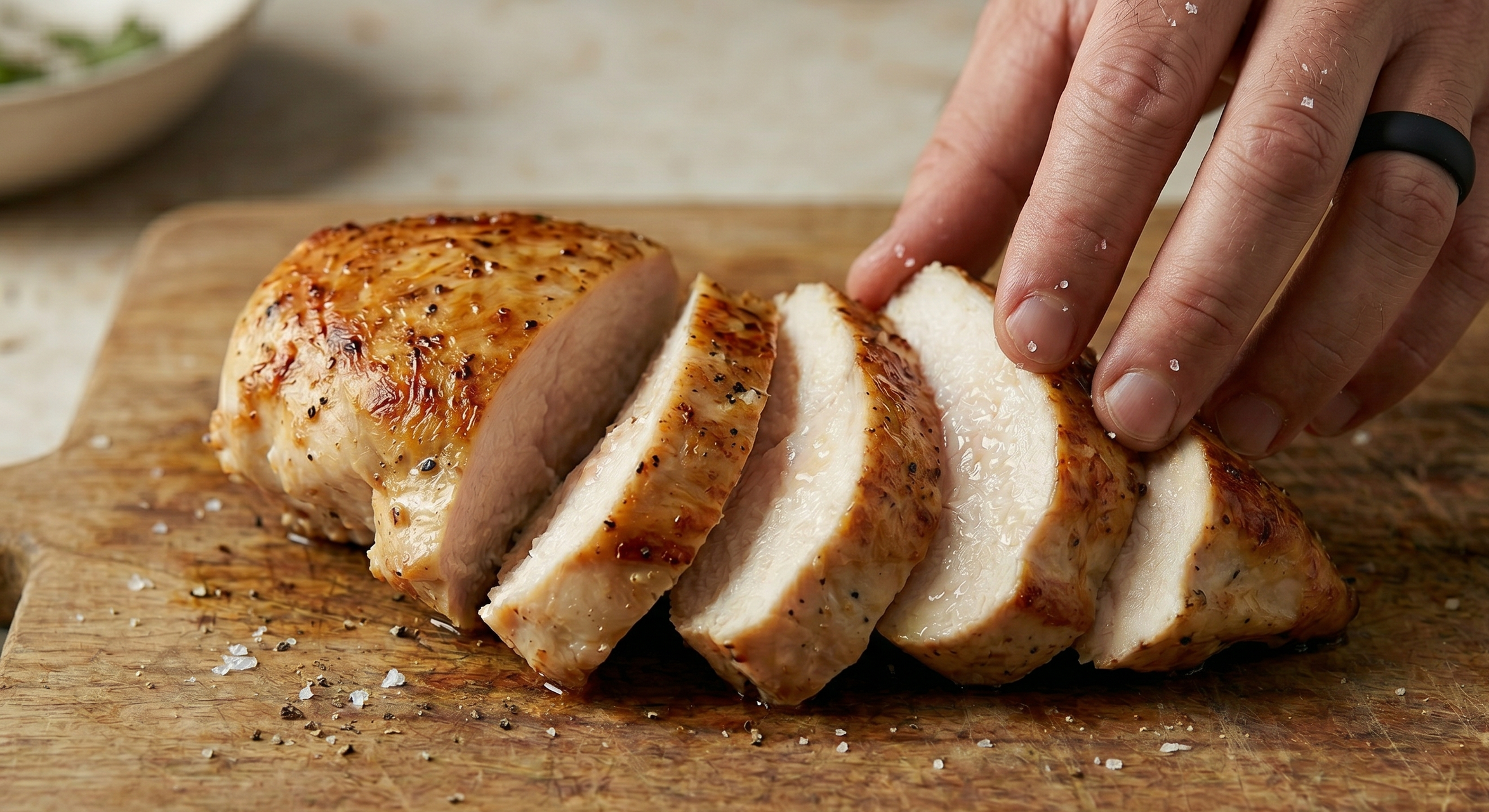
If you cut into chicken the second it leaves the heat, all those precious juices will pour out onto your cutting board. Heat excites the moisture in the meat; resting allows those juices to redistribute and reabsorb into the fibers.
The Fix: Let your chicken rest for at least 5–10 minutes before slicing. Use that time to finish your side dish or plate the rest of the meal.
The Bigger Picture
These mistakes aren’t complicated—most people were just never taught.
Fix them, and everything changes.
Your chicken becomes juicy, flavorful, and consistent—every time.
Not luck—repeatable results.
Where Kitchen Studio Comes In
That’s exactly what we break down inside Kitchen Studio.
Not just recipes—but how cooking actually works.
Inside the Meal After Meal Foundations Labs, you learn how to:
Control heat
Build real flavor
Cook with confidence instead of guesswork
Because once that clicks…
You stop hoping your food turns out well—
and start expecting it to.
If you’re ready to stop guessing and start cooking with intention—
Kitchen Studio was built for you.
👉 Cook smarter
👉 Trust your instincts
👉 Build meals from what you already have
From pantry to plate.
Step into Kitchen Studio. Meal After Meal.







Follow Us

A chef’s rule worth wearing.
The Taste It Before You Trust It T-Shirt takes one of the kitchen’s simplest lessons and turns it into a statement. Bold typography paired with a refined editorial accent gives the design a clean, modern look that feels just as good outside the kitchen as it does behind the line.
Finished with subtle Forks247 branding on the sleeve, this tee is made for cooks, food lovers, and anyone who knows the final decision should always come down to flavor.
Detail
Premium unisex fit 100% combed and ring-spun cotton Heather colors contain polyester Fabric weight: 4.2 oz./yd² (142 g/m²) Pre-shrunk fabric Side-seamed construction Shoulder-to-shoulder taping Forks247 sleeve branding Designed for everyday comfort
Taste it. Adjust it. Trust yourself.