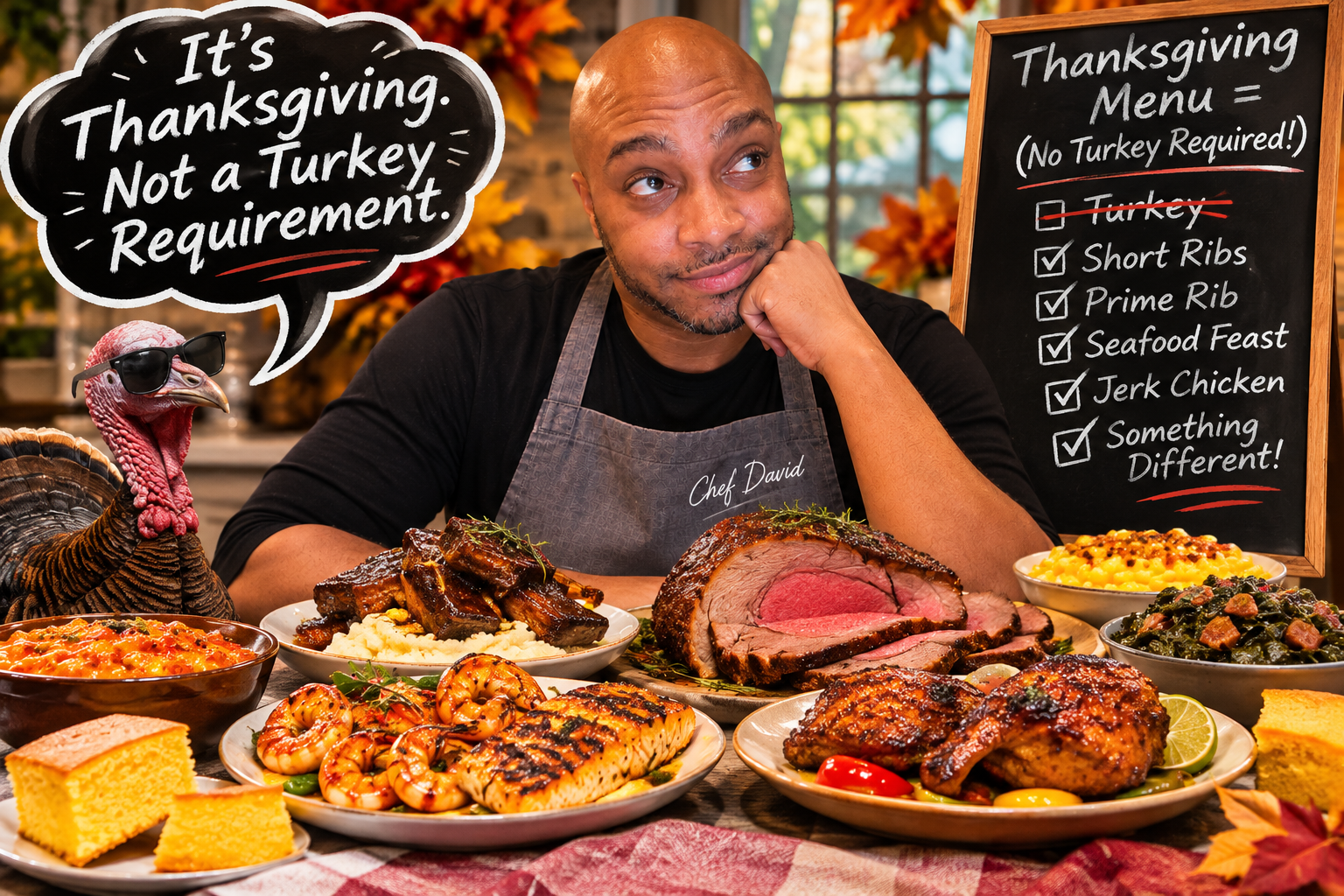
Who decided we all have to eat the same meal every November? And why are people so offended when somebody wants something different?
I'm going to say something that might get me uninvited from a few Thanksgiving dinners.
You do not have to cook a turkey for Thanksgiving. There. I said it. And before somebody's auntie starts clutching her pearls, let me explain.
I love a beautifully roasted turkey. I appreciate a good cornbread dressing, collard greens simmered with smoked meat, baked macaroni and cheese, and sweet potatoes that have no business being called a vegetable after everything we've added to them. I'm a chef. I respect tradition.
But somewhere along the way, Thanksgiving became less about gathering around a table and more about following a menu that apparently nobody is allowed to question.
Every November, millions of Americans prepare nearly identical meals, whether they particularly enjoy them or not. And if you even suggest doing something different?
You'd think you had proposed canceling Thanksgiving altogether. "What do you mean you're not making turkey?" "But it's Thanksgiving!" "That's not Thanksgiving food!"
Well, who exactly is running the Thanksgiving Food Compliance Department? Because I'd love to have a conversation with them.
Let's Be Honest. Some of You Don't Even Like Turkey.
There. That's the other thing nobody wants to say out loud. Some people don't actually enjoy turkey. They tolerate it.
They cover it in gravy, pile dressing on top of it, add a little cranberry sauce, and convince themselves it's delicious because they've been eating it every November since childhood. And there's nothing wrong with loving turkey.
But there's also nothing wrong with admitting you'd rather have a beautifully braised short rib, a juicy prime rib, or a plate of seafood. Think about it.
If you don't particularly enjoy turkey the other 364 days of the year, why are you suddenly committed to preparing a 20-pound one on Thanksgiving? Tradition? Family expectations? Because that's what your grandmother made? Those are meaningful reasons, and I respect them. But tradition should bring us together. It shouldn't make the person cooking dinner miserable.
And quite frankly, if you're spending two days preparing a meal you don't even want to eat, we might need to reconsider who's actually enjoying this holiday.
Thanksgiving Was Never Supposed to Be a Culinary Prison Sentence
I understand the connection between Thanksgiving and traditional dishes. Food carries memories. There are families who have been preparing the same dressing recipe for generations. Someone's grandmother made the best sweet potato pie anybody ever tasted, and every year the family tries to recreate it. Those dishes mean something.
But let's not confuse honoring tradition with being afraid to create new ones. Food traditions have never been completely frozen in time.
Even the Thanksgiving meals we consider traditional today reflect generations of regional influences, cultural adaptations, family preferences, and ingredients that became popular over time.
And depending on where you grew up, your Thanksgiving table might look completely different from somebody else's.
In Southern Black households, you're likely to find baked macaroni and cheese, collard greens, candied yams, cornbread dressing, and perhaps a glazed ham sitting right beside that turkey. In Louisiana, somebody might be serving gumbo.
In coastal communities, seafood dressing, crab, or oysters might make an appearance. Other families bring tamales, arroz con gandules, lasagna, jerk chicken, curry, or dishes that reflect their own cultural backgrounds. And you know what? It's all food worth gathering around.
If anything, allowing our tables to reflect who we are makes the holiday more personal.
What If We Actually Cooked What We Wanted to Eat?
Now we're getting somewhere. Imagine planning Thanksgiving dinner without immediately writing "turkey" at the top of your grocery list. What would you serve? Seriously. Would you still choose turkey? Or would you build a menu around dishes you genuinely love?
Because here's the beauty of cooking: once you stop treating a holiday menu like a set of rules, the possibilities get interesting.
And I'm not suggesting you replace Thanksgiving dinner with a bag of chips and a frozen pizza. Although, if that's genuinely what you want, I'm not here to investigate your kitchen.
I'm talking about creating a memorable holiday meal that feels intentional, exciting, and a little unexpected. Let's explore a few possibilities.
The Southern Thanksgiving Remix: Keep the Soul, Change the Centerpiece
Now, this is a direction I can absolutely get behind. Keep those familiar Southern flavors, but give the meal a different personality.
Instead of the traditional roasted turkey, imagine a beautiful platter of red-wine-braised short ribs, tender enough to pull apart with a fork.
Serve them with creamy smoked Gouda grits, roasted garlic green beans, and a skillet of buttery cornbread.
Or perhaps a bourbon-glazed pork roast with maple-roasted sweet potatoes, braised collard greens, and a rich pan sauce. Now tell me that doesn't sound like a holiday meal.
You could even put together a seafood-centered Southern Thanksgiving with blackened redfish, jumbo shrimp, crab-stuffed mushrooms, and a beautiful pan of seafood dressing.
We're not abandoning Southern cooking. We're letting it evolve.
And personally, I think a table full of flavorful food that people are genuinely excited to eat is a much better Thanksgiving than one where everybody takes a courtesy slice of turkey before loading their plates with macaroni and cheese. You know exactly what I'm talking about.
Thanksgiving With a Little International Influence? Absolutely.
Here's where we can really have some fun. One of the things I enjoy most about cooking is how different cultures approach flavor. And there's absolutely no reason those influences can't make their way onto a Thanksgiving table.
The point isn't to combine random dishes just to be different. It's to build a menu around a flavor direction, a culture you appreciate, or a style of cooking your family genuinely enjoys.
And when you're borrowing inspiration from another culinary tradition, take the time to understand the ingredients and techniques that make it special. Good cooking deserves that respect.
Or Maybe Thanksgiving Should Look More Like a Dinner Party
Here's an idea that might make some people uncomfortable. What if Thanksgiving dinner didn't involve seventeen different side dishes? I know. Revolutionary.
Instead of preparing enough food to feed an entire neighborhood, imagine hosting a beautifully curated dinner party. A simple three-course meal.
Start with roasted butternut squash soup finished with sage brown butter. Follow it with herb-crusted beef tenderloin, Parmesan smashed potatoes, and roasted Brussels sprouts with a balsamic reduction. Finish with a bourbon pecan tart or a warm apple dessert. Set the table. Light some candles. Pour the drinks.
And actually sit down with your guests instead of spending the entire evening trying to keep nine casseroles warm.
There's something to be said for a smaller menu executed beautifully. As a chef, I've always believed that more food doesn't automatically mean a better meal.
Sometimes, a few thoughtfully prepared dishes create a more memorable experience than a table so crowded you have to move the rolls just to find your plate.
But What About Grandma's Dressing?
Now, I already know the argument that's coming. "Okay, Chef, but my family would lose their minds if I didn't make the dressing." Then make the dressing!
Who said changing the menu meant throwing every tradition out the window? You don't have to approach Thanksgiving like it's an all-or-nothing situation.
Keep two or three family favorites and introduce something new. Maybe you skip the turkey but keep the dressing, macaroni and cheese, and collard greens.
Perhaps you serve a beautiful prime rib alongside your grandmother's sweet potato casserole. Or maybe you keep the turkey but completely reinvent the side dishes. That's the part people overlook.
In fact, introducing a new dish each year might be how your family discovers its next great Thanksgiving tradition.
Because at some point, somebody's grandmother made that famous recipe for the very first time. And I can almost guarantee somebody had an opinion about it.
Let's Address the Real Problem: People Don't Like Change
Here's where things get interesting. I don't think Thanksgiving menu disagreements are always about the food. I think they're often about expectations.
When someone says, "That's not Thanksgiving food," what they might really mean is, "That's not what Thanksgiving has always looked like to me." And those aren't necessarily the same thing. Food is emotional.
It reminds us of people, places, childhood memories, and experiences we don't want to lose. I understand that.
But there's room for both nostalgia and creativity at the same table. You can appreciate the memories attached to a traditional Thanksgiving dinner while also recognizing that your family, tastes, and circumstances may have changed. Maybe you're hosting for the first time. Maybe your family is smaller. Maybe you're combining two different cultural traditions.
Maybe you're tired of spending hundreds of dollars preparing dishes that nobody touches after the first plate.
Or maybe—and hear me out—you simply want something different. That should be reason enough. Of course, if you're hosting other people, communication matters.
Don't tell everyone you're preparing your famous Thanksgiving spread and then surprise them with an entirely different menu without warning. That's not culinary creativity. That's how family group chats become hostile.
But if you explain your plans, invite suggestions, and perhaps keep a few beloved favorites, you might be surprised by how willing people are to try something new. And if they're not? Well, there's always next year.
The Best Thanksgiving Menu Isn't the Most Traditional One
It's the one that works for the people sitting around your table. That's it. Not the one with the biggest turkey. Not the one with the most side dishes.
Not the one that looks exactly like the Thanksgiving you remember from 1997. The one that brings people together over food they genuinely enjoy.
If that means a traditional turkey dinner with all the Southern fixings, wonderful. If it means smoked brisket, seafood gumbo, lamb chops, jerk chicken, or a beautifully prepared vegetarian feast, that's wonderful too.
And if you want to serve turkey alongside something completely unexpected? Even better. Cooking should leave room for creativity.
Especially during a holiday that's supposed to be about gratitude, connection, and sharing a meal. Because here's something worth remembering:
From My Kitchen to Yours
I'm not declaring war on Thanksgiving turkey. I'm simply suggesting that maybe, just maybe, we should give ourselves permission to enjoy the holiday without feeling obligated to follow the exact same menu every single year. As a chef, I appreciate the importance of tradition.
But I also believe some of the best meals happen when we're willing to experiment, explore new flavors, and challenge what we've always done.
So if you're thinking about replacing that turkey with a slow-braised short rib, a beautifully roasted duck, a seafood feast, or something completely different this year? Go for it. Make it flavorful. Make it memorable. Make it yours.
And if somebody at the table insists that your menu isn't a proper Thanksgiving dinner? Just ask them one question: "Did you enjoy the food?"
Because if their plate is empty and they're asking for seconds, I think we've settled the argument.
Now I Want to Hear From You.
Would you ever skip the traditional Thanksgiving turkey and serve something completely different? Or is that bird absolutely nonnegotiable in your house? I'm genuinely curious. And yes, I'm expecting some strong opinions. Happy cooking, and Happy Thanksgiving!
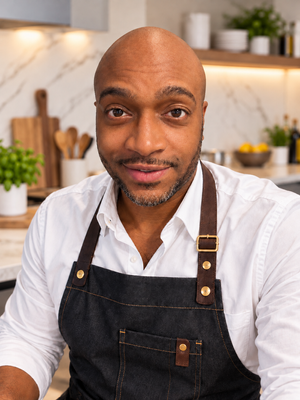
Chef David Wilmott
Executive Chef | Forks247
A Little More Flavor. A Lot More Confidence.
Whether you're preparing a traditional Thanksgiving dinner or creating something completely unexpected, great cooking begins with understanding flavor and technique.
Explore Kitchen Studio for chef-guided cooking foundations, practical techniques, and inspiration to make every meal your own.
Because good cooking doesn't have to follow tradition. It just has to deliver flavor.
Keep Cooking.
Your next great meal starts here. Discover chef-led recipes, practical kitchen inspiration, and new ways to bring flavor to your table.
Explore Recipes
Find your next meal, discover new ingredients, and bring something different to your table.
Find Your Next Meal → STORIESExplore the Blog
Chef-led stories, practical cooking advice, seasonal inspiration, and a little food for thought.
Read More Stories → THE CHEFMeet Chef David
Meet the chef behind Forks247 and discover the experience, perspective, and philosophy behind the food.
Meet Chef David →Good Cooking Is About Understanding Why.
Ever wonder why certain techniques work, why ingredients behave differently, or how chefs build layers of flavor?
That's where Kitchen Studio comes in.
Recipes show you what to make. Kitchen Studio helps you understand why it works.
Explore Kitchen Studio →




Follow Us
A Year Built on Flavor.
Bring inspiration into your kitchen all year long with the Forks247 2027 Culinary Calendar, a thoughtfully curated celebration of seasonal ingredients, inspired recipes, and everyday culinary excellence.
Created by Chef David and the Forks247 Kitchen Studio, this calendar brings together beautiful food imagery, chef-inspired cooking ideas, and seasonal highlights designed to make every month a little more flavorful.
Whether you're a passionate home cook, a food enthusiast, or simply someone who appreciates great food, this calendar is your invitation to explore, create, and enjoy the flavors of every season.
What's Inside
- 12 Months of Culinary Inspiration:A full year celebrating the ingredients, flavors, and traditions of each season. - 12 Featured Recipes:Chef-curated dishes showcasing seasonal ingredients and approachable culinary techniques. - Seasonal Ingredient Highlights:Discover ingredients at their best throughout the year. - Chef's Notes:Practical kitchen insights and inspiration from Chef David. - Culinary Celebrations:Explore food-related occasions and seasonal traditions. - Digital Recipe Access:Scan the featured QR code to discover the calendar's companion recipes online.
More Than a Calendar
The Forks247 Culinary Calendar is designed to inspire creativity beyond the page. From comforting winter favorites to vibrant summer dishes and holiday entertaining, each month offers another opportunity to bring something delicious to the table.
Perfect for your kitchen, home office, workspace, or as a thoughtful gift for the food lover in your life.