Somewhere along the way, we started confusing bold flavor with spicy food. But a dish doesn't have to set your mouth on fire to make an impression. Sometimes the most memorable flavors come from garlic, mustard, lemon, or that one ingredient you weren't quite sure how to use. Today, we're giving flavor permission to make a statement.
Let's Talk About Pungency
The word pungent doesn't always get the warmest reception. We tend to associate it with ingredients that announce themselves before we even begin cooking. Garlic, onions, mustard, horseradish, and fermented sauces all have that unmistakable character.
But pungency isn't necessarily a bad thing. It's part of what makes cooking interesting.
Think about raw garlic. It's sharp, assertive, and sometimes downright aggressive. But cook that same garlic gently in olive oil, and suddenly it becomes sweet, aromatic, and beautifully mellow.
Same ingredient. Entirely different experience.
That's the beauty of understanding how ingredients behave. When you know how to manage strong flavors, they become tools rather than obstacles.
Bold Flavor Is About Balance, Not Volume
One of the biggest mistakes I see home cooks make is assuming that when a dish tastes flat, it simply needs more seasoning.
Sometimes it does.
But sometimes it needs acidity. Sometimes it needs richness. Sometimes it needs a little savory depth. And sometimes the problem isn't what's missing, but how the ingredients were cooked in the first place.
I like to think about building flavor in layers. Each ingredient should have a purpose.
Aromatics
Garlic, shallots, onions, and fresh herbs introduce fragrance and character. How they're cooked changes the flavor they contribute.
Acidity
Lemon juice and vinegar bring brightness, balance richness, and help the other flavors stand out.
Umami
Anchovies, mushrooms, Worcestershire sauce, and fermented ingredients contribute savory depth and complexity.
Heat
Chiles add energy and contrast, but heat should support a dish rather than overpower its other flavors.
Why the Order of Cooking Matters
Here's where technique becomes just as important as the ingredient list.
Imagine taking a few chicken thighs and dropping them straight into a pan with garlic, mustard, lemon juice, and chicken stock. You'll probably end up with something edible.
But will you develop the same richness you would get from properly searing the chicken first? Not even close.
When chicken makes contact with a properly heated skillet, the proteins and natural sugars on its surface undergo the Maillard reaction. This creates the golden-brown color and complex savory flavors associated with a beautiful sear.
Those browned bits left behind in the pan? That's flavor waiting to happen.
Add a little stock, gently scrape the bottom of the skillet, and suddenly those concentrated flavors become part of your sauce.
That's not complicated cooking. That's intentional cooking.
Chef Notes
When building a pan sauce, don't rush the sear. Let the chicken develop a golden crust before turning it. Those flavorful browned bits, known as fond, are one of the most valuable ingredients in the skillet.
Bringing It All Together
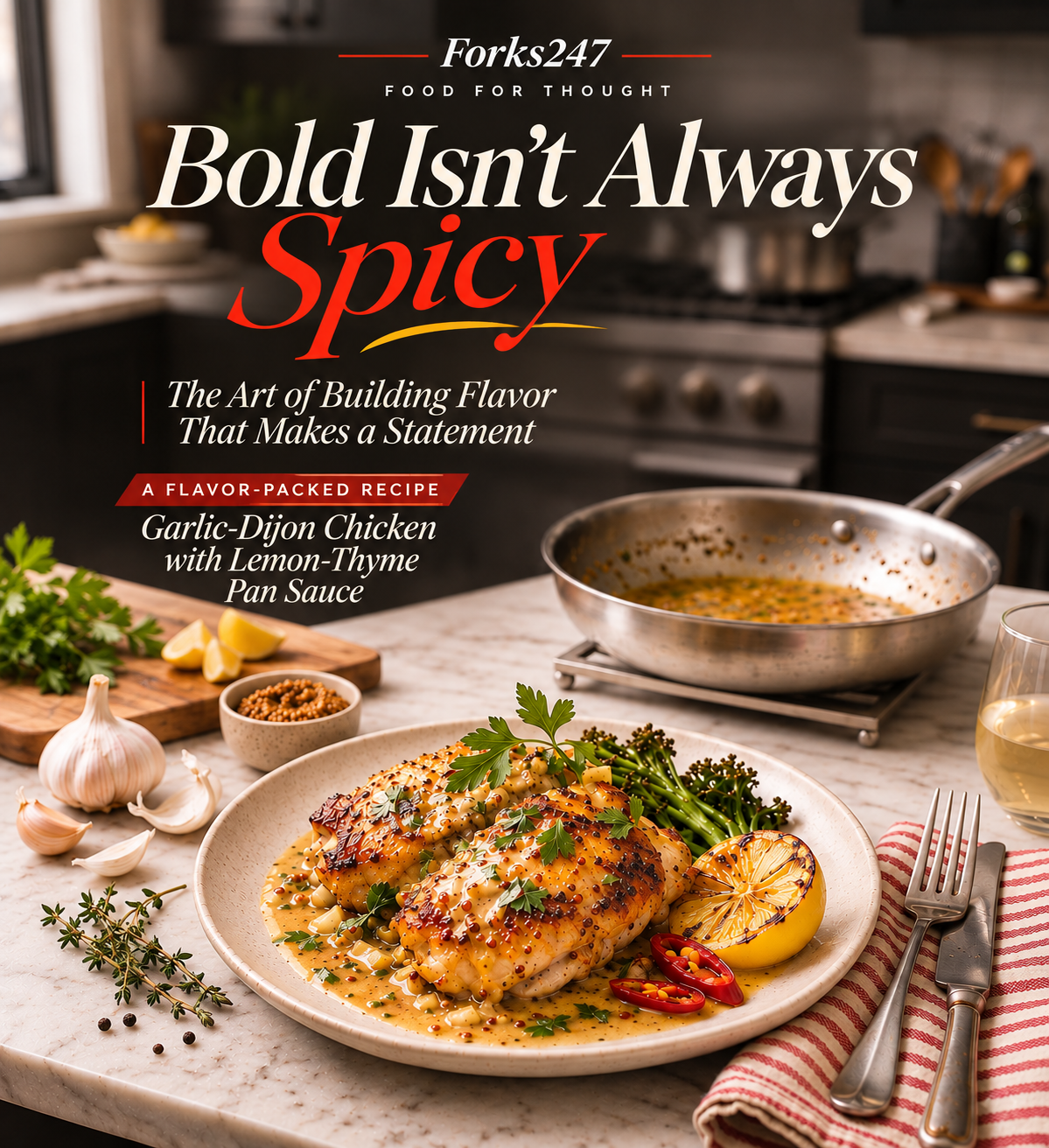
For Cook Something Bold & Pungent Day, I wanted to create something that demonstrates bold flavor without turning dinner into a competition over who can tolerate the most heat.
Enter Garlic-Dijon Chicken with Lemon-Thyme Pan Sauce and Red Serrano Peppers.
Garlic-Dijon Chicken with Lemon-Thyme Pan Sauce & Red Serrano Peppers
The foundation begins with beautifully seared chicken thighs, allowing those savory browned bits to develop in the skillet.
Garlic contributes its unmistakable aroma, while Dijon mustard brings tanginess and helps give the sauce body. Fresh thyme adds an earthy, herbal character.
Lemon brightens the finished sauce, cutting through the richness and allowing the individual flavors to shine.
And the red serrano peppers? They bring a little excitement to the party. Not enough to steal the show, but just enough to remind you they're there.
The result is savory, aromatic, bright, and deeply satisfying, with a sauce you'll want to spoon over everything on your plate.
A Few Things I Want You to Remember
You don't need an overflowing spice cabinet or a collection of expensive ingredients to create exceptional flavor.
What you need is an understanding of how ingredients interact.
Taste as you cook. Learn the difference between a dish that needs salt and one that needs acidity. Give your aromatics time to develop. Don't rush a good sear.
And most importantly, stop being afraid of ingredients with personality.
That little jar of Dijon mustard in your refrigerator? It can do far more than dress a sandwich.
Those anchovies sitting in your pantry? They can add incredible savory depth without making the finished dish taste like fish.
And that lemon on your counter? Sometimes a squeeze at the very end is all a rich dish needs.
The more you understand these ingredients, the less you'll depend on following recipes word for word.
You'll start cooking with confidence.
One Last Thought
Cooking should be enjoyable, creative, and occasionally a little adventurous.
There's nothing wrong with simple food. In fact, some of the most memorable meals I've prepared have been built around just a few carefully selected ingredients.
But simple doesn't have to mean boring.
So whether you're experimenting with garlic, introducing a little fermented flavor, or building your first proper pan sauce, give yourself permission to cook something that makes a statement.
After all, bold flavor isn't about how much heat you can handle. It's about how much flavor you can create.
And around here, we're not afraid of a little flavor.
Until next time, keep cooking with confidence.
Forks247 | Cooking Beyond the Recipe
Take Your Cooking Beyond the Recipe.
Want to understand why your favorite cooking techniques work? Inside Kitchen Studio, we explore the foundations of better cooking, from seasoning and flavor development to everyday techniques that help you build confidence in the kitchen.
Join Kitchen StudioKeep Cooking.
Your next great meal starts here. Discover chef-led recipes, practical kitchen inspiration, and new ways to bring flavor to your table.
Explore Recipes
Find your next meal, discover new ingredients, and bring something different to your table.
Find Your Next Meal → STORIESExplore the Blog
Chef-led stories, practical cooking advice, seasonal inspiration, and a little food for thought.
Read More Stories → THE CHEFMeet Chef David
Meet the chef behind Forks247 and discover the experience, perspective, and philosophy behind the food.
Meet Chef David →Good Cooking Is About Understanding Why.
Ever wonder why certain techniques work, why ingredients behave differently, or how chefs build layers of flavor?
That's where Kitchen Studio comes in.
Recipes show you what to make. Kitchen Studio helps you understand why it works.
Explore Kitchen Studio →




Follow Us

A Year Built on Flavor.
Bring inspiration into your kitchen all year long with the Forks247 2027 Culinary Calendar, a thoughtfully curated celebration of seasonal ingredients, inspired recipes, and everyday culinary excellence.
Created by Chef David and the Forks247 Kitchen Studio, this calendar brings together beautiful food imagery, chef-inspired cooking ideas, and seasonal highlights designed to make every month a little more flavorful.
Whether you're a passionate home cook, a food enthusiast, or simply someone who appreciates great food, this calendar is your invitation to explore, create, and enjoy the flavors of every season.
What's Inside
- 12 Months of Culinary Inspiration:A full year celebrating the ingredients, flavors, and traditions of each season. - 12 Featured Recipes:Chef-curated dishes showcasing seasonal ingredients and approachable culinary techniques. - Seasonal Ingredient Highlights:Discover ingredients at their best throughout the year. - Chef's Notes:Practical kitchen insights and inspiration from Chef David. - Culinary Celebrations:Explore food-related occasions and seasonal traditions. - Digital Recipe Access:Scan the featured QR code to discover the calendar's companion recipes online.
More Than a Calendar
The Forks247 Culinary Calendar is designed to inspire creativity beyond the page. From comforting winter favorites to vibrant summer dishes and holiday entertaining, each month offers another opportunity to bring something delicious to the table.
Perfect for your kitchen, home office, workspace, or as a thoughtful gift for the food lover in your life.