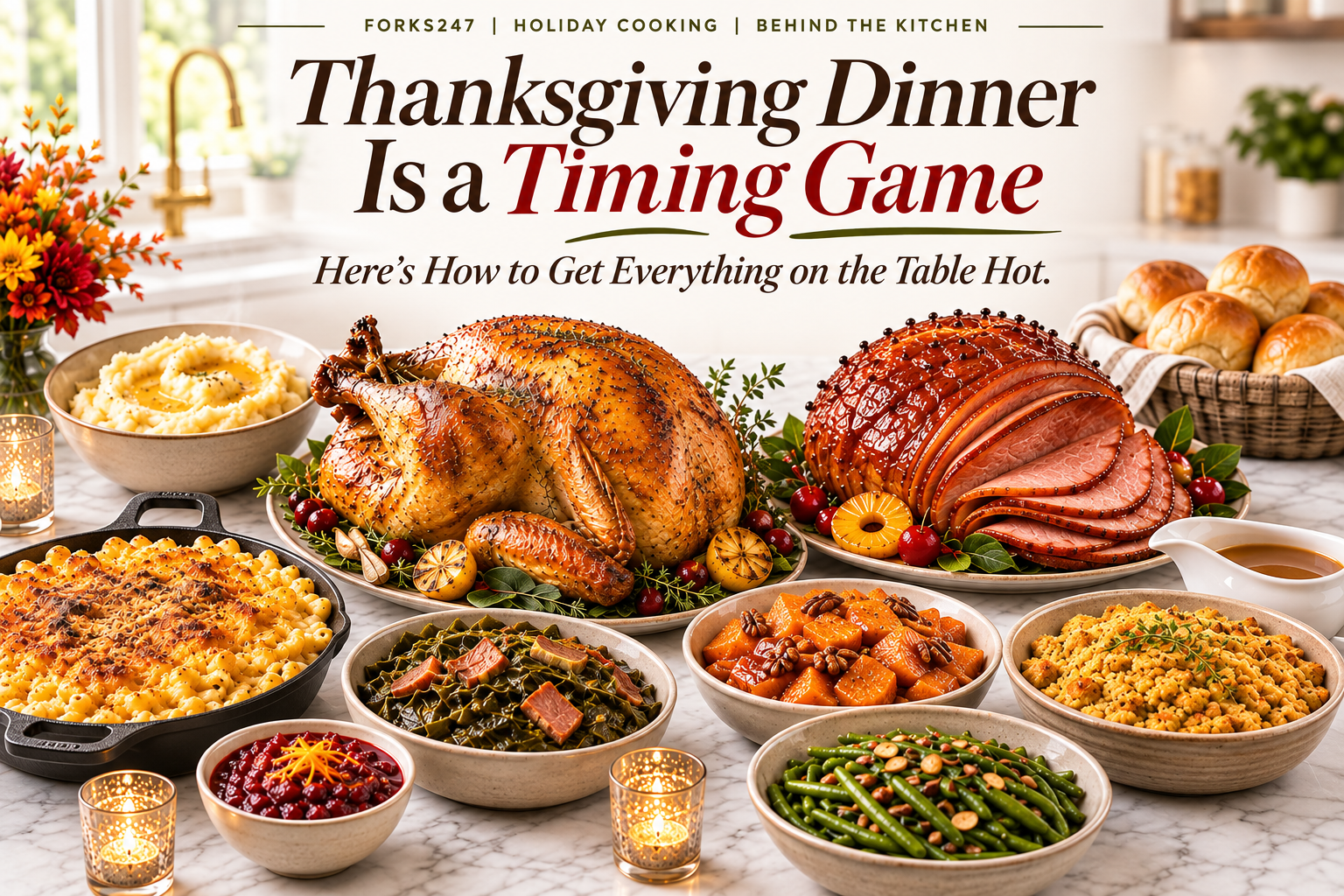
Because nobody wants piping-hot turkey, lukewarm macaroni and cheese, and rolls that were perfect 45 minutes ago.
There's a particular kind of chaos that happens in kitchens across America every Thanksgiving.
The turkey is taking longer than expected. The macaroni and cheese still needs another 20 minutes. Someone has opened the oven for the sixth time to check the rolls. The mashed potatoes are getting cold, the gravy is developing a skin, and somebody has wandered into the kitchen asking the one question nobody should ever ask a person managing Thanksgiving dinner:
"What time are we eating?"
Well, we were eating at 3:00. But since you opened the oven four times, we're looking at 3:45. I'm kidding. Mostly.
Here's something I've learned after years of working in professional kitchens and preparing meals for large gatherings: Thanksgiving dinner isn't necessarily difficult because of what you're cooking. It's difficult because of when everything needs to be ready.
You can make the best turkey, the creamiest mashed potatoes, and macaroni and cheese that could settle a family disagreement. But if half the food is cold by the time everyone sits down, something went wrong long before the first plate was served.
The good news? You don't need a commercial kitchen, six ovens, or a culinary degree to get Thanksgiving dinner on the table hot.
You need a plan. And perhaps a little less confidence in your ability to cook twelve things simultaneously.
First, Stop Trying to Cook Everything on Thanksgiving Day
Let's get this out of the way.
Thanksgiving Day should not be the first time you're peeling potatoes, chopping onions, making cranberry sauce, assembling casseroles, and discovering that your roasting pan doesn't fit inside your oven.
That's not cooking. That's an obstacle course.
In professional kitchens, we rely on something called mise en place, a French term meaning "everything in its place."
And before you roll your eyes at the fancy French terminology, it simply means getting your ingredients, equipment, and preparations organized before the cooking begins.
It's the difference between cooking with a plan and standing in front of an open refrigerator wondering where you put the celery.
Two days before Thanksgiving, you can already have a surprising amount of work completed.
- Chop onions, celery, and other vegetables.
- Prepare cranberry sauce.
- Make pie dough or bake desserts.
- Prepare stock for gravy and dressing.
- Measure dry ingredients for recipes.
- Organize serving dishes and utensils.
- Check that every dish actually fits in your oven.
That last one deserves more attention than people realize.
A beautiful 22-pound turkey doesn't do you much good if the roasting pan occupies every available inch of oven space. And no, rearranging the racks seventeen times won't magically make the oven bigger.
Your Oven Is Prime Real Estate. Treat It That Way.
Here's where Thanksgiving cooking gets interesting.
Most home kitchens have one oven. Maybe two if you're fortunate. Yet somehow, the Thanksgiving menu requires the oven to operate like an airport runway on the busiest travel day of the year.
The turkey needs several hours. The dressing needs 40 minutes. The macaroni and cheese needs 30. The sweet potato casserole needs 35. The rolls need 12.
And everybody wants their dish served fresh from the oven.
This is where timing becomes more important than the recipes themselves.
The trick is to stop thinking about each dish individually and start thinking about how they share the same equipment.
Start with the item that requires the most time and the least flexibility: usually the turkey. Then build the rest of your cooking schedule around it.
And here's something that might surprise you: the turkey doesn't have to finish cooking five minutes before dinner.
In fact, it shouldn't.
The Turkey Needs to Rest. That's Your Golden Opportunity.
One of the biggest Thanksgiving mistakes is treating the turkey like it needs to go directly from the oven to the carving board and immediately onto everyone's plate.
Not only does that make carving more difficult, but you're also overlooking one of the most valuable windows of time in your entire cooking schedule.
A properly roasted turkey benefits from resting before carving.
For many whole turkeys, allowing approximately 30–45 minutes of resting time gives the meat an opportunity to settle and makes carving easier. Larger birds may need additional resting time.
And while that turkey is resting, your oven is suddenly available. That's when the casseroles, dressing, and other baked sides can go in.
Think about it. Instead of competing with the turkey for oven space, your side dishes get their turn while the turkey is doing exactly what it needs to do.
That's not cutting corners. That's smart cooking.
And don't leave the turkey sitting on the counter indefinitely. If you're planning an especially long rest or delayed service, you'll need a safe hot-holding plan.
Not Everything Needs to Be Cooked at the Last Minute
There's a common misconception that food tastes best only when it has been prepared moments before serving. Sometimes that's true.
But plenty of Thanksgiving dishes actually benefit from being made ahead.
Cranberry sauce? Make it a day or two ahead. The flavors have time to develop, and that's one less pot competing for stove space.
Desserts? Many pies can be prepared in advance, provided they're stored properly.
Dressing? You can prepare components ahead, refrigerate them safely, and assemble or bake according to your recipe.
Gravy? A flavorful stock or gravy base can be prepared ahead of time. Finish it with turkey drippings on Thanksgiving Day for that freshly roasted flavor.
Even mashed potatoes can be prepared ahead and reheated gently with additional warm milk, cream, or butter to restore their texture.
The key is knowing which dishes tolerate reheating and which ones deserve your attention right before serving.
Cranberry sauce can wait patiently in the refrigerator. A perfectly crisp dinner roll? Not so much.
And that's okay. Every dish doesn't need to be treated like the guest of honor.
Let's Talk About the Three Things That Ruin Thanksgiving Timing
1. Overcrowding the Oven
When every rack is packed with casseroles, hot air can't circulate effectively. Food heats unevenly, baking takes longer, and the original cooking times become more like optimistic suggestions.
Give dishes room, rotate them when appropriate, and avoid constantly opening the oven door.
2. Making the Sides Too Early
Mashed potatoes are wonderful when they're hot and fluffy. They're less exciting when they've been sitting uncovered for an hour.
Plan to hold or reheat them gently, and keep a little warm milk or cream available to bring back that smooth consistency.
3. Forgetting the Little Things
Rolls. Gravy. Drinks. Serving spoons. Butter. The cranberry sauce that's still sitting in the refrigerator.
These are the small tasks that suddenly become emergencies ten minutes before dinner.
Make a final-service checklist and treat those finishing touches like part of the meal, not an afterthought.
A Thanksgiving Cooking Timeline That Actually Works
Let's say you're planning to serve Thanksgiving dinner at 3:00 PM.
Here's a sample timeline to help everything come together without turning your kitchen into a competitive cooking show.
Thanksgiving Day Game Plan
Target dinner time: 3:00 PM. Illustrative schedule for a fully thawed 12–14 lb unstuffed turkey. Adjust roasting time based on actual weight, your oven, and thermometer readings.
Clear counters, check your equipment, organize prepped ingredients, and set out the dishes you'll need.
Roast at 325°F or higher, following safe cooking guidance. Monitor internal temperatures and allow flexibility if cooking takes longer than expected.
Get potatoes ready, organize vegetables, and prepare anything that needs quick attention later.
Once it's safely cooked, remove it and allow time to rest. The finish time depends on the bird, so don't rely on the clock alone.
If the turkey is out, begin baking or reheating prepared casseroles and dressing. If the turkey needs more time, adjust the remaining schedule.
Reheat mashed potatoes, finish vegetables, and prepare your gravy.
Warm the rolls, check the seasoning, and transfer hot dishes into preheated serving vessels.
Carve the turkey as close to serving as practical, bring everything together, and make sure hot food stays hot.
You've earned the right to sit down and enjoy the meal you spent all that time preparing.
Of course, every Thanksgiving menu is different.
Some families serve dinner at noon. Others eat at six. Some roast their turkey, others fry it, smoke it, or prepare several smaller birds.
The exact times will change.
The principle doesn't: work backward from dinner, build around the longest cooking item, and give yourself room for the unexpected.
And Please, Stop Opening the Oven Every Ten Minutes.
I understand. You're excited.
The turkey looks beautiful. The macaroni and cheese is bubbling. You want to see what's happening.
But every time you open the oven door, you're releasing heat and potentially extending the cooking process.
Your food needs a little privacy.
Use the oven light. Use a thermometer. Trust the process.
And if the turkey isn't done when you expected it to be, don't panic. Adjust the schedule.
That's what professional kitchens do every day. We make a plan, and then we make adjustments as needed.
The ability to adapt is just as important as knowing how to cook.
Your Guests Remember the Experience, Not Your Cooking Schedule
Here's the part I think we sometimes forget.
Thanksgiving is supposed to be about gathering around a table, enjoying good food, and spending time with people we care about.
It's not supposed to be a 12-hour endurance test where the person doing all the cooking is too exhausted to enjoy dinner.
I've always believed that being a good cook isn't just about how well you prepare individual dishes. It's about understanding how those dishes work together.
The timing. The preparation. The temperature. The finishing touches. That's what turns a collection of recipes into a complete meal.
And yes, things will occasionally go wrong.
The rolls might get a little too brown. Somebody might forget to take the cranberry sauce out of the refrigerator. Someone will almost certainly ask when dinner is ready while you're standing directly in front of a hot oven.
It's Thanksgiving. It happens.
But with a little planning, those moments become minor inconveniences instead of full-blown kitchen disasters.
And if everything makes it to the table hot? Well, that's something to be thankful for.
From My Kitchen to Yours
Thanksgiving cooking doesn't have to be complicated. A little preparation, some practical timing, and the willingness to do a few things ahead can make all the difference.
If you're looking to build more confidence in the kitchen, explore Kitchen Studio for practical cooking techniques, kitchen foundations, and chef-guided resources designed for everyday cooking.
And while you're planning your holiday menu, remember this:
The best Thanksgiving dinners aren't necessarily the ones with the most dishes. They're the ones where everyone gets to sit down together and enjoy them.
Happy cooking, and Happy Thanksgiving!
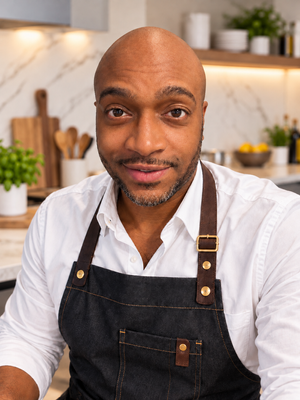
Chef David Wilmott
Executive Chef | Forks247
Food safety guidance: USDA Food Safety and Inspection Service.
Keep Cooking.
Your next great meal starts here. Discover chef-led recipes, practical kitchen inspiration, and new ways to bring flavor to your table.
Explore Recipes
Find your next meal, discover new ingredients, and bring something different to your table.
Find Your Next Meal → STORIESExplore the Blog
Chef-led stories, practical cooking advice, seasonal inspiration, and a little food for thought.
Read More Stories → THE CHEFMeet Chef David
Meet the chef behind Forks247 and discover the experience, perspective, and philosophy behind the food.
Meet Chef David →Good Cooking Is About Understanding Why.
Ever wonder why certain techniques work, why ingredients behave differently, or how chefs build layers of flavor?
That's where Kitchen Studio comes in.
Recipes show you what to make. Kitchen Studio helps you understand why it works.
Explore Kitchen Studio →




Follow Us
A Year Built on Flavor.
Bring inspiration into your kitchen all year long with the Forks247 2027 Culinary Calendar, a thoughtfully curated celebration of seasonal ingredients, inspired recipes, and everyday culinary excellence.
Created by Chef David and the Forks247 Kitchen Studio, this calendar brings together beautiful food imagery, chef-inspired cooking ideas, and seasonal highlights designed to make every month a little more flavorful.
Whether you're a passionate home cook, a food enthusiast, or simply someone who appreciates great food, this calendar is your invitation to explore, create, and enjoy the flavors of every season.
What's Inside
- 12 Months of Culinary Inspiration:A full year celebrating the ingredients, flavors, and traditions of each season. - 12 Featured Recipes:Chef-curated dishes showcasing seasonal ingredients and approachable culinary techniques. - Seasonal Ingredient Highlights:Discover ingredients at their best throughout the year. - Chef's Notes:Practical kitchen insights and inspiration from Chef David. - Culinary Celebrations:Explore food-related occasions and seasonal traditions. - Digital Recipe Access:Scan the featured QR code to discover the calendar's companion recipes online.
More Than a Calendar
The Forks247 Culinary Calendar is designed to inspire creativity beyond the page. From comforting winter favorites to vibrant summer dishes and holiday entertaining, each month offers another opportunity to bring something delicious to the table.
Perfect for your kitchen, home office, workspace, or as a thoughtful gift for the food lover in your life.