The Ingredient Most Home Cooks Forget: Why Acid Changes Everything
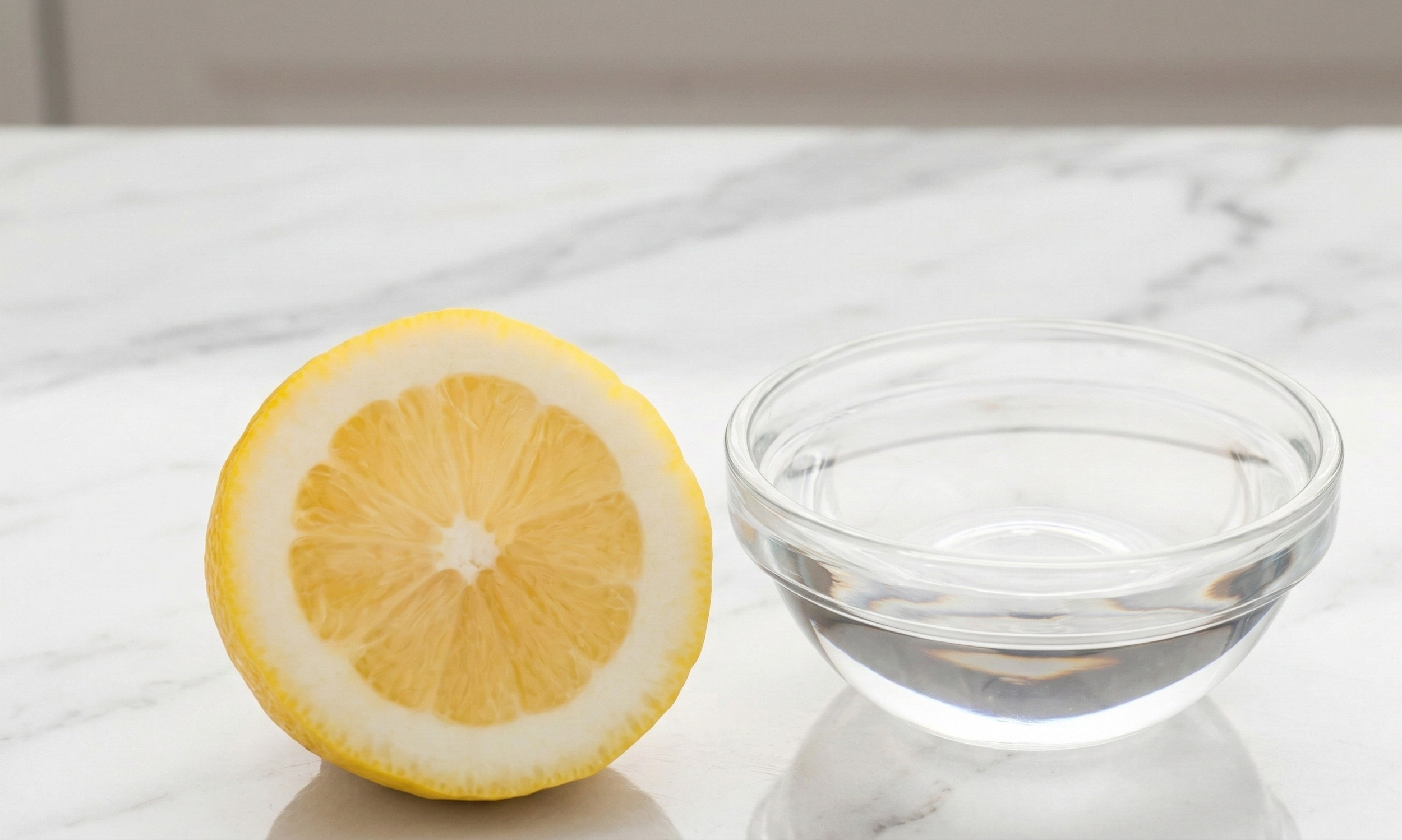
There’s a moment every cook knows well. You’ve seasoned the dish—added salt, maybe a little pepper—then you take a taste and something still feels off. The food isn’t bad, and it’s definitely not undercooked. It’s just… flat. So what do most people do next? They reach for more salt. Sometimes that helps for a moment, but very quickly the dish just becomes salty without actually becoming better. Here’s the secret many home cooks miss: when food tastes dull, it usually doesn’t need more salt—it needs acid. And once you understand why, it changes the way you cook.
Acid Is the Missing Ingredient
In cooking, acid is one of the most powerful tools for building flavor balance, But for some reason, it’s the ingredient that gets forgotten the most.
Salt seasons.
Fat carries flavor.
But acid wakes everything up.
Think of acid like turning the lights on in a room.
The furniture was always there.
The colors were always there.
You just couldn’t see them clearly.
That’s exactly what acid does to flavor.
It doesn’t necessarily make food taste sour.
It makes the flavors clearer, brighter, and more defined.
Why Acid Matters in Cooking
A well-balanced dish almost always has three things working together:
• Salt – enhances flavor
• Fat – creates richness and body
• Acid – provides contrast and brightness
Without acid, rich dishes can feel heavy.
Vegetables can taste muted.
Sauces can feel like they’re missing something—even when technically everything is there.
Add the right acid, though?
Suddenly:
• Sauces pop
• Vegetables taste fresher
• Rich dishes feel balanced instead of heavy
That’s the power of a small splash of brightness.
Three Everyday Cooking Examples
Let me show you what this looks like in real cooking situations.
1. Creamy Sauces
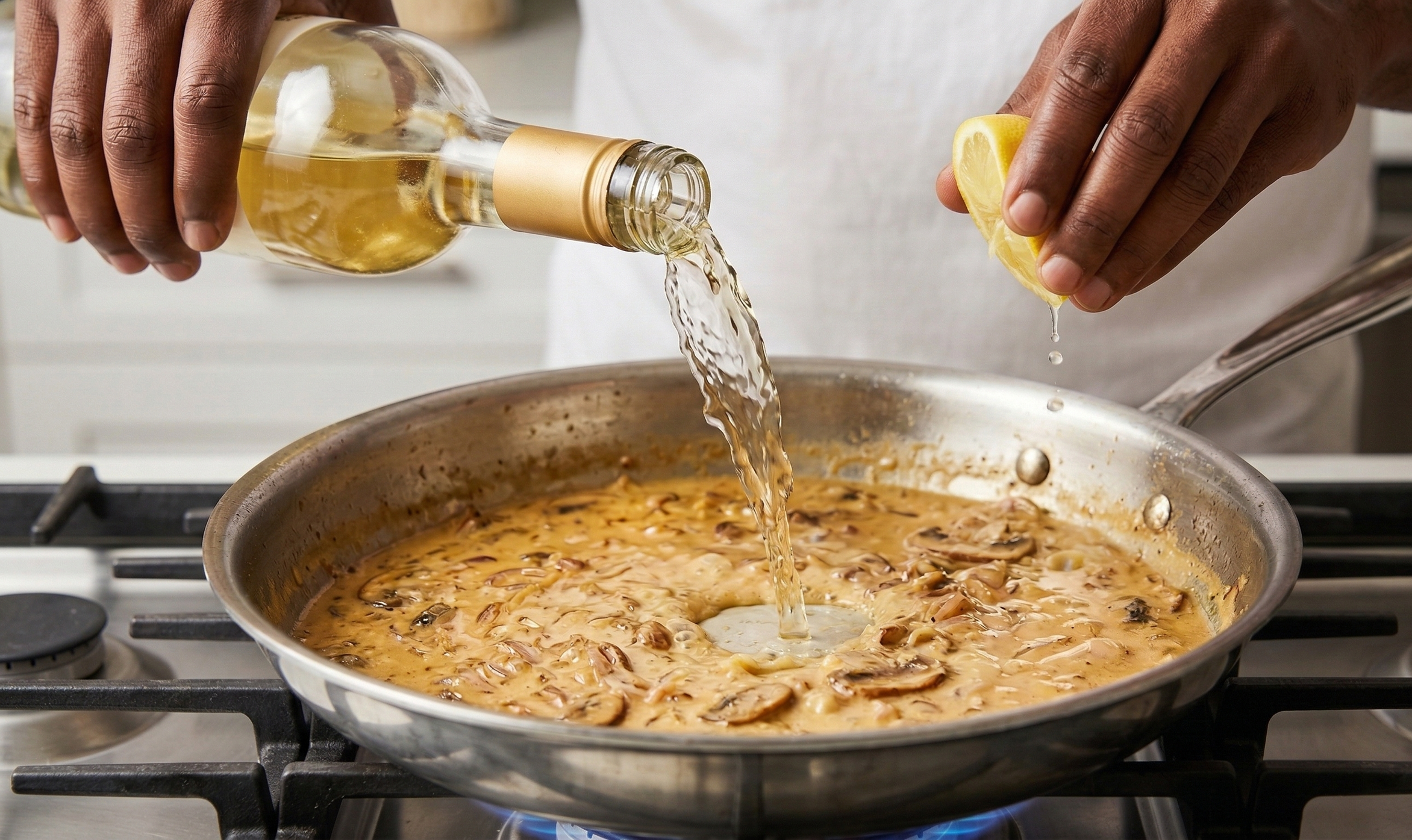
Imagine a rich pan sauce.
Butter.
Cream.
Shallots.
Maybe mushrooms.
Delicious, right?
But if it feels a little heavy or muddy in flavor, the fix is simple:
Add a splash of white wine or lemon juice at the end.
Suddenly the sauce tastes lighter, sharper, and more complex.
You didn’t change the sauce.
You balanced it.
2. Roasted Vegetables
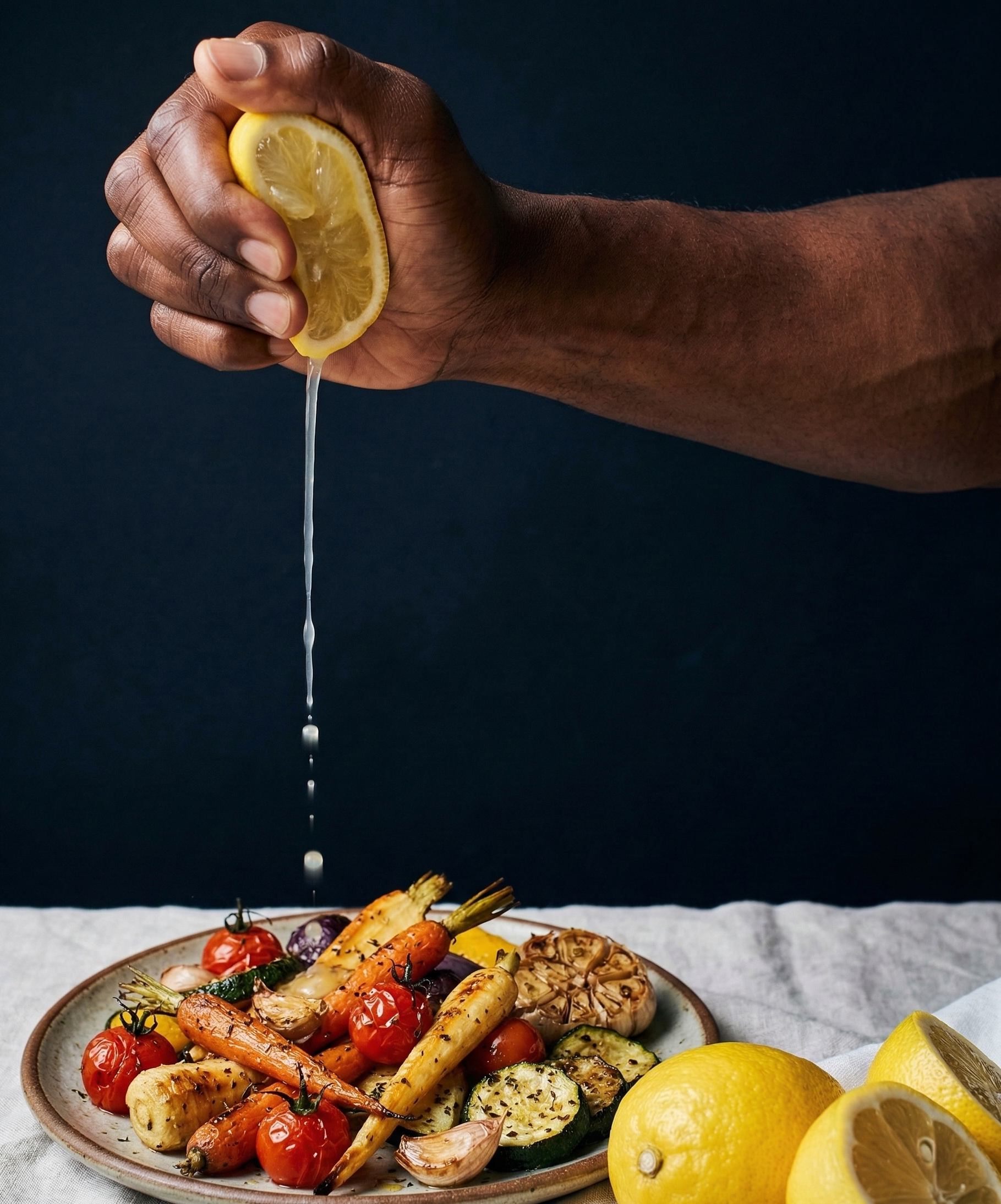
Roasted vegetables are already sweet and caramelized.
But right before serving?
Try this:
• squeeze of lemon
• drizzle of sherry vinegar
• splash of balsamic
Now those roasted carrots, Brussels sprouts, or potatoes suddenly taste brighter and more vibrant.
It’s like turning the flavor contrast up.
3. Rich Meat Dishes
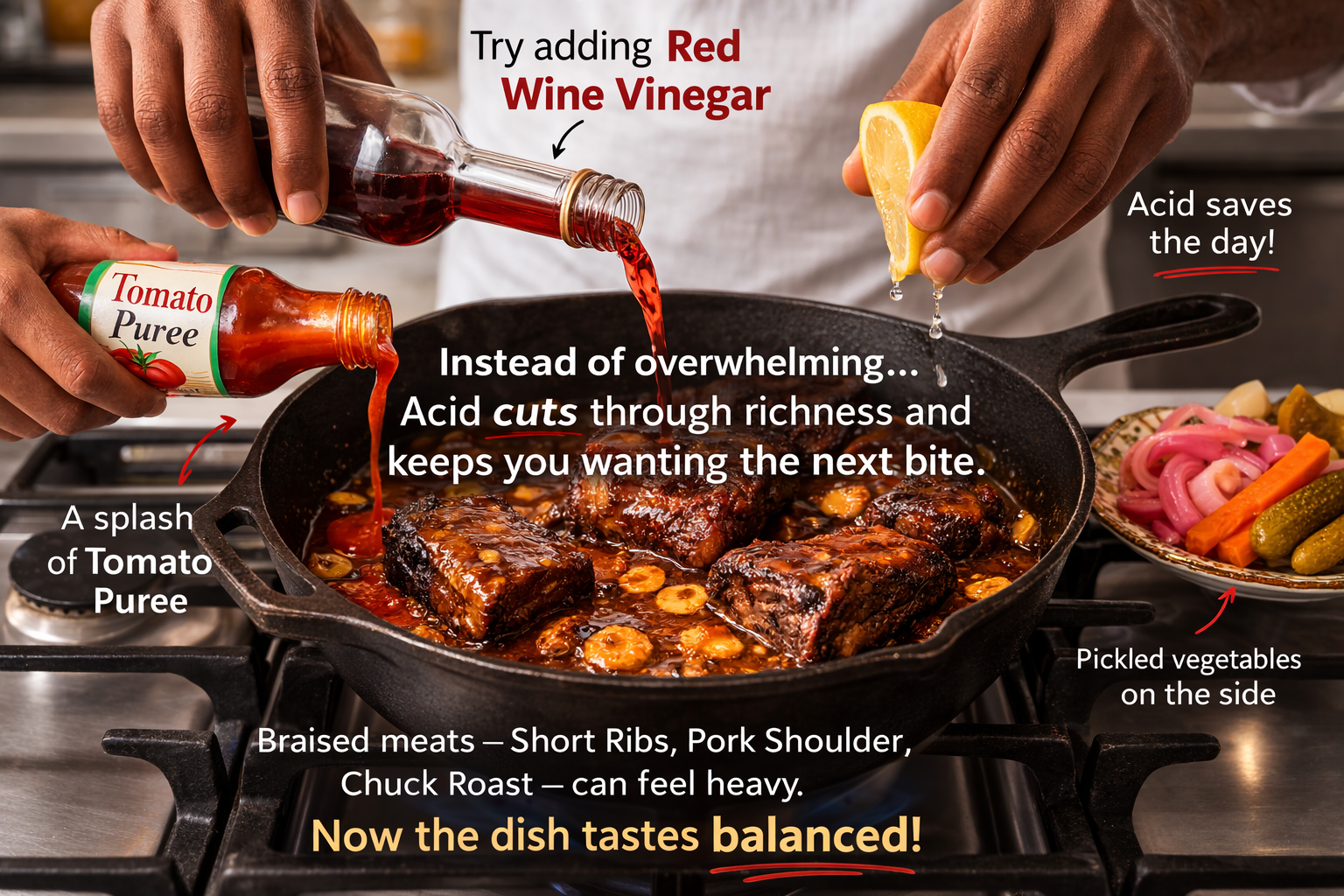
Braised meats and fatty cuts—like short ribs, pork shoulder, or chuck roast—are incredible, but they can also feel heavy on the palate. That’s where acid saves the day.
Try adding:
• red wine vinegar
• a splash of tomato
• pickled vegetables on the side
Now the dish tastes balanced instead of overwhelming. Acid cuts through richness and keeps you wanting the next bite.
When to Add Acid?
Cook the dish.
Taste it.
Add a small splash of acid.
Stir.
Taste again.
Here’s the technique that makes the biggest difference:
Add acid near the end of cooking.
Acid is usually a finishing tool.
If you add it too early, it can lose its brightness as it cooks.
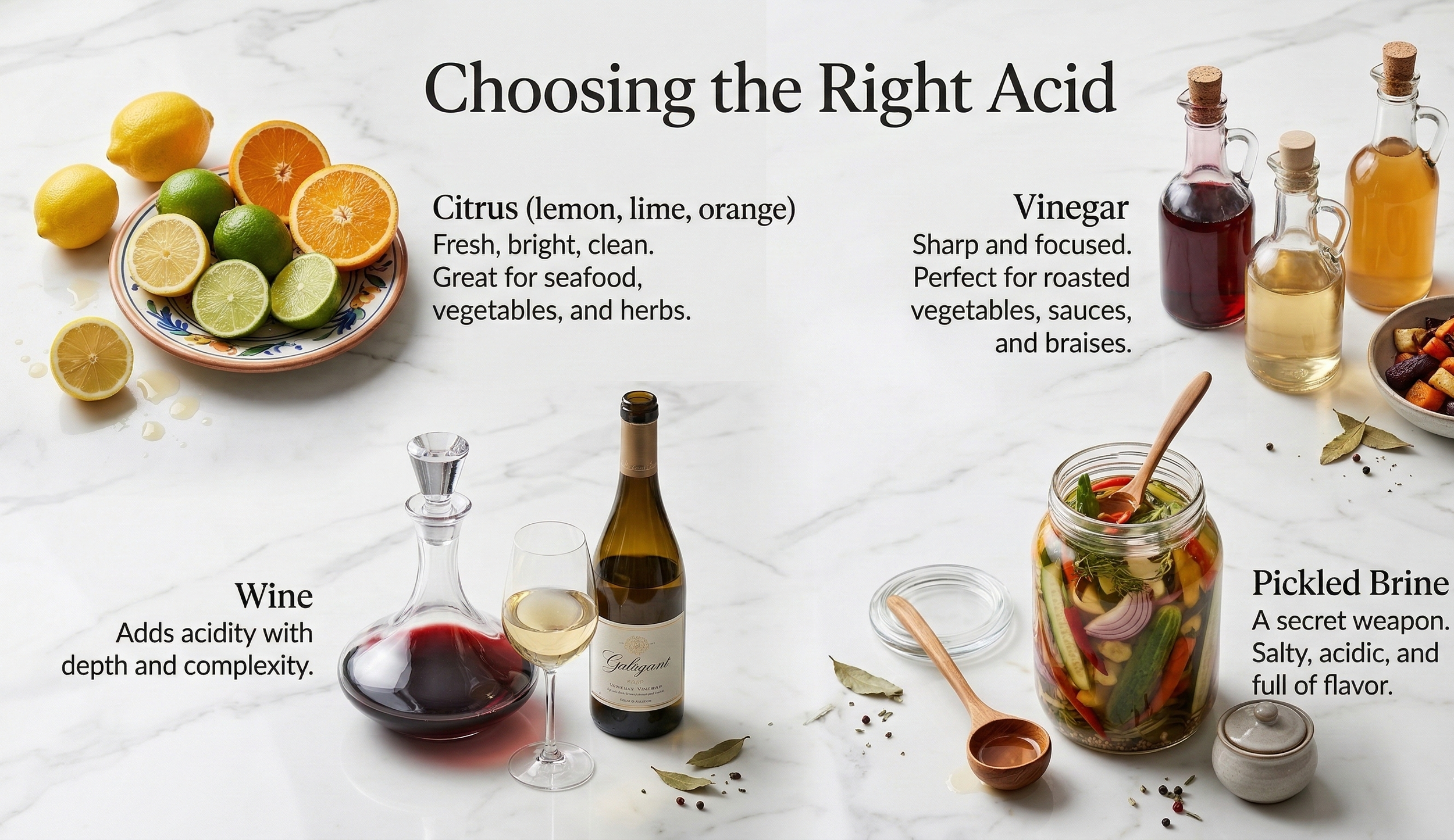
Different acids bring different personalities to a dish.
Matching the acid to the dish is where cooking really becomes fun.
Citrus (lemon, lime, orange)
Fresh, bright, clean. Great for seafood, vegetables, and herbs.
Vinegar
Sharp and focused. Perfect for roasted vegetables, sauces, and braises.
Wine
Adds acidity with depth and complexity.
Pickled brine
A secret weapon. Salty, acidic, and full of flavor.
A Quick Flavor Check
The next time something tastes a little dull, run this quick test:
✓ Rich + dull = add acid
✓ Roasted + heavy = add acid
✓ Creamy + muted = add acid
Then taste again.
Nine times out of ten, that tiny adjustment brings the whole dish into focus.
Want to Learn More About Flavor Balance?
This exact concept—how salt, fat, and acid work together—is something I break down deeper inside Kitchen Studio.
Inside Kitchen Studio, I walk through the Meal After Meal Foundations, where we explore the simple techniques that professional cooks use every day to build balanced, confident meals without overthinking the process.
If you’ve ever wondered why restaurant food tastes more vibrant than home cooking, the answer is usually small technique shifts like this.
And once you understand them, you start seeing cooking in a completely different way.
One small adjustment at a time. One meal after another.
Want to cook with more confidence?
Explore the Meal After Meal Foundations inside Kitchen Studio.




Follow Us

A chef’s rule worth wearing.
The Taste It Before You Trust It T-Shirt takes one of the kitchen’s simplest lessons and turns it into a statement. Bold typography paired with a refined editorial accent gives the design a clean, modern look that feels just as good outside the kitchen as it does behind the line.
Finished with subtle Forks247 branding on the sleeve, this tee is made for cooks, food lovers, and anyone who knows the final decision should always come down to flavor.
Detail
Premium unisex fit 100% combed and ring-spun cotton Heather colors contain polyester Fabric weight: 4.2 oz./yd² (142 g/m²) Pre-shrunk fabric Side-seamed construction Shoulder-to-shoulder taping Forks247 sleeve branding Designed for everyday comfort
Taste it. Adjust it. Trust yourself.