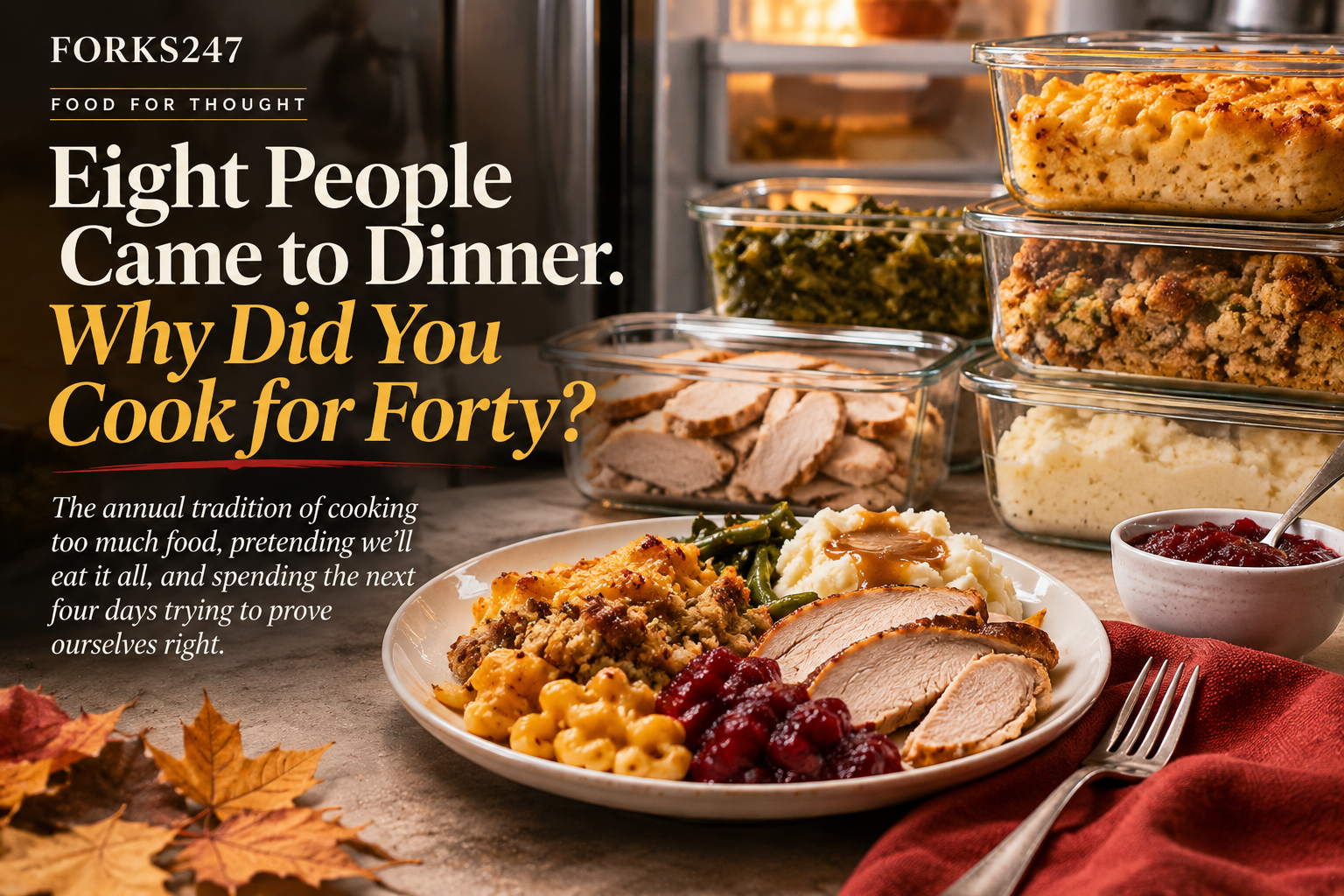
The annual tradition of cooking too much food, pretending we'll eat it all, and spending the next four days trying to prove ourselves right.
Eight people came to Thanksgiving dinner. Eight. So why are there three pans of macaroni and cheese, two different dressings, a twenty-pound turkey, and enough sweet potatoes to feed a small congregation?
Thanksgiving was yesterday. The guests have gone home. The kitchen is finally clean. The good serving platters have been put away, and you've officially announced that you're not cooking another thing until Monday.
Then you open the refrigerator.
And there it is.
Enough turkey to feed a small neighborhood. Three containers of macaroni and cheese. Two different dressings. Half a pan of sweet potatoes. A mountain of mashed potatoes. And a collection of desserts nobody seems to remember bringing.
You've got leftovers in the refrigerator, leftovers in the freezer, and probably a foil-covered plate somewhere in somebody else's car.
And let's not forget the person who took a plate home but somehow left you with the container they brought.
Now comes the real Thanksgiving challenge.
How many different ways can we convince ourselves to eat this food before we're completely tired of looking at it?
Somewhere Along the Way, More Food Became Better Hospitality
Let me make something clear before somebody's auntie gets upset with me.
I love a good Thanksgiving spread.
I love the dishes that only appear once or twice a year. I appreciate the family recipes, the traditions, and the relative who has been responsible for the macaroni and cheese since 1998 and has absolutely no intention of allowing anyone else near that recipe.
And in many families, particularly across the South, food is one of the ways we express love, generosity, and hospitality.
A full table means something. It tells people they're welcome, they're cared for, and nobody is leaving hungry.
There's something beautiful about that.
But somewhere along the way, preparing enough food became less important than preparing more than enough food.
We double recipes because we don't want to run out. We make extra sides because somebody might want options. We prepare multiple desserts because one person doesn't like pecan pie and another person refuses to eat anything with pumpkin in it.
Before you know it, eight people are coming to dinner, and you're preparing food like the entire church congregation accepted the invitation.
And the funny part?
Every single year, somebody stands in front of the refrigerator and says, "We made entirely too much food."
Yes.
Yes, we did.
And somehow, we're all going to do it again next year.
The Problem Isn't Leftovers. It's Leftover Fatigue.
I don't have anything against leftovers.
Some foods are arguably better the next day. A good pot of greens can develop deeper flavor overnight. Well-prepared dressing reheats beautifully. And cold sweet potato pie?
I'm certainly not turning that down.
But there's a difference between enjoying leftovers and feeling obligated to finish them.
Friday, that turkey sandwich is delicious.
Saturday, you're thinking about making turkey soup.
Sunday, you're searching online for seventeen different ways to disguise the same turkey.
And by Monday, somebody in the house has finally said what everyone else has been thinking:
I understand completely.
It's not necessarily that the food isn't good. It's that we've lost the excitement of eating it.
You can only rearrange the same turkey, dressing, greens, and macaroni and cheese on a plate so many times before your appetite starts asking for something different.
And here's where I think we need to challenge ourselves a little.
Food should be something we enjoy, not an obligation we're trying to complete.
Here's a Controversial Idea: What If We Cooked Less Next Year?
I know.
Somebody's grandmother just felt a disturbance in the kitchen.
But hear me out.
What if Thanksgiving didn't require twelve different side dishes?
What if you made one excellent dressing instead of three?
What if the vegetables received just as much attention as the turkey instead of being that one dish somebody felt obligated to put on the table?
And what if we stopped assuming that every person needs a full serving of every single dish?
A great menu isn't measured by how many things you can fit on the table.
It's measured by how well those dishes work together.
I've spent enough time in professional kitchens to know that a focused menu often produces better results than an unnecessarily large one.
Fewer dishes allow you to devote more attention to seasoning, technique, temperature, timing, and presentation.
You know, the things that actually make food taste good.
And here's something else: making fewer dishes doesn't mean creating a less memorable experience.
Sometimes it simply means you're not spending Thanksgiving morning wondering why you agreed to prepare seven casseroles before noon.
Chef Notes: Plan the Menu, Not Just the Shopping List
Before planning your next holiday meal, think about the number of guests, their preferences, and how the dishes complement one another.
A substantial protein, a few thoughtfully prepared sides, something fresh or acidic to balance the richness, and dessert can create a complete and satisfying experience.
If leftovers are part of your family's tradition, plan for them intentionally. Prepare enough for everyone to enjoy another meal or take a plate home.
Just don't confuse planning for leftovers with accidentally preparing an additional Thanksgiving dinner.
Stop Reheating Thanksgiving. Start Cooking Something New.
Now, if you've already prepared enough food to last until Christmas, there's no reason to waste it.
But I'd encourage you to stop thinking about leftovers as finished dishes that can only be reheated.
Think of them as ingredients.
That roasted turkey doesn't have to become another turkey plate.
Those mashed potatoes don't have to spend the rest of their lives sitting beneath a spoonful of gravy.
And the dressing? It might actually have a second career.
Once you start changing textures and introducing different flavor combinations, leftovers become much more interesting.
Turkey Pot Pie
Combine leftover turkey with vegetables and a savory cream sauce. Finish with a flaky pastry or biscuit topping for a completely different dinner.
Crispy Dressing Cakes
Form chilled dressing into small patties and cook until crisp on the outside and heated through. Serve with a little warm gravy.
Turkey & Vegetable Soup
Use leftover turkey with stock, vegetables, herbs, and rice or noodles. It's comforting without feeling like another Thanksgiving plate.
Mashed Potato Croquettes
Combine cold mashed potatoes with herbs and cheese. Add a binder if necessary, shape into portions, and cook until golden and crisp.
Notice what's happening here?
We're not simply reheating food.
We're changing its identity.
And that's one of the most useful skills you can develop in the kitchen: learning how to take something you already have and turn it into something people genuinely want to eat.
Of course, there's one important detail.
You need to do it before the leftovers become a science experiment.
And Please Stop Treating Your Refrigerator Like a Time Machine
We need to have a quick conversation about food safety.
Because some of you are remarkably optimistic about how long Thanksgiving leftovers should last.
I admire confidence in the kitchen.
But confidence and wishful thinking are two very different things.
Just because the turkey still looks good doesn't mean it's safe to eat.
And no, heating something until it's practically glowing doesn't automatically correct improper storage.
Leftover Safety: A Quick Reminder
Refrigerate promptly: Perishable foods should be refrigerated within two hours of cooking or removal from temperature-controlled service. Divide large portions into shallow containers so they cool more quickly.
Know the storage window: Properly refrigerated leftovers generally should be used within three to four days. Freeze what you won't use within that period.
Reheat thoroughly: Reheat leftovers to an internal temperature of 165°F.
Don't trust appearances: Smell, color, and appearance alone cannot establish whether a food is safe.
For food prepared on Thanksgiving Day, Thursday, November 26, 2026, Monday, November 30 is the end of the typical four-day refrigerated storage window, provided it was refrigerated promptly and kept at 40°F or below.
Freezing portions while they're still within the safe storage window is much smarter than waiting until the end of the week and hoping for the best.
And before somebody asks: no, I don't recommend eating that turkey that's been sitting in the refrigerator since last Thursday just because you hate throwing away food.
Food waste matters.
So does avoiding foodborne illness.
A Better Thanksgiving Starts Before Thanksgiving
Here's something I'd love to see more families do next year.
Before planning the holiday menu, look at what happened this year.
Which dishes disappeared first?
Which dishes were barely touched?
Did everyone really need three desserts?
Did you need that enormous turkey, or would a smaller bird have been more than enough?
And let's be especially honest about the dishes that nobody particularly enjoys but somehow keep appearing because "we've always had it."
Tradition deserves respect.
But tradition doesn't necessarily require us to repeat every decision forever.
These questions aren't about being cheap.
They're about cooking with intention.
And the answers can save you time, money, refrigerator space, and a tremendous amount of unnecessary work.
More importantly, they can help create a meal that's memorable because of its quality, not simply its quantity.
My Final Thought
I love Thanksgiving.
I love the traditions, the food, and the memories created around the table.
But I also believe that good cooking should have purpose.
We don't need to prepare more food simply because that's what we've always done.
We can honor family traditions without turning every holiday meal into an exercise in excess.
So next Thanksgiving, make the dishes that matter.
Make them well.
Make enough for the people you're feeding.
And if you want leftovers, plan for them instead of accidentally creating a second Thanksgiving.
Because there's nothing wrong with a full table.
But there is something to be said for knowing when you've made enough.
Now, Let's Stir the Pot.
Are you the person who intentionally cooks enough Thanksgiving food for the entire weekend?
Or are you ready to start scaling things back?
And here's the question I really want answered:
How many days after Thanksgiving are you still willing to eat leftovers?
Friday? Saturday? Sunday?
Or are you one of those people who believes the Thanksgiving meal should continue until the following Wednesday?
I already know somebody is about to defend their five-day-old dressing in the comments.
Let's hear it.
Cook With More Confidence
Great cooking isn't just about following recipes. It's about understanding ingredients, developing flavor, and making better decisions in the kitchen.
Explore Meal After Meal Foundations inside Kitchen Studio and discover the techniques behind more confident everyday cooking.
Explore Kitchen StudioBeyond the Recipe
Anybody can follow steps.
Cook with genuine instinct.
Recipes tell you what to do—Kitchen Studio shows you why it works. Build confidence with 100 chef-developed culinary labs and cook on the fly from your own pantry.
Kitchen Studio
Cook beyond the recipe.
Keep Cooking.
Your next great meal starts here. Discover chef-led recipes, practical kitchen inspiration, and new ways to bring flavor to your table.
Explore Recipes
Find your next meal, discover new ingredients, and bring something different to your table.
Find Your Next Meal → STORIESExplore the Blog
Chef-led stories, practical cooking advice, seasonal inspiration, and a little food for thought.
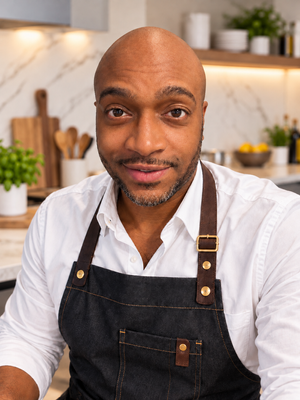
Read More Stories → THE CHEFMeet Chef David
Meet the chef behind Forks247 and discover the experience, perspective, and philosophy behind the food.
Meet Chef David →




Follow Us
A Year Built on Flavor.
Bring inspiration into your kitchen all year long with the Forks247 2027 Culinary Calendar, a thoughtfully curated celebration of seasonal ingredients, inspired recipes, and everyday culinary excellence.
Created by Chef David and the Forks247 Kitchen Studio, this calendar brings together beautiful food imagery, chef-inspired cooking ideas, and seasonal highlights designed to make every month a little more flavorful.
Whether you're a passionate home cook, a food enthusiast, or simply someone who appreciates great food, this calendar is your invitation to explore, create, and enjoy the flavors of every season.
What's Inside
- 12 Months of Culinary Inspiration:A full year celebrating the ingredients, flavors, and traditions of each season. - 12 Featured Recipes:Chef-curated dishes showcasing seasonal ingredients and approachable culinary techniques. - Seasonal Ingredient Highlights:Discover ingredients at their best throughout the year. - Chef's Notes:Practical kitchen insights and inspiration from Chef David. - Culinary Celebrations:Explore food-related occasions and seasonal traditions. - Digital Recipe Access:Scan the featured QR code to discover the calendar's companion recipes online.
More Than a Calendar
The Forks247 Culinary Calendar is designed to inspire creativity beyond the page. From comforting winter favorites to vibrant summer dishes and holiday entertaining, each month offers another opportunity to bring something delicious to the table.
Perfect for your kitchen, home office, workspace, or as a thoughtful gift for the food lover in your life.