When Food Prices Start Talking: What Today’s Food Industry Is Really Telling Us
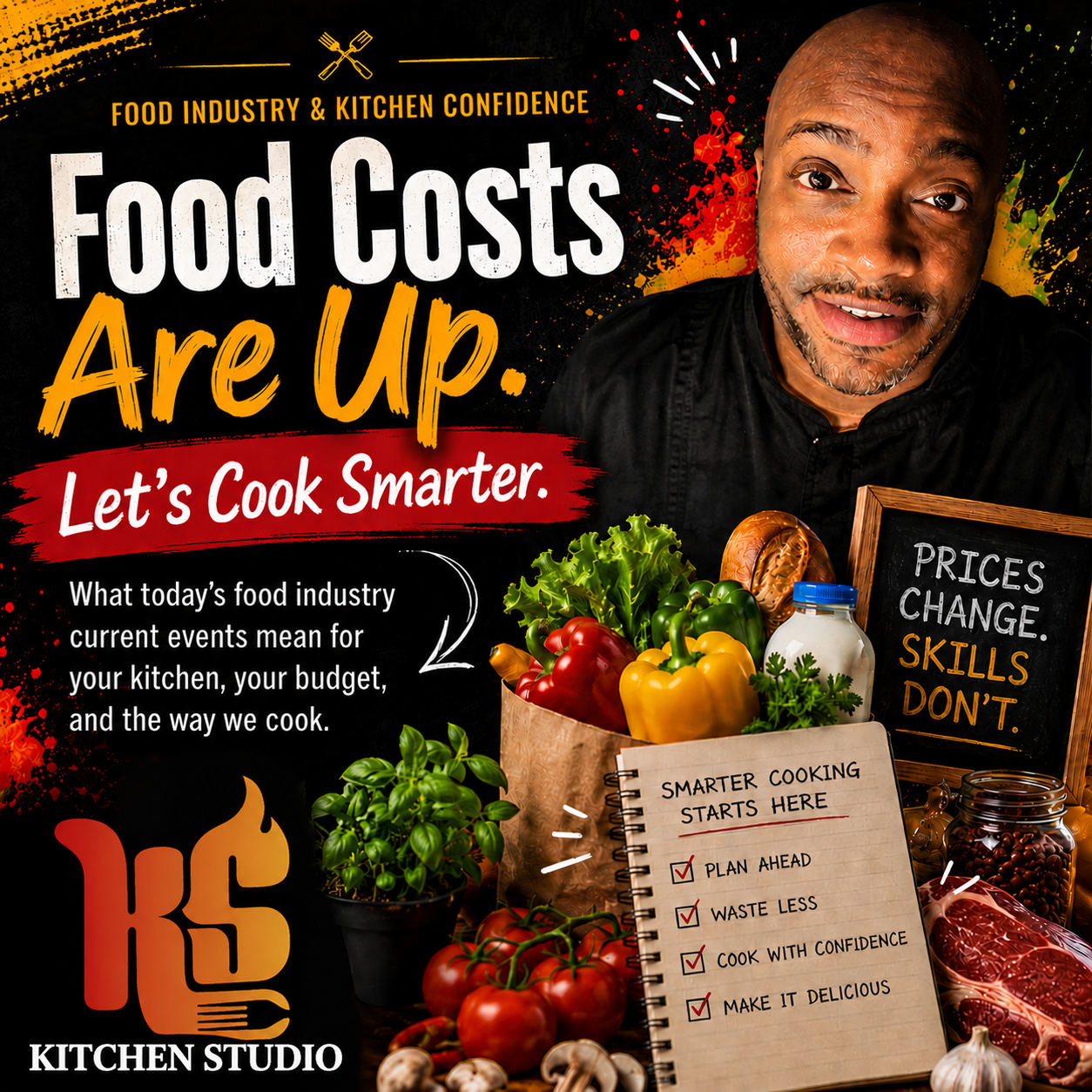
Let’s be honest. Food feels different right now.
You can feel it when you walk into the grocery store. You can feel it when you look at a restaurant menu. You can feel it when you grab that pack of beef, that carton of eggs, those tomatoes, or that bag of greens and think, “Now wait a minute… wasn’t this cheaper last week?”
And here’s the thing: you’re not imagining it.
Food prices, agriculture, restaurant costs, weather, labor, transportation, and supply chains are all connected. We may not talk about those things every time we cook dinner, but they are sitting right there in the cart with us.
That is why I always say food is more than just what ends up on the plate.
Food tells a story.
And right now, the food industry is telling us something important: the way we shop, cook, and value food has to become smarter.
Not complicated. Smarter.
The Grocery Store Is Teaching Us Something
There was a time when most people walked into the grocery store with a list and expected everything to go according to plan.
Chicken? Check.
Beef? Check.
Tomatoes? Check.
Fresh herbs? Check.
Dinner plan? Done.
Now?
You might walk in with one dinner idea and walk out with a completely different one because the price, quality, or availability changed your whole plan.
That is real life cooking.
And honestly, that is also chef thinking.
In a professional kitchen, we adjust all the time. If one ingredient does not look good, we move. If the price does not make sense, we pivot. If something is out of season, we find another way to build flavor.
That does not mean the dish has to suffer.
It means the cook has to think.
Chef’s Takeaway
The best home cooks are not the ones who always buy the most expensive ingredients. The best home cooks are the ones who know how to make good decisions with what is available.
That is where confidence starts.
Agriculture Is Not Far Away from Your Kitchen
A lot of people think agriculture is something that happens somewhere else.
On farms.
In fields.
In trucks.
In warehouses.
Somewhere far away from their kitchen.
But agriculture is closer to your dinner table than you think.
When weather affects crops, you see it in the produce section. When cattle herds are affected by drought, you see it in beef prices. When fuel and transportation costs rise, you see it in almost everything that has to move from one place to another.
That tomato on your sandwich has a story.
That steak in the meat case has a story.
That bag of greens in your refrigerator has a story.
And the more we understand that, the more we respect the food we bring home.
Did You Know
Food prices are not only about what happens at the grocery store. They can be shaped by weather, farming conditions, transportation, labor, packaging, demand, and how far food has to travel before it reaches your kitchen.
That is one thing I think today’s food conversation is forcing us to do. It is making us pay attention again.
For a long time, food culture was focused heavily on trends. What is viral? What looks good on camera? What is everybody making this week?
But now, people are asking better questions.
Where did this come from?
Why does it cost more?
How can I use all of it?
What can I substitute?
How do I make this stretch?
How do I still make dinner taste good?
Those are the questions that make you a better cook.
Want to Cook With More Confidence?
Inside Kitchen Studio, Chef David breaks down the why behind everyday cooking — seasoning, flavor-building, meal planning, and chef-level decisions made simple.
Open Kitchen StudioRestaurants Are Still Strong, But Let’s Talk About the Math
People still love restaurants.
And they should.
Restaurants are where people celebrate birthdays, anniversaries, promotions, date nights, family dinners, and those “I am not cooking tonight” moments that everybody needs sometimes.
But let me say this from a chef’s perspective: running a restaurant or food business is not just about cooking good food.
It is math.
Ingredient costs.
Labor.
Rent.
Utilities.
Packaging.
Insurance.
Repairs.
Delivery fees.
Waste.
Prep time.
Portion control.
All of that shows up somewhere.
So when a guest looks at a menu and says, “Why does this cost that much?” I understand the question. But I also know what sits behind that number.
The guest sees the plate.
The chef sees everything it took to get that plate to the table.
Flavor Note
Good food has value beyond the ingredients. It carries skill, timing, sourcing, seasoning, labor, consistency, and care. That is what makes a plate feel complete.
That is why culinary perception matters. We have to help people understand that good food has value. Not just because it tastes good, but because skill, labor, sourcing, timing, and consistency all matter.
Cheap food and valuable food are not always the same thing.
Affordable Food Needs a Better Conversation
Now let me be clear.
I am not saying food should be out of reach. Everybody deserves access to good food. Feeding yourself and your family should not feel like a luxury.
But I do think we need to mature the way we talk about affordable food.
Affordable does not always mean the cheapest thing on the shelf.
Sometimes affordable means buying ingredients that can stretch.
Sometimes it means choosing a less expensive cut of meat and knowing how to cook it properly.
Sometimes it means buying a whole chicken instead of individual pieces.
Sometimes it means turning leftovers into something completely new instead of letting them sit in the back of the refrigerator until they become a science project.
We have all been there.
The real power is knowing what to do with what you have.
A whole chicken can become roasted chicken one night, chicken salad the next day, soup after that, and stock if you really want to get every bit of goodness out of it.
A bag of potatoes can become mashed potatoes, roasted potatoes, breakfast hash, soup, or a side dish for several meals.
A pot of beans can become dinner, a dip, a taco filling, a soup base, or a side.
That is not just budget cooking.
That is smart cooking.
And smart cooking does not have to feel like sacrifice. When you know how to season, layer flavor, and use technique, simple ingredients can still feel special.
Food Waste Hits Different Now
Let’s talk about food waste.
Because when food costs more, throwing it away feels different.
That container of leftovers you forgot about? That is money.
Those herbs that went bad? Money.
That produce you bought with good intentions but never used? Money.
That meat sitting in the freezer with no plan? Money.
In professional kitchens, waste control is serious. It is not just about being neat or organized. It is about survival. If a restaurant wastes too much food, it loses money fast.
The same thing happens at home, just on a smaller scale.
Buying groceries is only half the job. Managing those groceries is the other half.
That means checking what you already have before you shop. It means storing food properly. It means using the oldest ingredients first. It means planning meals that connect to each other instead of treating every dinner like a brand-new production.
Try This Tonight
Before you cook or shop, open the refrigerator and find three ingredients that need attention first. Build your next meal around those items before buying more.
You do not have to be perfect.
You just have to be more aware.
That one shift can save you money and make you a better cook.
Culinary Perception Is Changing
For years, food on social media made cooking look almost too easy.
Thirty seconds later, the dish is done.
No mess.
No grocery bill.
No prep.
No failed attempt.
No “why did my sauce break?”
No “why is this chicken dry?”
No “why does mine not look like the video?”
But real cooking is not always that clean.
Real cooking has decisions. Real cooking has timing. Real cooking has adjustments. Real cooking has moments where you taste something and say, “It needs something, but I do not know what.”
That is where education comes in.
The good thing about this moment in food culture is that people are starting to want more than just recipes. They want understanding.
They want to know why restaurant food tastes different.
They want to know how chefs season without measuring every single thing.
They want to know how to build flavor without making a dish complicated.
They want to know how to shop smarter and waste less.
They want to know how to cook with confidence.
That is the kind of food conversation I care about.
Because once you understand the why, the recipe becomes easier.
Skill Is the Real Luxury
Here is the truth.
In today’s kitchen, skill is the real luxury.
Not the most expensive steak.
Not the fanciest salt.
Not the imported ingredient with a name nobody can pronounce.
Not the sauce that took three days and a prayer.
Skill.
Knowing how to season properly is skill.
Knowing when to use acid is skill.
Knowing how to sear instead of steam is skill.
Knowing how to make a simple pan sauce is skill.
Knowing how to turn leftovers into something people actually want to eat is skill.
Knowing how to walk into a grocery store, see that your original plan does not make sense anymore, and still come home ready to cook something good?
That is skill.
And that is what home cooks need more of right now.
Not pressure.
Not perfection.
Skill.
What Home Cooks Can Do Right Now
So what does all of this mean when you are standing in the kitchen trying to figure out dinner?
It means you start thinking a little differently.
Before you shop, ask yourself:
What do I already have?
What needs to be used first?
What can stretch across more than one meal?
What protein gives me the best value this week?
What vegetables are in season or priced well?
What can I cook once and repurpose later?
What flavor builders do I already have in the pantry?
That is chef thinking.
And chef thinking is not about making food fancy. It is about making food make sense.
You do not need a restaurant kitchen to cook better.
You need a better understanding of ingredients, flavor, timing, and technique.
That is what helps you stay calm when prices change, when the store is out of something, or when dinner does not go exactly according to plan.
Final Thought
Food industry current events are not just headlines.
They show up in your grocery cart.
They show up on restaurant menus.
They show up in your refrigerator.
They show up in your budget.
And they show up at the dinner table.
But here is the good news: you still have more control than you think.
You may not control food prices.
You may not control weather.
You may not control supply chains.
You may not control what the grocery store has in stock.
But you can control how you cook.
You can learn to shop smarter.
You can waste less.
You can build flavor from simple ingredients.
You can make better substitutions.
You can cook with more confidence.
You can stop letting one missing ingredient ruin the whole meal.
That is the kind of cooking I want people to learn.
Because when you understand food better, you do not just cook better.
You respect it more.
And right now, that matters.

Download Kitchen
Studio
Take Chef David’s cooking guidance with you. Install Kitchen Studio on your phone or desktop and start building better meals from pantry to plate.
Install Kitchen StudioGet More Chef-Led Recipes & Kitchen Confidence
Join Forks247 for seasonal recipes, practical cooking tips, chef notes, and real-life kitchen inspiration from Chef David.




Follow Us
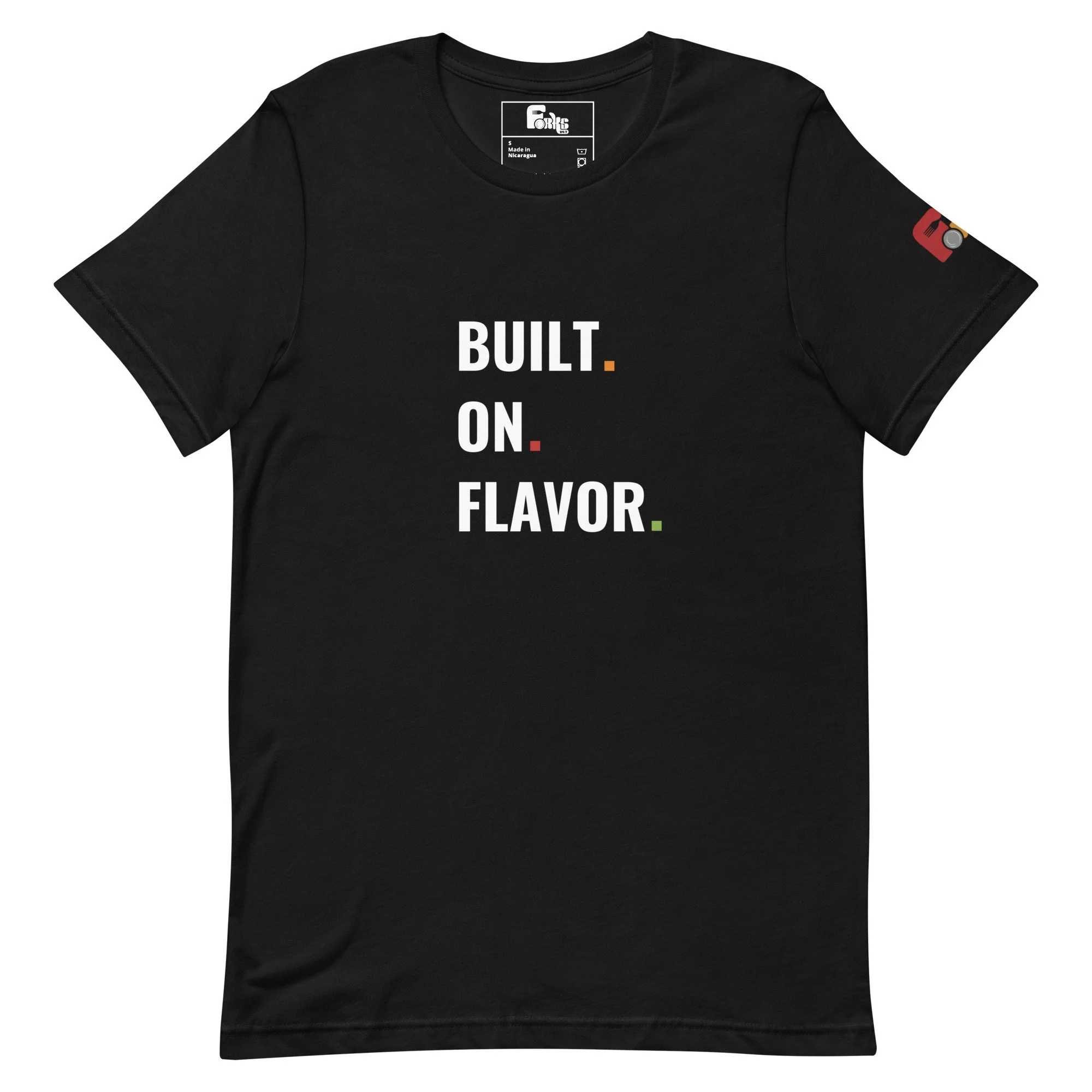
A chef’s rule worth wearing.
The Taste It Before You Trust It T-Shirt takes one of the kitchen’s simplest lessons and turns it into a statement. Bold typography paired with a refined editorial accent gives the design a clean, modern look that feels just as good outside the kitchen as it does behind the line.
Finished with subtle Forks247 branding on the sleeve, this tee is made for cooks, food lovers, and anyone who knows the final decision should always come down to flavor.
Detail
Premium unisex fit 100% combed and ring-spun cotton Heather colors contain polyester Fabric weight: 4.2 oz./yd² (142 g/m²) Pre-shrunk fabric Side-seamed construction Shoulder-to-shoulder taping Forks247 sleeve branding Designed for everyday comfort
Taste it. Adjust it. Trust yourself.